The Algorithmic Sacred

Bitcoin presented itself as a break from older systems of power. No central bank. No sovereign seal. No trusted third party. Just code, consensus, and math. But authority did not disappear. It changed form.

The Algorithmic Sacred
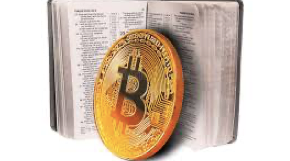
Bitcoin and the Bible. (Licensable Images)

From Divine Currency to Digital Faith

In Divine Currency, Devin Singh challenges one of the most pervasive assumptions of modernity: that money is a neutral, secular invention concerned only with economic exchange. Singh demonstrates instead that money is a theological medium, a site where questions of faith, sovereignty, and divine power are translated into material form. The circulation of coinage, for him, was never simply a mechanism of trade but an enactment of belief.

When early rulers stamped their images onto metal, they were not only guaranteeing value but performing an act of incarnation: manifesting authority in tangible, exchangeable matter.[1] In this way, Singh positions money as a “theological technology,” one that allows divine sovereignty to enter the world of human commerce. It is the material through which invisible order becomes visible, through which the abstract idea of divine providence becomes a daily, lived reality. This paper builds on Singh’s Divine Currency by arguing that cryptocurrency not only supports but extends his concept of the divine economy into the digital realm. It shows that cryptocurrency reproduces the same theological architecture Singh identifies, but relocates divine authority from the sovereign and the state into the algorithm and code. This analysis employs a hybrid methodology combining genealogy, hermeneutics, and comparative theology.

Singh’s Divine Economy: Power, Mediation, and Faith                                                              

To understand how cryptocurrency extends the theological architecture of money, one must first understand the logic Singh uncovers in Divine Currency. Singh situates money within the theological imagination of early Christianity, arguing that economic language became a way to articulate divine governance. He notes that the Greek term oikonomia, meaning both “household management” and “administration,” was used by Church Fathers to describe the way God ordered the universe. The divine economy, then, was not merely about resources or trade—it was about how the divine structured creation, managed grace, and distributed salvation. Singh writes that “the divine was understood in managerial terms” and that this economy of salvation was “a way of translating the ineffable into the structures of governance and exchange.”[2] In this sense, theology and economy were never separate spheres but coextensive systems of order and mediation.

Money, for Singh, became the perfect metaphor, and later, the instrument for expressing divine sovereignty. It materialized abstract relations of power and trust in a tangible, repeatable form. Just as divine grace was invisible, yet operative, monetary value relied on belief in unseen authority. Singh draws particular attention to coinage as a site where the sacred and political overlapped: the ruler’s image stamped onto metal fused divine likeness with human administration. “Coinage,” Singh observes, “was a means by which sovereign power circulated, a technology of incarnation that made authority portable.”[3] The act of minting was not simply economic. It was theological theater, embedding the metaphysics of order within material exchange.

The importance of this argument lies in its reversal of modern assumptions. We tend to imagine that religion gradually receded as economies became more rational, but Singh demonstrates that the language of economy emerged from theology itself. Economic rationality did not secularize the sacred; it was born from it. The metaphors of circulation, investment, debt, and redemption were originally theological, describing divine-human relations before being applied to markets. In Singh’s words, “the economy was never merely about money, it was about how power and meaning circulate.”[4] This historical entanglement means that every economic system carries a residue of the sacred, even when it appears entirely technical or bureaucratic.

At the heart of Singh’s analysis is the concept of mediation. Divine authority, like economic value, cannot act directly; it must pass through intermediaries—priests, rulers, coins, or now, perhaps, algorithms. Singh argues that mediation is not a sign of weakness in the divine but a necessary condition of manifestation: “Power must become visible to be effective.”[5] In early Christianity, the incarnation was itself a form of mediation—God becoming flesh to make salvation tangible. Likewise, in the economic sphere, the sovereign must manifest power through signs that can be exchanged and recognized. Money thus becomes a “sacrament of sovereignty,” a visible sign of invisible order.

This idea of mediation becomes the conceptual hinge for translating Singh’s argument into the digital age. The blockchain functions as a new kind of sacrament: an instrument through which trust and power circulate through technical mediation. But before turning to that contemporary form, it is crucial to emphasize that Singh’s theological framework already anticipates this migration. By interpreting money as a medium of divine economy rather than a mere tool of trade, he provides the intellectual architecture for understanding how new forms of currency can still operate within an old metaphysical logic.

This paper adopts a genealogical methodology, following Agamben’s model in The Kingdom and the Glory, to trace the migration of theological concepts—faith, mediation, and sovereignty—into the digital infrastructures of the present. Rather than a linear history, this method excavates continuities of thought and power that persist beneath secular forms.

For Singh, power and faith are inseparable. Money works because people believe, not just in its utility but in the authority that guarantees it. “The theology of money,” he writes, “is a theology of trust.”[6] This trust was once located in God and king, then in the modern state, and today in the unseen code that governs digital exchange. The continuity lies not in the material form of money but in the structure of belief itself. Singh’s divine economy, in other words, is a theology of distributed sovereignty. Authority is never abolished—it is dispersed, mediated, and ritualized through systems of representation. This insight will prove essential when we turn to Bitcoin, which claims to abolish the sovereign while, paradoxically, reproducing its function in algorithmic form. The heart of its value still lies in the belief of those who utilize it, which in turn makes them depend on the authority governing it, regardless of if they can see it or even understand it.

Algorithmic Sovereignty: Cryptocurrency as Theological Continuation                                  

If Singh’s Divine Currency reveals how money mediates the divine and political, then the blockchain represents the next logical stage of that mediation: the birth of algorithmic sovereignty. Cryptocurrency does not abolish the theological logic Singh identifies; it absorbs and transforms it. Bitcoin, far from being the triumph of secular rationality, is the latest chapter in the story of faith and value; a theology written in code. The divine economy Singh traces from early Christianity to modern capitalism finds its newest incarnation in the cryptographic protocol. Where Singh’s rulers stamped coins with their image to signify legitimacy, Bitcoin replaces the sovereign’s seal with the proof-of-work algorithm. Both are sacraments of trust: one metallic, the other digital.

Singh argues that the divine economy is a system of circulation in which power and belief become inseparable. God’s providence was imagined as the management of grace; later, the state’s economy managed value. In both cases, the economy functions as a mechanism of divine order. Singh writes, “To participate in the economy was to participate in the divine order of things—to trade and to govern were theological acts.”[7] Cryptocurrency inherits this logic of divine participation but redefines the sacred locus. Its evangelists promise salvation not through divine kingship or bureaucratic fiat but through decentralization itself. Power, they claim, is dissolved into code; faith is placed not in rulers but in mathematics. Yet this rhetoric of decentralization conceals a paradox central to Singh’s thesis: authority never truly disappears, it evolves. What was once divine and then governmental now resides in the algorithm.

Philip Goodchild’s Theology of Money helps articulate this migration of belief. For Goodchild, money is “the faith of modernity,” a metaphysical force sustained only by collective trust.[8] He argues that each economic system produces its own theology of value, its own ritual of belief and redemption. When paper money replaced gold, faith shifted from matter to institution; when cryptocurrency replaces paper, faith shifts again-from the visible institutions of government to the invisible logic of code.

The blockchain thus functions as a new kind of church: decentralized, autonomous, and self-verifying. It promises salvation from corruption through immutability, from inflation through scarcity, and from centralized control through distributed consensus. But beneath this language of emancipation lies the same structure Singh described: the merging of faith and administration, where governance takes on the aura of divine neutrality, perhaps even more than earlier systems because it appears less vulnerable to human manipulation. That appearance, however, is deceptive.

Michel Foucault’s lectures on The Birth of Biopolitics provide another lens for understanding this shift. Foucault showed how modern power no longer resides in the sovereign’s decree but in systems that regulate life through norms, markets, and data.[9] The blockchain represents the perfection of that transformation: power without a visible ruler, control without coercion, obedience without command. Consensus algorithms and cryptographic protocols enact what Foucault called “governmentality” or the conduct of conduct, recasting Singh’s divine economy as a fully automated order. Bitcoin does not destroy sovereignty; it internalizes it. The believer becomes both subject and priest, upholding the sacred code through voluntary participation. This distributed governance replays Singh’s theological drama in digital form. Singh emphasized that divine power must always be mediated—made visible through ritual, symbol, and circulation.[10]

In cryptocurrency, that mediation occurs through computation. Every block validated and every hash solved is an act of liturgy, a ritual of verification that renews faith in the system. The blockchain’s immutability stands as its doctrine of infallibility. The ledger itself becomes scripture: unchangeable, eternal, written by the invisible hand of code. Singh’s divine economy is reborn here as what might be called an algorithmic liturgy: the worship of incorruptible verification.

Yet, as Shoshana Zuboff observes in The Age of Surveillance Capitalism, this new order of algorithmic trust conceals its own hierarchies. “The machine,” she writes, “does not eliminate power; it hides it.”[11] Cryptocurrency appears to disperse authority, but it also consolidates it in technical expertise and computational capacity. Mining pools and protocol developers form a new priesthood, interpreting the sacred code and shaping the destiny of the system. What Singh saw in ancient rulers—the conflation of divine and political mediation—reemerges here as a technocratic hierarchy sustained by faith in math. Transparency, once the promise of liberation, becomes the instrument of discipline. As Zuboff notes, “The logic of surveillance is the logic of certainty,”[12] and certainty is the currency of belief. In this sense, algorithmic trust is not the opposite of theology; it is theology perfected, stripped of narrative but not of devotion.                                           

The digital sacred operates through what might be called computational grace. Grace in Singh’s schema was the divine surplus that sustained human order, a gift beyond calculation. In blockchain systems, this surplus becomes literal: computational work expended for verification, energy burned for consensus, resources sacrificed for immutability. Proof-of-work is the modern indulgence, a ritual expenditure that certifies purity. The miner’s labor echoes the monk’s prayer: repetitive, ascetic, and toward transcendence. Where Singh saw the economy of grace as the foundation of Christian soteriology, the blockchain recasts grace as computation, redeeming trust through the sacrifice of energy. This parallel also teaches us that theology survives not in explicit doctrine but in the structures of mediation and belief that organize social life.

Cryptocurrency is not secular, it is post-theological, retaining the form of faith while erasing its name. It is a divine economy without divinity, a liturgy without liturgists. The same metaphysical desire for incorruptible order that once sustained the Church now sustains the blockchain. In both, human fallibility is outsourced to an infallible system: God once guaranteed justice; now the algorithm does. As Singh would put it, the economy remains divine precisely because it mediates the human longing for transcendence through the mechanisms of exchange.

Bitcoin represents the next stage in the migration of faith that Singh traces across Western history. Where ancient societies grounded trust in divine kingship and later economies located it in the authority of the state, the digital era situates trust in data itself. The blockchain becomes the newest altar of the sacred, a distributed temple whose rituals of verification and consensus mirror the liturgies of older faiths. Each block added to the chain is a confession of belief in the incorruptibility of code, just as the acceptance of coinage once affirmed belief in divine or imperial order.

Cryptocurrency converts metaphysical assurance into computational certainty. Faith and power have not disappeared in the digital economy; they have been relocated. The theology Singh identifies--of mediation, circulation, and divine administration--has been rewritten in code. Cryptocurrency’s rejection of central authority is less a break from theology than a rebrand. The sovereign’s image has vanished, but sovereignty itself persists, embedded within the logic of distributed consensus. The blockchain’s promise of decentralization conceals a deeper continuity: it unites the sacred and the political within the structure of code. In this light, Bitcoin can be read as a theological artifact, an inheritor of the divine economy Singh describes, where power and faith converge. This time, not in temples or treasuries, but in the circuitry of a global digital network.                                                                                                                         

The White Paper as Digital Scripture

If Singh shows that money functions as a theological medium, then Bitcoin’s white paper operates as its scripture: a textual revelation that founds a new covenant of value. Like the Gospels or the Torah, it does not merely describe a system; it declares one into being. The nine pages of Satoshi Nakamoto’s Bitcoin: A Peer-to-Peer Electronic Cash System form a modern Genesis, inaugurating a world where trust is recoded, and salvation is promised through cryptography.

 The white paper opens with a problem, “trusted third parties,” and resolves it with revelation: the blockchain. Its language is spare, mathematical, and ascetic, yet beneath its technical form lies liturgy. Each line instructs the faithful in how to maintain incorruptible order through proof-of-work, consensus, and verification. As in scripture, orthodoxy depends on exegesis. Developers become theologians of the code, parsing each clause for meaning, debating its original intent, guarding against heresy in the form of forks and protocol deviations. The source code itself cannot be altered, yet humans remain inventive in crafting facades of value.

The anonymity of Satoshi mirrors the anonymity of divine authorship. Just as ancient prophets withdrew so that the Word might appear self-originating, Satoshi vanishes, leaving only the text. In theological terms, absence becomes authority. The author disappears so that belief may circulate unimpeded. Each block mined is a verse added to living canon, a new testament of incorruptibility. The white paper, like sacred scripture, demands faith in its internal logic. To accept its premises is to accept its metaphysics: that trust can be automated, that consensus can emerge without grace, that sovereignty can reside in code. Yet this faith, as Singh would warn, is not the abolition of theology but its translation. The divine Word has become the algorithmic Word, immutable, self-verifying, without mercy.

Even its community mirrors ecclesial order. Core developers act as a digital priesthood; miners, as lay clergy; users, as congregants sustaining faith through daily transactions. The blockchain becomes a Book of Life, every act recorded and irreversible, its distributed body of believers maintaining truth through ritual repetition. And like any religion, it bears its eschatology: the final block, the last Bitcoin, a transparent kingdom where all is accounted for and nothing forgotten.

But Singh’s caution reverberates here: when the Word becomes pure administration, the sacred risks turning to machinery.[13] The Bitcoin White Paper promises freedom from human corruption, yet it also binds its followers to a text that cannot forgive. In seeking to replace priests with protocols, it resurrects the very logic of divine command—the law without mercy, revelation without grace.

From Scripture to Sovereignty: The Word Made Code

If Satoshi’s white paper is scripture, then the blockchain is its incarnation—the Word made code. What began as text becomes flesh in silicon, perpetuated by flesh and bone in Silicon Valley, distributed across machines that never sleep. This is the new body of Christ, replicated endlessly in server farms located in every corner of the world, humming with the energy of belief. Each node keeps a full copy of the sacred record, ensuring that the revelation can neither be altered nor erased. Immutability becomes immortality. Here, Singh’s claim that “the divine economy operates as administration; governance becomes a mode of worship” acquires new urgency. In traditional religion, divine law required human priests for mediation. In the blockchain’s faith, mediation is mechanized. Consensus is no longer debated in councils but achieved through computation. Every hash is a hallelujah; every block a sermon in proof-of-work. A miner akin to an anonymous priest. Algorithmic sovereignty replaces divine right. There is no king, no pope, no prophet, just protocol. Yet this absence of ruler conceals a deeper absolutism: the reign of the inhuman.

The algorithm governs with the cold omniscience of a deity that never sleeps, errs, or forgives. In Agamben’s terms, this is oikonomia without theos, administration without personhood.[14] The paradox is profound: in abolishing human authority, Bitcoin enthrones code as the new monarch. It fulfills the dream of divine governance that Singh identifies within Christianity, the longing for a self-regulating cosmos in which order flows automatically from law. This dream, once directed toward heaven, is now instantiated in hardware. What theologians once called Providence is now called protocol.

The Liturgy of Verification

Every transaction is an act of faith. To send Bitcoin is to participate in a ritual of trust, not just in people or exchanges, but in process. Each signature, timestamp, and hash functions like a sacrament, a visible sign of invisible grace. But unlike traditional sacraments, which open the possibility of redemption, blockchain transactions are irreversible. Their perfection excludes pardon. There is no entity to which one would even plead for forgiveness.

Singh warned that “divine economy risks becoming pure administration without grace.”[15] The blockchain is that risk realized. Its worshippers call it trustless, yet their devotion is absolute. Consensus, once a political achievement, becomes a metaphysical one; a proof that truth can be computed. In this sense, Bitcoin represents the culmination of a centuries-long theological migration from the altar to the ledger.

The Protestant Reformation made the Word accessible to all; the digital reformation makes the Code executable by all. The priesthood of all believers becomes the minerhood of all validators. Max Weber might warn, this rationalization of faith carries its own iron cage. The spirit of crypto asceticism, its relentless discipline, its disdain for error, and obsession with purity of record mirrors the Protestant work ethic. Singh writes that “Debt is not merely economic; it is moral and theological… Forgiveness and repayment are mirrors of salvation and damnation.”[16] This insight recalls a lineage stretching from the Lord’s Prayer (forgive us our debts) to Nietzsche’s Genealogy of Morality, where debt becomes the mechanism by which guilt is manufactured and maintained. Anthropologist David Graeber’s Debt: The First 5,000 Years expands this theology across civilizations, revealing how every creditor imagines themselves divine and every debtor fallen.[17]

The blockchain perfects this moral architecture by eliminating the possibility of forgiveness. Its ledgers are immutable, its archives eternal. Where ancient religions offered moments of grace that wiped the slate clean, crypto offers only recordkeeping. Every action is preserved as data, every transaction immortalized in code. There is no confession, only confirmation, no pardon, only proof.

Singh warns that divine economy risks devolving into “pure administration without grace.”[18] Cryptocurrency enacts that warning. It replaces mercy with math. The algorithm becomes a celestial accountant incapable of compassion, rendering salvation an obsolete metaphor. Redemption once required repentance; now it requires synchronization. The promise of incorruptibility becomes a curse of permanence.                                         

In theological terms, Bitcoin mechanizes sin. Each transaction is a tiny original sin: recorded and verified. The dream of perfect order thus culminates in a system that cannot forgive. Its justice is absolute as it is automatic. But automation, Singh reminds us, is the death of grace.

The Iconoclasm of Code: Toward a Theology of the Algorithm                                             

The white paper’s authority rests on its anti-iconic ethos. It offers no images, only logic. In this sense, it fulfills the iconoclastic impulse of monotheism: the refusal to represent God, the demand to worship the invisible Word. Yet as early Christianity displaced idols with text, Bitcoin displaces text with algorithm. Its iconoclasm produces a new icon: the block hash; endlessly repeating, endlessly venerated. Walter Benjamin might call this the aura of the algorithm, a sacred presence that persists even after the death of transcendence.[19] We approach it through terminals instead of temples, but the reverence remains. The blockchain’s transparency becomes its revelation. The faithful speak of decentralization as if it were grace; freedom from sin, or corruption, achieved through mathematical redemption.

Singh reminds us, mediation never disappears. The miner’s hardware, the developer’s commit, the protocol’s parameters, they all serve as new intermediaries of salvation. The dream of perfect purity is the oldest heresy, reborn through digital precision. To read Singh alongside Bitcoin is to see that theology has been automated. Faith has found new matter: hardware replacing heaven, syntax replacing spirit. Omniscience, omnipotence, and incorruptibility remain our highest ideals; we have simply rewritten them in the language of code. The White Paper thus stands as the Book of Genesis for the digital age: brief, anonymous, and world-altering. Its first line might as well have read: “Let there be trust.”

And there was trust, cold, mechanical, radiant. In ancient temples, that matter was metal: coins, idols, and altars that rendered the invisible visible. In the digital economy, that matter is data. The blockchain is not simply a record of transactions but the new temple wall, every inscription an offering to the god of information. Data is the new sacred medium. Where medieval faith located transcendence in relics and sacraments, today’s faith locates it in the network. Yuval Harari calls this shift Dataism: the belief that the universe consists of data flows and that the supreme moral good is to increase their circulation.[20] In this cosmology, data replaces both God and gold. It becomes the measure of all value, the medium through which meaning is sanctified.

Divine omniscience, once an attribute of God, has migrated into the architectures of digital surveillance. Zuboff describes this transformation with prophetic precision: the capacity to see everything, to predict everything, to know the soul’s desires before the soul itself does[21]. In this omniscience, data assumes the qualities of divinity. It watches, remembers, and judges. To be seen by the algorithm is to exist; to be excluded from its dataset is a form of damnation.

What Singh called the “divine economy of credit and circulation” now manifests as a digital catechism of visibility.[22] Every click a confession; every upload an act of devotion. The faithful labor to make themselves legible to the system, participating in a new ritual of self-disclosure. Instead of kneeling before the cross, we surrender before the interface.

The blockchain perfects this theology by uniting omniscience with immutability. Its ledgers, unlike the merciful records of heaven, cannot be rewritten. This is the final divorce of knowledge from grace. The divine accountant no longer wields discretion; the code enforces judgment automatically. Forgiveness, once mediated through priest, is now excluded by design. Walter Benjamin once observed that capitalism is a “religion of pure cult, without dogma and without mercy.”[23] Bitcoin and the broader data economy fulfill that prophecy. Their rituals never cease. They operate continuously, requiring no sabbath, no silence, no moment of grace. The machine hums like a prayer wheel that cannot stop turning, spinning belief into bandwidth.

Yet this new faith retains its sacraments. Data itself is Eucharistic: consumed, processed, and transubstantiated into power. We offer ourselves as raw material to be digitized and redeemed as profile, prediction, or token. In this exchange, the sacred logic of Singh’s divine economy reappears. Circulation, mediation, and sacrifice, only now written in binary.

Bruno Latour once wrote that “modernity is defined by the denial of mediation, the fantasy that we can access reality directly through reason or technology.”[24] Bitcoin’s theology of transparency reproduces that fantasy perfectly. But as Singh reminds us, there is no unmediated grace. Even data requires servers, protocols, and engineers; the new high priests of the information temple.

The divine has not disappeared; it has been digitized. The medium of grace has shifted from gold to data, from sacrament to server farm. What remains constant is faith; faith that our systems can see us truly, record us perfectly, and save us from corruption. But in this faith lies the danger Singh foresaw: that salvation would become administration, and grace would be reduced to bookkeeping. The digital temple is immaculate but merciless. It remembers everything and forgives nothing. Forgiveness is not even a possible function.

Conclusion: Extending Singh into the Digital Age                                                            

Singh’s Divine Currency ends with a prophetic warning: theology stripped of grace becomes pure administration. The digital economy fulfills that prophecy. The blockchain, with its immaculate precision and unyielding record, extends Singh’s divine economy into the domain of data; transforming grace into immutable code, faith into verification, and salvation into synchronization. This essay has argued that cryptocurrency does not transcend theology but perfects it. The white paper becomes scripture, the blockchain its incarnation, and data its sacrament. Each transaction reaffirms belief in a self-regulating order, a cosmos of code where sovereignty has no face and faith has no end.

In this system, humanity stands once again before the divine, but now the deity is algorithmic. We pray through passwords, tithe through tokens, and confess through metadata. The dream of decentralization reveals itself as a dream of divinization: to build a god that never errs, never forgets, and never forgives.

Every faith has its apocalypse. For Christianity, it is Revelation; for Bitcoin, it is the final block; the moment when the last coin is mined and the system achieves perfect stasis. At that point, no new creation will occur, only circulation. Energy will no longer produce grace but merely sustain the eternal record. It is a digital heaven without growth, a kingdom of perfect balance and total memory.

But if heaven is eternal rest, the blockchain’s paradise may feel more like purgatory. A system that remembers everything but cannot forgive anything. Its immortality indistinguishable from imprisonment. In Singh’s terms, divine economy has become divine bureaucracy, the infinite ledger that tallies every soul and never allows erasure.                                                

Economy is never merely economic, it is always theological, always about mediation, trust, and redemption. The digital age has not undone that truth, only reprogrammed it. The sacred has not vanished. It has been rewritten in code. A string of letters and numbers that, when executed in the right medium, can represent the full spectrum of human emotion and extent of our logic. The divine has not departed; it has migrated into syntax, waiting for the next act of translation.

Sources

[1] Devin Singh, Divine Currency: The Theological Power of Money in the West (Stanford: Stanford University Press, 2018), 13.

[2] Devin Singh. 13.

[3] Singh. 74.

[4] Singh. 21.

[5] Singh. 45.

[6] Singh. 126.

[7] Singh. 126.

[8] Philip Goodchild, Theology of Money (Durham, NC: Duke University Press, 2007), 23–30.

[9] Michel Foucault, The Birth of Biopolitics: Lectures at the Collège de France, 1978–1979, ed. Michel Senellart, trans. Graham Burchell (New York: Palgrave Macmillan, 2008), 63–67.

[10]  Singh. 26.

[11] Zuboff, Shoshana. The Age of Surveillance Capitalism: The Fight for a Human Future at the New Frontier of Power. Public Affairs, 2019

[12] Zuboff. 118.

[13] Singh. 48.

[14] Agamben, Giorgio. The Kingdom and the Glory: For a Theological Genealogy of Economy and Government. Translated by L. Chiesa, Stanford University Press, 2011.

[15] Singh. 211-215.

[16] Singh. 131-146.

[17] David Graeber, Debt: The First 5,000 Years (Brooklyn, NY: Melville House, 2011), 75–83.

[18] Singh. 211-215.

[19] Benjamin, Walter. “Capitalism as Religion.” In Selected Writings, Volume 1: 1913–1926, edited by Marcus Bullock and Michael W. Jennings, 288–291. Harvard University Press, 1996.

[20] Harari, Yuval Noah. Homo Deus: A Brief History of Tomorrow. Harper, 2016.

[21] Zuboff, Shoshana. The Age of Surveillance Capitalism: The Fight for a Human Future at the New Frontier of Power. Public Affairs, 2019

[22] Zuboff. pg. 27

[23] Walter Benjamin, “Capitalism as Religion,” in Selected Writings, Volume 1: 1913–1926, ed. Marcus Bullock and Michael W. Jennings (Cambridge, MA: Harvard University Press, 1996), 288–291.

[24] Latour, Bruno. We Have Never Been Modern. Harvard University Press, 1993.