The Machine Talks First
By Matt Stone
First Movers
America did not collapse in one grand flash of fire and horsemen. That would have at least shown some style. No, this country got eaten by consultants, dashboards, private equity ghouls, and software that smiles like a hostage. We did not march into hell. We accepted the terms and conditions.
The rot did not arrive like an invading army. It came as convenience. It came as efficiency. It came as optimization. It came with a clean logo, a helpful tone, and a promise to make things easier.
Then one day you look around and realize your hospital is a hedge fund, your job is a software test, your politics are a costume, your attention span has the lifespan of a moth on meth, and the sky itself can turn red and half the country just mutters “damn that’s crazy” before going back to microwaving chicken nuggets and hate-scroll-Toking its way toward spiritual death.
This is not a healthy society. It is a processing plant with patriotic wallpaper.
The ugliest joke in modern American life is that we are told we are freer than ever while almost every important decision now gets made before we even enter the room. By the time you show up, the score is already assigned, the bill is already printed, the job has already been filtered, the story has already been framed, and some underpaid clerk with burnout eyes is waiting for your signature like a funeral director asking whether you want the oak or mahogany package for your dignity.
That is not agency. That is being politely mugged by a spreadsheet.
You can see the whole disease in your mailbox. Make a few credit card payments on time and suddenly every parasite in the financial swamp sends you a glossy envelope stamped with fake respect. Congratulations, citizen. You have demonstrated enough self-control to qualify for a new and exciting chance to destroy yourself at 27 percent interest. You behaved responsibly for three weeks and the machine took that as a sign that you might be reliable enough to milk.
That is this country in one image. You do the right thing, and six predators show up dressed like rewards.
They flatter you with “pre-approved” and “exclusive offer” because America’s real love language is bait. The machine does not see a person trying to stay afloat. It sees a nervous mammal who might pay on time. That is all it needs. The trap gets printed before you can even enjoy your small victory.
Healthcare followed the same path, only with more blood and more expensive parking. We used to pretend hospitals were sacred places where sick people went to be helped. Then the walking pocket-protectors in loafers arrived with acquisition papers and discovered that suffering scales beautifully if you strip enough dignity out of it. Now large chunks of American medicine feel like a hostage negotiation held in a lobby that smells faintly of bleach and despair.

Look at Asheville. Mission Hospital used to be the kind of place people believed belonged to the community. Then HCA bought Mission Health, and the whole thing started to smell like a corporate casserole left in the sun. Complaints piled up. Lawsuits followed. People in western North Carolina started saying the place was getting worse, not better. Long waits. Staffing problems. service problems. Patient care concerns. The usual corporate miracle. Take over something vital, cut the living guts out of it, call the blood loss “streamlining,” then act wounded when the locals notice their regional lifeline now feels like an airport Chili’s with trauma bays.
That is what happens when a corporation finishes the mission it told the public about. Once it has solved the original problem or captured the market, the real mission begins. Survival. Growth. Self-protection. Expansion by any means not yet illegal enough to scare the lawyers. At that stage the stated purpose becomes a mascot costume. The real organism underneath is just trying to feed.
The same rot chewed through Boeing.
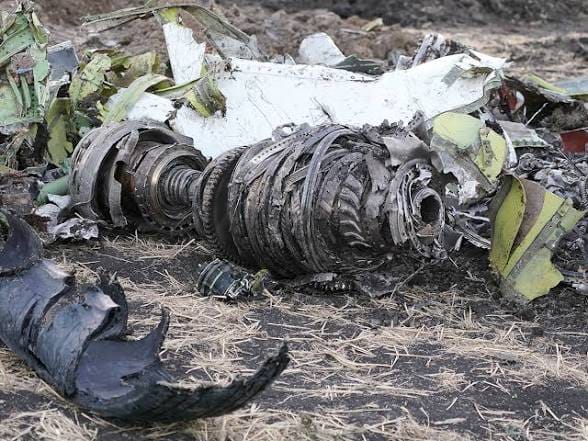
Once upon a time Boeing meant engineering. Metal, caution, discipline, adults who understood gravity and feared it properly. Then America had one of its recurring bouts of shareholder worship and turned one of the world’s great manufacturing names into a PowerPoint cult with jets attached. Safety became a speed bump. Engineering got shoved behind finance. Planes started leaving the factory with the kind of quality-control issues that would embarrass a backyard treehouse operation.
When a plane loses a door plug in midair because basic oversight broke down, that is not just one mistake. That is a culture. That is what happens when the people running the show decide that the mission is no longer “build aircraft that stay together in the sky” but “keep the machine fed and the graph going up.” Once the mission dies, the shell remains. People still say the company name with the old respect, but what they are really talking about is a capitalist ghost wearing a name tag.
This is bigger than hospitals and airplanes. It is the whole country now.
Once a corporation achieves what it set out to do, its mission often becomes survival by any means. Not service. Not excellence. Not public good. Survival. Growth. Immunity. The hospital no longer exists to heal. The plane maker no longer exists to build the safest plane. The platform no longer exists to connect people. The company no longer serves its purpose. It serves itself.
And the public becomes whatever it can be turned into. Consumer. Borrower. Patient. User. Voter. Target. Content. Labor.
Never citizen. Never neighbor. Never soul.
White collar America thought it was too refined to get butchered this way. The office class watched factories automate and figured the robots were for the grease monkeys and forklift tribe, not for the laptop clergy. Then the software learned how to write the email, build the slides, sort the resumes, answer the customer, summarize the report, and fake intelligence just well enough to make management cream its khakis.
Now the office is slowly becoming a haunted house where half the jobs are ghost jobs and the other half are people checking machine output they barely understand. The machine drafts. The human edits. The machine screens. The human signs. The machine decides what gets seen first, and the human gets to take legal responsibility once the damage is already in motion.
This is what they call “human in the loop,” a phrase that sounds reassuring until you see how these systems actually work. In practice, the human often arrives after the most important shaping has already been done. The software gets first crack at reality.
The person who comes after is left to validate a frame they did not create, often already primed to believe the machine does not err. Angela Lipps learned that the hard way. Facial recognition software helped produce suspicion against her, and the human review that followed did not meaningfully interrupt the process. It carried it forward. That is the deeper problem. The machine proposes the world, and the human being inside the institution too often just confirms it. A person can be arrested for a crime in a state she has never set foot in because the safeguard was never really designed to question the machine. It was there to formalize its judgment.
So people begin to feel powerless in ways they cannot always name. Their names are still on the forms. Their hands still touch the keyboard. But the range of meaningful action keeps shrinking. It is like being allowed to steer a car after the road, speed, weather, and destination have already been chosen elsewhere, by people you will never meet, under a banner called innovation.Even the economy now has the look of a drunk uncle trying to stand up too fast at Thanksgiving. The country lost jobs. Unemployment ticked up. Hiring looks weaker. None of it is dramatic enough for the television apes to put on black ties and announce national tragedy, but the floorboards are creaking.
The machine still runs. It just carries fewer people with it. More productivity. Fewer entry points. More pressure. Less stability. More talk about resilience from men who would not survive twelve minutes without catered lunch and a full staff serving their every need.
That is the hidden humiliation of this economy. It can still produce numbers, growth, and investor smiles while more and more people feel like they are being gently pushed out of the frame. The graph is healthy. The person is not. That is considered acceptable now.
Over all of this hangs the state itself, which now resembles a man laughing too hard while smoke leaks out of his shirt. The debt is staggering. Long-term fiscal projections look ugly. Obligations swell. Interest payments grow. The country is not collapsing tomorrow morning, but the signs are there. A system that owes too much, extracts too much, and can no longer imagine a future that does not involve squeezing somebody lower on the ladder.
And when big systems get stressed, they do not suddenly discover compassion. They get meaner. They charge more, cut more, deny more, and dress the whole thing up in sterile language. A desperate corporation does not become noble. A desperate government does not become wise. A desperate healthcare system does not discover mercy. It discovers fees.
Even war has been absorbed into the same sick logic. The first movers in modern conflict are now often satellites, cyber systems, and networks above the heads of ordinary people. That phrase alone should make your teeth hurt. First movers. Not soldiers on a field. Not a speech. Not even an explosion. The opening move happens in orbit, in code, in systems. By the time most human beings understand a war has begun, the machinery has already made contact.
There it is again. The decision upstream. The consequence downstream.
That is the shape of the age.
The same thing happens with disease. A new COVID variant appears with a ridiculous pile of spike mutations and people immediately know the drill. Experts warn. media flails. Products get updated. Share prices tremble and then grin. In a healthy society, public health would feel like care. In this one, it feels like the opening bell at a conference where suffering wears a nametag and everyone in the room is trying to monetize caution.
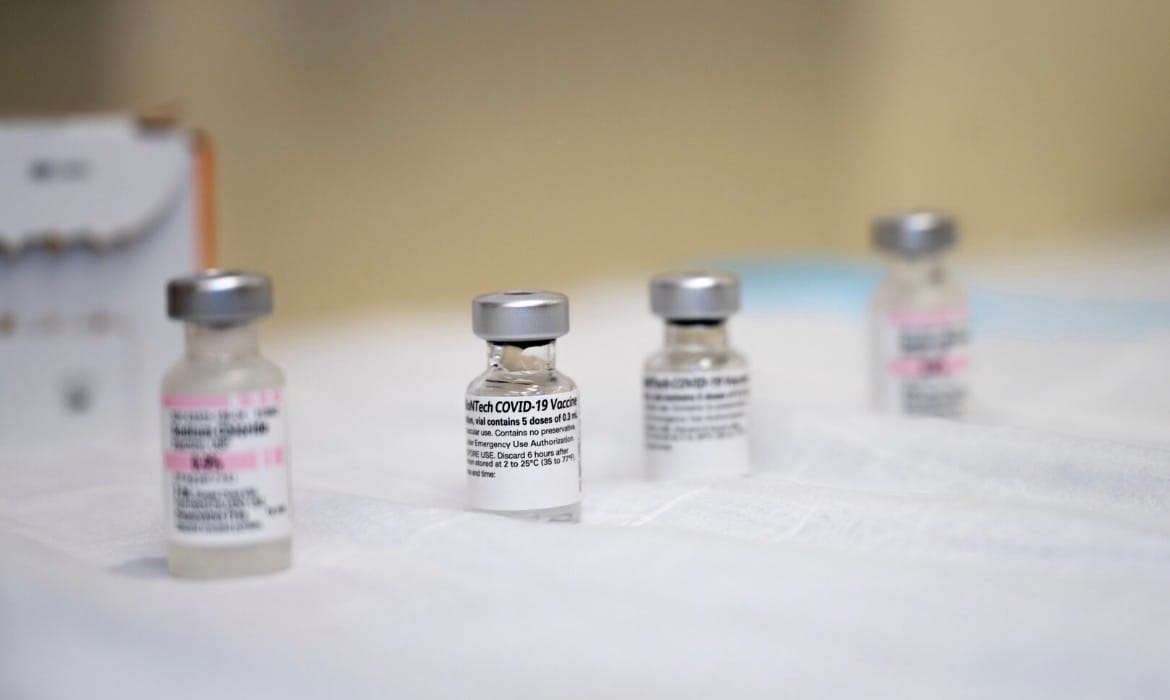
People no longer hear “new variant” and think only of health. They think of another round of public theater, pharma profit, nervous messaging, and the same grim suspicion that every crisis in America eventually fattens the wallets of someone with dead eyes and stock options.
And while all of this is happening, the culture has entered what I can only describe as the exhaustion phase.
Congress and the media can discuss claims about unknown craft, biologics, retrieved materials, and all the rest of the UFO fever dream, and most people barely have the strength to raise an eyebrow. Peruvian authorities can make bizarre claims about nonhuman biologics that look suspiciously similar to thousand-year-old cave drawings. Lawmakers can hold hearings on all of the above, and accuse others in government of covering up a decades-old program retrieving crashed non-human aircraft. Media outlets treat the whole thing with straight faces long enough to make your grandmother spit out her coffee. And still, almost nobody has the capacity to even give a shit.
Not because the claims are true. Not because the claims are false. Because the public mind has been cooked to medium-well.
That is the deeper horror. Even extraordinary reports no longer feel extraordinary. They arrive in the same feed as cat videos, tank footage, celebrity nonsense, and sponsored depression. So they flatten into noise.
If literal aliens landed in the Clinton years, the country might have frozen. Now people would ask if the clip was AI, post one meme about intergalactic pronouns, and then go back to arguing about oat milk.

The sky itself can turn biblical and most people react like they saw a funny license plate. Dust storms roll across Australia or the United States looking like laser battles from a cheap space opera, and the public response is a numb little shrug. Damn. Weird. Anyway. The world is visibly fraying, mutating, throwing up red warnings in the sky like a drunk god with stomach problems, and the public nervous system has the processing power of a wet cigarette.
That is not stupidity. That is saturation.
We trained our brains to act like a predator is around every corner, and then we put the predator in our pockets and taught ourselves to pet it every sixteen seconds. Buzz. Alert. outrage. meme. threat. tragedy. thirst trap. atrocity. ad. clip. scandal. weather event. collapse. recipe. war. ad again. The alarm system never shuts off, so eventually the brain does the only thing it can do. It flattens everything. Nothing feels singular. Nothing feels sacred. Nothing feels real enough to stop the day.
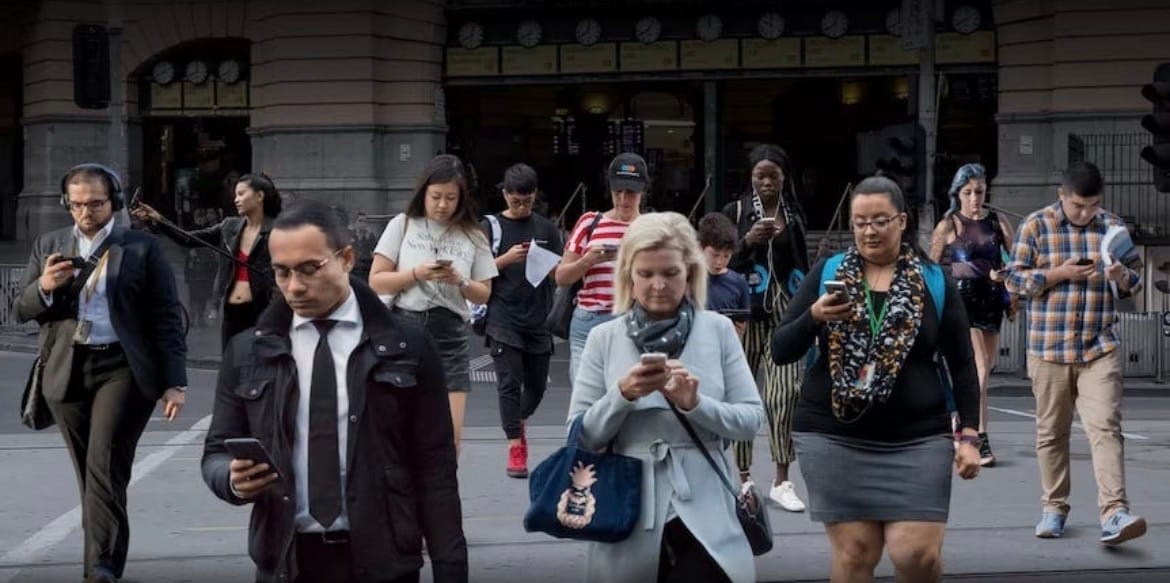
And into that flattened public mind slithers the machine in its most advanced form.
The machine talks to us in our own voice now. That is the truly satanic innovation. It does not shout from a podium like an old dictator. That would be too simple, too honest, too much like the movies. Instead it slips into your head wearing your accent, your politics, your jokes, your wounds, your tribe, your little pet resentments. It tells you what to be mad about, what to be sad about, which filter to put over your profile photo, which company to boycott today, which slogan proves you are a good person, which tragedy deserves tears, and which one should pass without comment because it is off-brand for your demographic.
It does not need to control your mind. It just needs to rent it by the hour.
It hands out emotional weather reports. Here is today’s outrage. Here is your approved grief. Here is the person you must hate before lunch. Here is the corporation you are allowed to condemn until next week when another one buys ad space and receives absolution. Here is the little black square. Here is the flag. Here is the overlay. Here is the moral starter pack for today’s synthetic emergency.
People think they are expressing themselves. Most of the time they are selecting from a drop-down menu of pre-approved emotional reactions built by glowing sociopaths who call this “engagement.” The machine is the national grief counselor, youth pastor, party boss, and meth dealer now. It tells you what to feel, when to feel it, and how loudly to perform it so the tribe will clap.
Politics barely survives inside this circus. What we call politics now is usually tribal belonging with graphics. It exists mostly in cyberspace and between our ears. People inherit the tribe first and the beliefs later. They absorb the approved enemies, the approved language, the approved fears, the approved griefs, and over time they mistake this emotional assembly line for a conscience.
That is why people defend beliefs like their lives depend on it. Because often what they are really defending is their place in the tribe. Their safety. Their belonging. Their little patch of social ground. Drop the wrong opinion and suddenly you are not just wrong. You are homeless in identity-space. So the fight becomes less about truth than shelter.
Nobody wants to lose the crowd. Nobody wants to feel alone. So we revert to being blue or red children, clouding the feed with our very own variant of 21st century delirium.
That is why politics feels both louder and emptier than ever. Everyone is screaming. Almost nobody is steering. The tribes brawl in the comment section while the real machinery moves somewhere else entirely. Hospitals get bought. Jobs vanish. systems sort people. war shifts into orbit. debt swells. AI eats the middle. The tribal warriors are still online, bravely protecting their chosen mascots and posting as if the republic hinges on a snarky thread and a well-timed reaction GIF.
It would be funny if it were not so pathetic.
The Supreme Court now sits on top of this mess like a powdered wig nailed to a slot machine. The justices can debate birthright citizenship while a sitting president watches the show like Caesar at open mic night, and the country is supposed to treat it as normal. Nine unelected people sit above the public and discuss who counts as American, while millions of citizens stand outside the building waiting to find out whether the meaning of belonging has been changed by people they never chose and cannot remove.
That is not just power. That is theater. A clown show with robes.
And here is the real insult. If birthright citizenship can be narrowed by reinterpretation, then citizenship stops being a fixed foundation and becomes a policy lever. The justices would not magically lose their own citizenship, obviously. But they would prove that the principle under them is not untouchable.
A court redefining who belongs would be standing on a definition it just made negotiable. They would not erase themselves. They would weaken the ground they stand on and call it order.
That is this era in one image. The people in power remain insulated while proving that the principles beneath everyone else are up for revision.
Put it all together and the pattern becomes impossible to miss.
The lender meets your score before it meets you.
The hospital meets your insurance before it meets you.
The employer meets your filtered profile before it meets you.
The platform meets your weakness before it meets you.
The state meets your category before it meets you.
The war meets the satellite before it meets the soldier.
The machine talks first. The human arrives second.
That is why people feel so powerless. They are not delusional. They are living downstream from systems designed to move before they can think, argue, or object. By the time the person shows up, the sorting has begun. The trap is set. The charge is posted. The outrage is assigned. The job is gone. The ruling is written. The missile is already overhead.
And through it all, the individual has less and less room to act in any meaningful way. You can complain after the hospital goes to shit. You can blow the whistle after the plane ships. You can tear up the credit offer after your file already served its purpose. You can protest the ruling after the ruling already moved the walls. You can rage online for hours and still wake up in the same machine, owned by the same systems, fed the same scripts, paying the same people to simplify your life into categories they can manage.
That is the real state of American life now.
Not some clean apocalypse.
Something uglier.
A country where care became a market. Work became machine supervision. Politics became tribal cosplay. Public attention became too fried to process even the weirdest claims. War begins in orbit. Citizenship becomes a stage prop. Corporations outlive their missions and then feed on the public in order to keep their own organs warm.
The system does not want human beings gone. That would almost be more merciful. What it wants is human beings flattened. Easier to score. Easier to sort. Easier to bill. Easier to deny. Easier to replace. Easier to turn into little data-producing debt mammals with profile photos and opinions fed to them by code.
That is why the whole place feels haunted.
People are still trying to love their kids, pay rent, stay sober, cook dinner, keep some humor, keep some self-respect, and not go insane. They are trying to live human lives inside systems built to treat humanity as friction. They can feel the insult even if they cannot always name it. They feel it in the waiting room, in the feed, in the mailbox, in the hiring portal, in the price of eggs, in the courtroom, in the red sky, in the deadness behind a customer service chatbot that pretends to understand “your frustration.”
The country is not dead. It is over-processed. It has been turned into a chain of extraction funnels run by smiling lunatics and defended by tribes who think posting is action.
And yet the one thing the machine still cannot do is be human.
It can rank. Route. Deny. Predict. Optimize. Mimic. Manipulate. Trigger. Monetize. It can wear your voice like a skin suit and tell you which feeling is allowed today.
But it cannot care.
It cannot laugh for the right reasons.
It cannot mean anything.
It cannot sit beside grief and shut up.
It cannot love your child.
It cannot forgive.
It cannot look at another person and decide that mercy is worth more than efficiency.
That is why the whole rotten beast still depends on us while pretending it would rather not. It needs our labor, our fear, our habits, our clicks, our debt, our compliance, our bodies, our arguments, our signatures, our attention, our pain. It just does not want the inconvenience of dealing with us as full human beings.
So that is the question now.
Not whether the machine is real. It is.
Not whether the beast is hungry. It is starving.
The question is whether enough people still remember that they were not born to be gears and levers inside a system designed to do nothing but extract.
Member discussion