
The Truth About Takur Ghar
Sixteen Years, Five Months, and Eighteen Days
John Chapman fought alone on an Afghan mountaintop after his team pulled back. It took the Pentagon more than sixteen years to say so with its highest medal.
In the early morning of March 4, 2002, Air Force Technical Sergeant John Chapman went up a frozen mountain in eastern Afghanistan to rescue a man who was already dead. He never came back down.
His team left the mountaintop believing Chapman was dead too. Video from a drone circling overhead later suggested he was not. He came to, and he kept fighting. Alone. For about an hour.
The Air Force gave him its second highest award, the Air Force Cross. The Medal of Honor did not come until August 22, 2018. That is 6,015 days after he died. And the fight over what really happened on that mountain did not end with the medal.
Who He Was
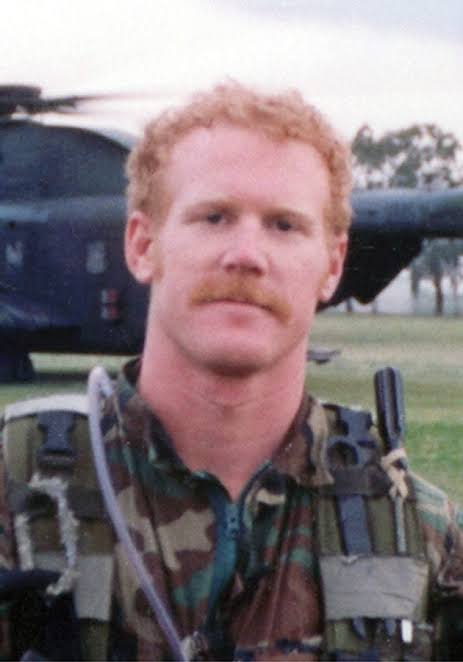
John Allan Chapman was born July 14, 1965, in Springfield, Massachusetts, and grew up in Windsor Locks, Connecticut. He graduated from Windsor Locks High School in 1983 and joined the Air Force on September 27, 1985, as an information systems operator.
He did not stay behind a desk. He volunteered to become a combat controller. Combat controllers are airmen who go into battle with special operations teams and talk to the aircraft overhead. They call in airstrikes, guide helicopters in, and turn airpower into something the men on the ground can use. Chapman became a team leader at the 24th Special Tactics Squadron, an elite Air Force special tactics unit.
In March 2002, he was attached to a small reconnaissance team from SEAL Team 6. Its call sign was Mako 30. His was Mako 30 Charlie.
The Mountain
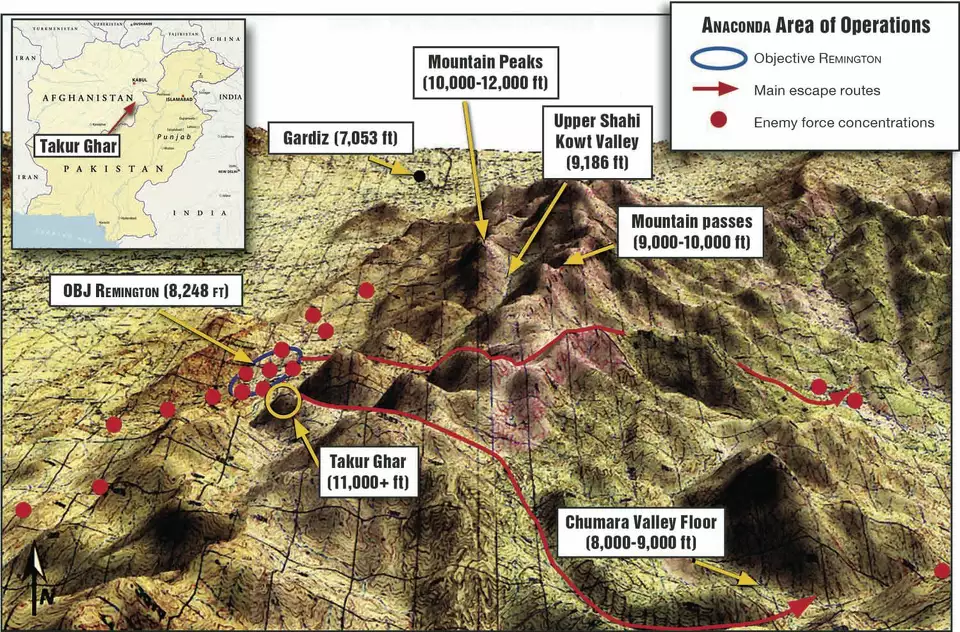
The battle was part of Operation Anaconda, a push to trap and destroy the last large group of al-Qaida fighters in eastern Afghanistan. They were dug into the Shahikot Valley.
Three special operations recon teams, two from Delta Force, commonly referred to as CAG, and one from SEAL Team 6, officially known as DEVGRU, had already slipped into the high ground around the valley. They were calling in ground strikes while remaining undetected. It was working.
There is some confusion on the actual chain of command here, but Delta Force and SEAL Team 6 answered to the same command, Task Force 11, part of the Joint Special Operations Command. Its commander was an Air Force officer, who ran the task force from a safe distance on an island off the coast of Oman. According to Sean Naylor, the SEALs had seen little action in Afghanistan and wanted in.
On the night of March 3, Trebon told Lt. Col. Pete Blaber, the Delta officer running the recon effort, that two SEAL teams would go into the valley and would not answer to him. Blaber warned that the plan was needlessly risky but was overruled. The SEAL officer put in charge, Lt. Cmdr. Vic Hyder, did not consult Blaber and switched to a radio channel Blaber could not reach. Cutting Blaber off the radio mattered.
Once the SEALs switched channels, they reported only up their own chain of command. Blaber and his team, the people who had studied the valley for weeks, could no longer see what the SEALs were doing, and the SEALs could no longer hear what Blaber's people knew. On a night when every scrap of information counted, the two groups who needed each other most had stopped talking.
One of the two SEAL teams was headed for Takur Ghar. At 10,469 feet, it was the highest ground over the valley. For days, Delta Force had led the recon effort that made Anaconda work. Its teams had crept into the high ground, stayed hidden, and called in the airstrikes that kept the operation from falling apart. They knew the terrain, and they knew the rule about never landing on the spot you plan to watch from. Delta Force was also the unit specifically built for rescue, which is exactly what this mission would turn into within hours. It was already on the ground in the Shahikot, and now it had been cut out of the call because some SEALs were bored and wanted in on the action.
Everything that followed came from those choices: the refused delay, the flight straight to the peak, and the helicopter setting down in the middle of an al-Qaida position.
Mako 30 had eight men: six SEALs, an Army signals intelligence specialist, and Chapman. Senior Chief Britt Slabinski was in charge. The plan was to land about 1,300 meters east of the peak and climb up in the dark. Then came delays the team could not control. Slabinski asked to push the mission back 24 hours. His bosses at Bagram said no.
Short on darkness, Slabinski chose to fly straight to the top. That broke one of the oldest rules in reconnaissance: never land right on the spot you plan to watch from. An armchair civilian could even follow that logic. An AC-130 gunship had flown over hours earlier and reported the peak empty. It was not, in fact, empty.
The Rescue That Went Wrong
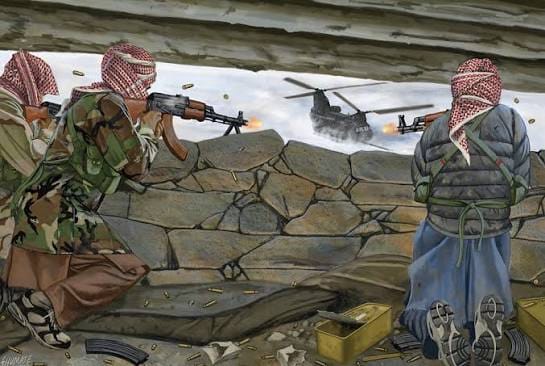
Around 1 a.m., an Army MH-47E Chinook called Razor 03 set down on the peak. Al-Qaida fighters immediately opened up with machine guns and rocket propelled grenades. A bullet cut a hydraulic line. As the helicopter pulled away, Petty Officer 1st Class Neil Roberts, after whom the ridge is now named after, either fell or jumped out, dropping about ten feet into deep snow.
The pilot could not turn back. The crew hand-pumped hydraulic fluid to keep the aircraft in the air until it ran dry, then crash-landed a few miles away. On the ground, Chapman got on the radio and started calling in air support and a rescue for Roberts.
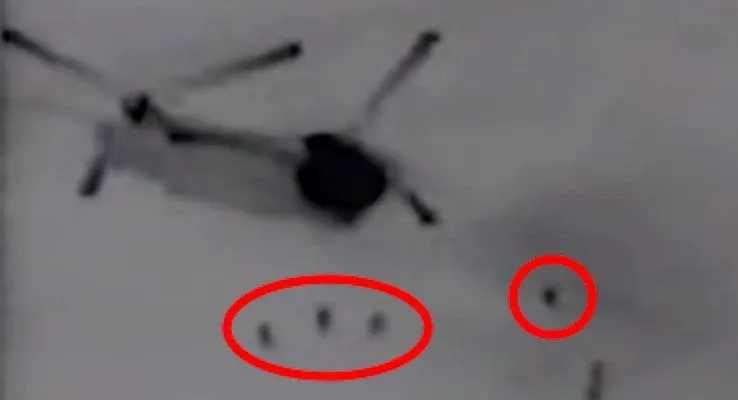
It took 45 minutes for another helicopter to pick them up. At a base in Gardez, Slabinski, Chapman, and four others boarded a third Chinook, Razor 04, and flew back to the peak they had just been shot down on.
They did not know it yet, but Roberts had already been killed, about half an hour before they got there.
Alone
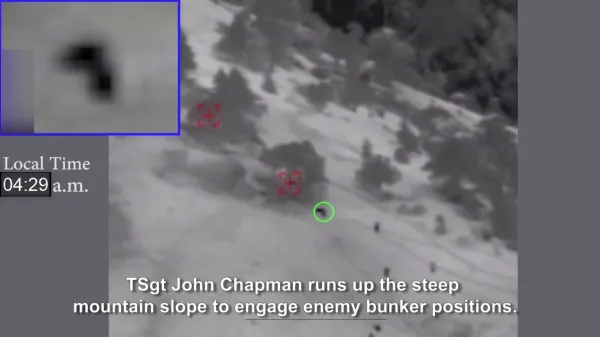
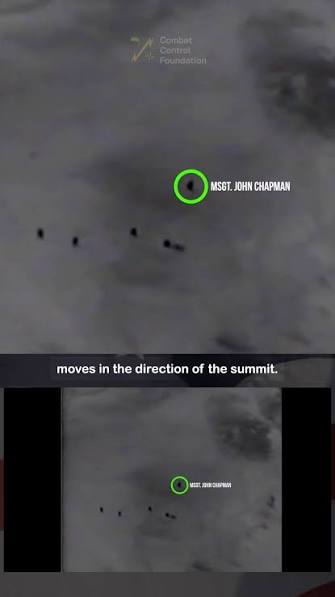
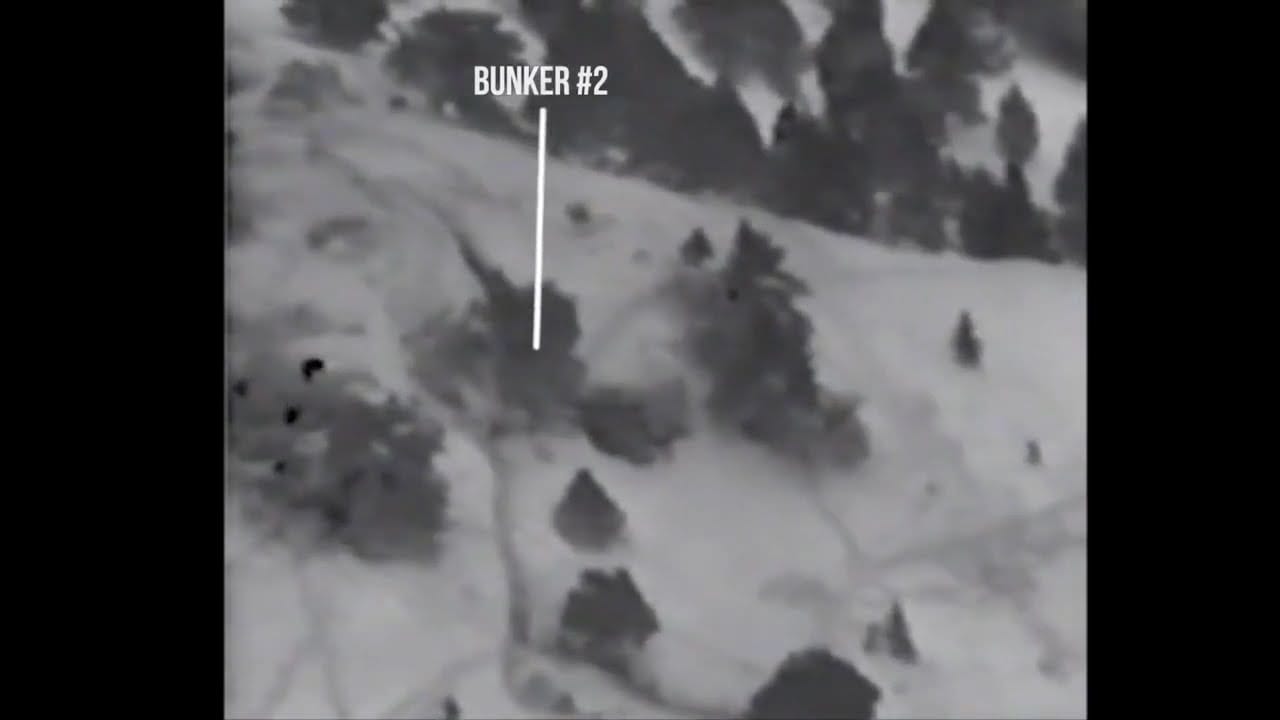
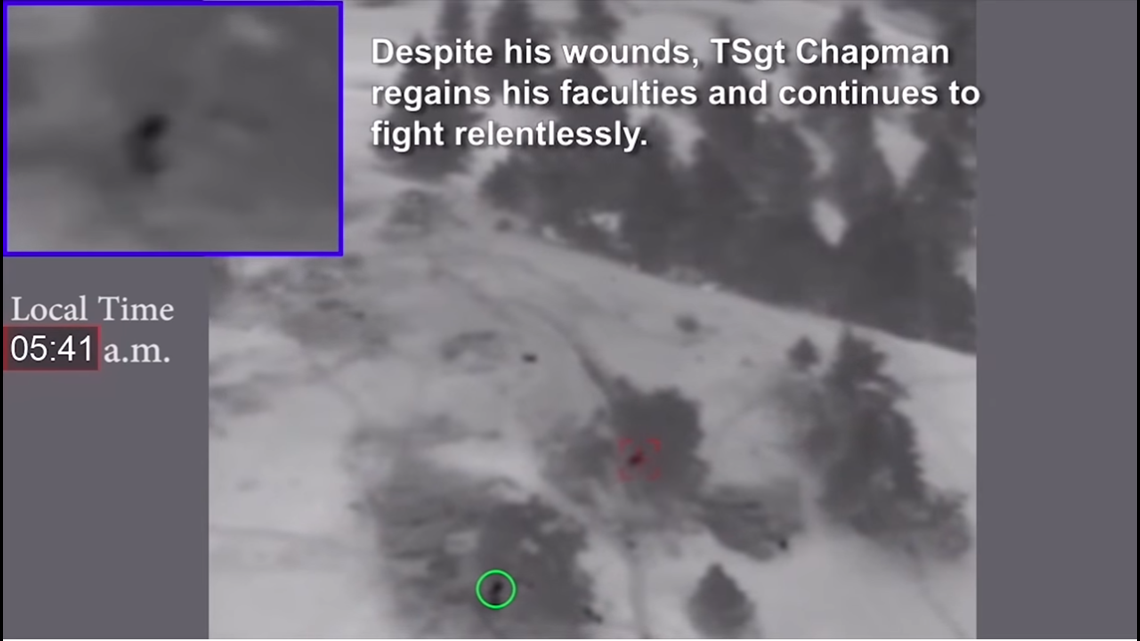
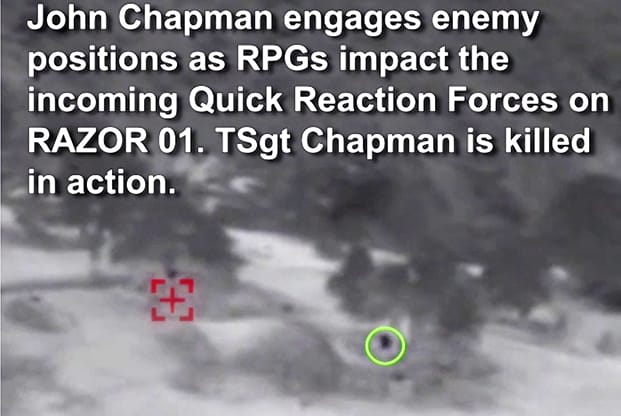
A Predator drone was filming the whole thing in infrared.
The six men jumped into the snow under heavy fire. Chapman went straight uphill toward a bunker. He killed the two fighters inside from about ten feet away. Then a machine gun opened up from a second bunker roughly 12 meters off. Chapman moved into the open to take it on. He was hit and went down.
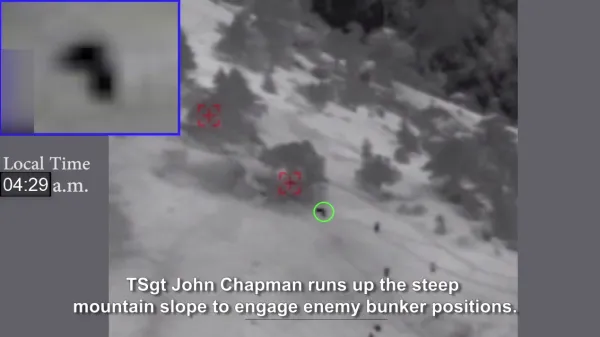
Another SEAL was badly wounded. The team was taking fire from three directions in the dark, in snow up to five feet deep. Slabinski decided they had to get off the top or be wiped out. Mako 30 pulled back to a rocky overhang below the peak. Hours later, after a hard move of about a mile across broken ground, a helicopter picked them up.
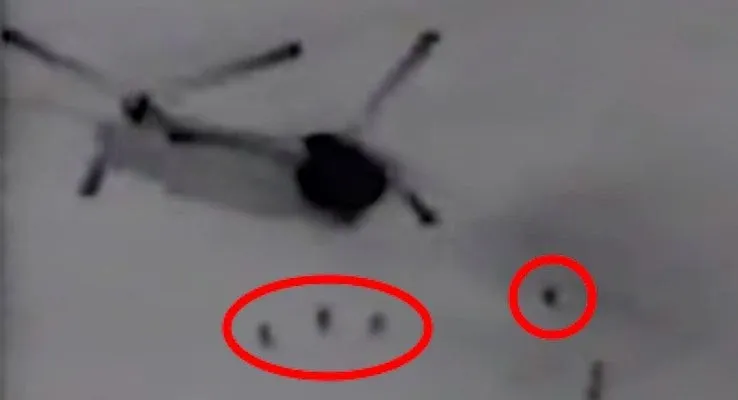
The Predator drone kept watching. And it kept seeing a gunfight on top of the mountain, where no American was supposed to be alive. Yet, the footage showed one man continuing the fight alone at the top of that snow-covered mountain.
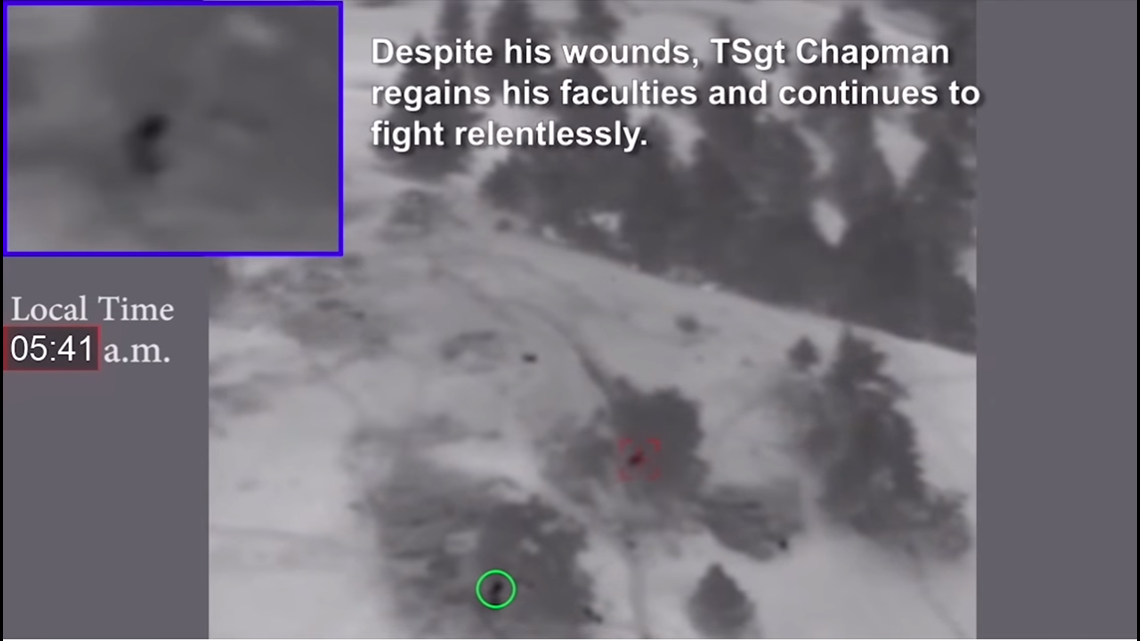
The Air Force says that fighter was Chapman. The official account says he regained his senses and fought on for more than an hour against multiple enemy fighters. The video shows him killing at least one fighter with rifle fire and a second in hand-to-hand combat.
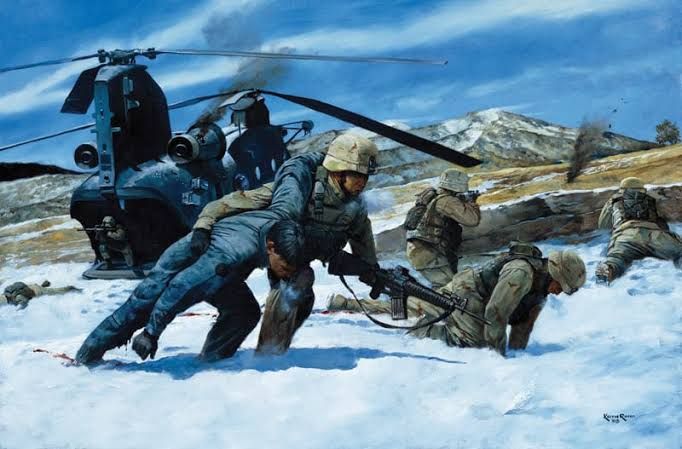
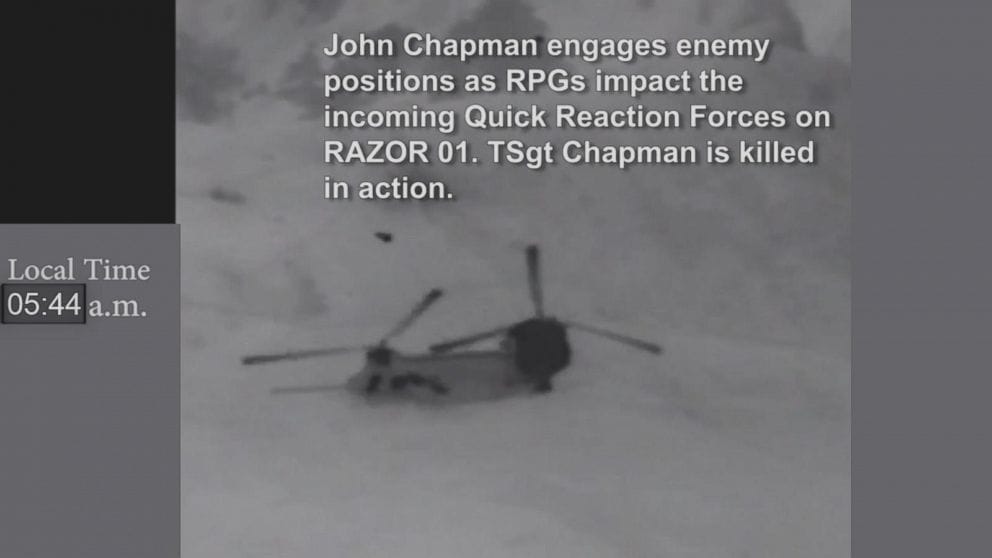
Meanwhile, a quick reaction force (QRF) of Army Rangers was headed for the peak. As the first Ranger Chinook came in, Chapman came out from cover to fire on the enemy guns aimed at it. It exposed him. He was shot again, and this time he did not get back up.
The Rangers
The quick reaction force came from the unit I would join myself, just 6 years later. In came 1st Battalion, 75th Ranger Regiment, led by Capt. Nate Self. They loaded onto two Chinooks, Razor 01 and Razor 02, with confusing orders. Nobody could tell them for sure whether they were securing a downed helicopter or recovering missing men.
Razor 01 flew straight into the same kill zone. Around 6:10 a.m., it was shot down on the peak. Sgt. Phillip Svitak, the door gunner, was killed. Three Rangers, Cpl. Matthew Commons, Sgt. Bradley Crose, and Spc. Marc Anderson were killed almost as soon as they came off the ramp. The survivors dragged the wounded behind the wreck and held on.
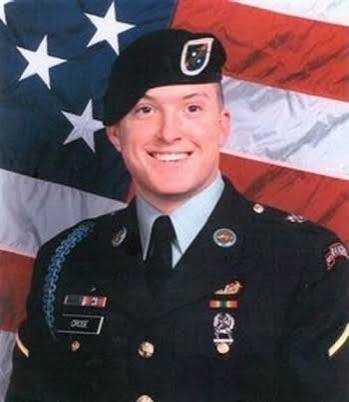
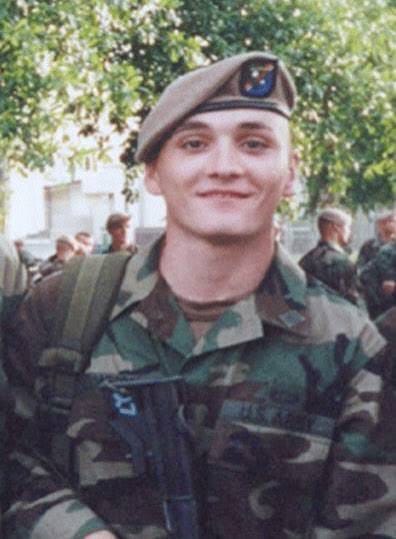
Razor 02 landed farther down the mountain. Its Rangers were told the climb would take 45 minutes. In thigh-deep snow and thin air, it took two hours. They reached the top around 10:30 a.m.
At 10:45, two machine gun teams opened up, and six Rangers charged the enemy positions through knee-deep snow, firing and throwing grenades. Near a boulder about 40 yards from the downed helicopter, Sgt. Eric Stebner found an American lying face down in the snow. It was Neil Roberts. A few yards away was the bunker. Inside, the Rangers found the body of John Chapman, lying between two dead enemy fighters.
By 11 a.m., the Rangers held the mountain. They counted eight enemy dead. One of them was wearing Roberts' jacket.
The fight was not over. Around 11:15, fighters on a knoll to the south opened fire on the casualty collection point. Senior Airman Jason Cunningham, an Air Force pararescueman treating the wounded, was shot in the pelvis. Navy jets bombed the knoll until the shooting stopped.
Then came the waiting. The men on the ground told headquarters again and again that the landing zone was safe, and that the wounded would die without a medevac. Commanders who had just learned, too late, not to land helicopters in the middle of an enemy kill zone now refused to send one in daylight, even though the men on the ground had cleared the mountain and were telling them it was safe. The helicopters finally came at 8:15 p.m. One took the wounded. Another took the dead: Roberts, Crose, Svitak, Chapman, Anderson, Commons, and Cunningham. Only days earlier, Cunningham had talked his command into letting pararescuemen carry blood in their kits. That blood kept him alive through the afternoon, but not long enough. He died at 6:10 p.m. He was 26 and had been a pararescueman for eight months.
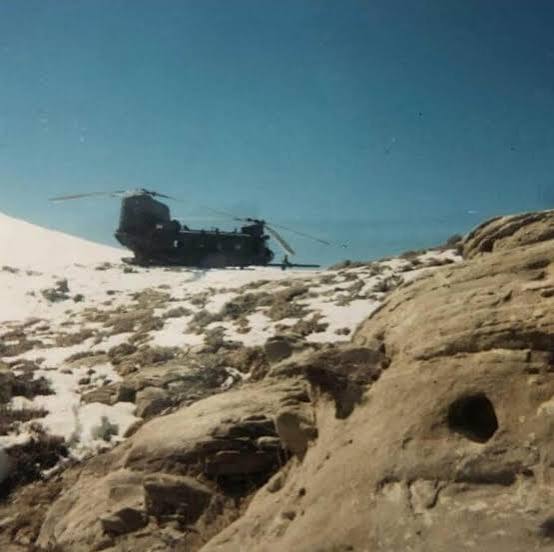
Within an hour, every American, living and dead, was off the mountain now called Roberts Ridge. Chapman died drawing fire away from the Rangers' helicopter. The Rangers were the ones who carried him home.
The Ranger Creed says: "I will never leave a fallen comrade to fall into the hands of the enemy." On Takur Ghar, the Rangers kept that promise for two men who weren't even Rangers, but they embodied the Ranger creed, nonetheless.
Who Left Him There
The honest answer takes longer, but in the end, they are just more words pointing at Mako 30, and by extension, SEAL Team 6.
Nobody on that team has been shown to have left Chapman on purpose. But nobody fucks up in combat on purpose. An Air Force special tactics officer who worked on the Pentagon's investigation told reporters in 2018 that the team had come within 15 to 18 feet of Chapman's unconscious body. That was as close as they could get in the snow, under fire, at night. Through night vision, the laser on Chapman's rifle had stopped moving. They took that as a sign he was dead.
Slabinski's own account has shifted over the years. He once described seeing the laser on Chapman's rifle rising and falling with his breath. In 2016 he told The New York Times that as the team pulled back, he crawled over Chapman and decided he was dead. In that 2016 interview, he also admitted he might have made a mistake under fire and said he was still haunted by it. In 2018, he told CBS News that as his team pulled back, he crawled over the top of Chapman looking for any sign of life and found none. He was haunted enough to sit on the board of a museum that gave him a giant display, while Chapman got a photo and a video on repeat. Not even a plaque. But Naylor, who reported that Times story, later wrote that the drone footage does not show Slabinski crawling over anyone. Based on everything available, the body Slabinski thought was Chapman's appears to have been Roberts. The drone footage also showed that Slabinski did see Chapman go down. According to the Pentagon's investigators, the team got within 15 to 18 feet of him and watched through night vision until the laser on his rifle stopped moving. But there is no evidence Slabinski ever got close enough to check whether Chapman was alive. In 2018, members of Delta Force and the Rangers told Fox News that Slabinski left a man behind and made a costly mistake by landing so close to the objective.
Days before his own Medal of Honor ceremony in 2018, Slabinski told Fox News flatly: "we left no one behind." In the same interview, he said he was never more than 20 to 30 feet from where Chapman lay. Of course, the Pentagon later concluded Chapman was still alive. So, he did leave someone behind. He has also credited Chapman with saving his team and supported Chapman's medal as he attended Chapman's ceremony.
There is a chain above Mako 30, too. Officers at Bagram who cut the Delta commander out, which is one of the most irresponsible, glory chasing mistakes of the whole debacle. Bosses who refused a 24-hour delay. Faulty intelligence that called the peak empty. A command center that sent the Rangers into the same landing zone that had already crippled two helicopters. All of that explains how Mako 30 ended up on that mountain. None of it explains why Mako 30 came off it without him.
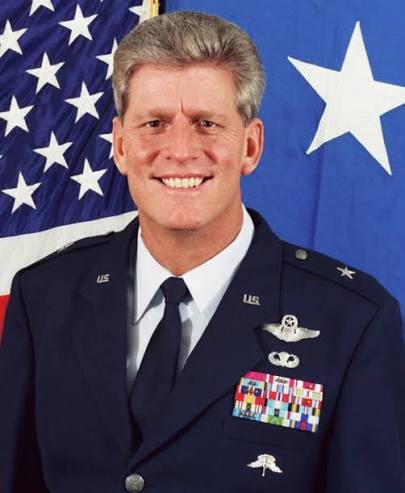
Pete Blaber, the Delta commander who was cut out, later said the SEALs did raise concerns about the mission and were overruled from above. The task force running the operation from Bagram was commanded by Brig. Gen. Gregory Trebon, an Air Force general. In a 2026 interview, Blaber put the deaths on Takur Ghar on what he called a disconnected chain of command.
The dispute is not fully settled. The Navy's special warfare command never accepted the Air Force's version, and some still argue about what the grainy footage can prove. But the Pentagon reviewed it for years and signed off. The official record now says Chapman lived, fought alone, and died protecting the Rangers coming to get him. The record also supports Mako 30 landing, engaging, and leaving Chapman behind.
The Long Road to the Medal
After the battle, Chapman received the Air Force Cross after his death. He was the first combat controller ever to earn it. Even then, some on his award board believed he deserved the Medal of Honor. For more than a decade, that is where it sat.
In January 2016, Defense Secretary Ash Carter ordered the services to review their top valor awards from Iraq and Afghanistan to see if any should be raised. Air Force Secretary Deborah Lee James had her special operations command dig into old cases. Chapman's was the obvious one.
The problem was proof. The Medal of Honor requires proof beyond a reasonable doubt, and that has always meant eyewitnesses. Nobody saw Chapman's last hour. Nobody except a drone. Using newer technology, an Air Force team enhanced the Predator video and combined it with footage from an AC-130H gunship. The service argued the video was as good as an eyewitness, maybe better, since cameras do not misremember. James approved the nomination in 2016. The New York Times broke the story that August.
Then, of course, the SEALs pushed back. Two former defense officials told CBS News the SEALs argued against the award because they could not accept any suggestion that SEALs had left a man on the battlefield. The Air Force's case meant a SEAL Team 6 team did leave a living man behind. Naval Special Warfare Command was led at the time by Rear Adm. Tim Szymanski, who had been in the Bagram operations center the night of the battle. According to Naylor, the command waged an unprecedented campaign to block the upgrade. The Pentagon's investigation stretched to 30 months.
The Deal
The standoff broke with a compromise. Chapman's medal could move forward, but only if Slabinski's Navy Cross was upgraded to a Medal of Honor too. Chapman's citation was also split in two: one part public, one part classified.
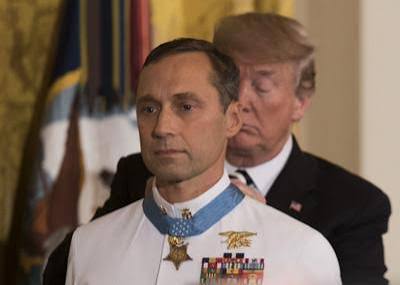
Chapman's family was told in March 2018 that his medal was coming. On May 24, 2018, President Trump gave Slabinski the Medal of Honor at the White House.
Three months later, on August 22, 2018, Trump presented Chapman's Medal of Honor to his widow, Valerie Nessel. It would have been their 26th wedding anniversary. The next day he was added to the Pentagon's Hall of Heroes, and the day after that he was promoted to master sergeant after his death.
He was the first airman to receive the Medal of Honor since Vietnam, and only the 19th since the Air Force was created in 1947. His is the first Medal of Honor backed by video of the act itself.
From the mountain to the medal: sixteen years, five months, and eighteen days.
Still Fighting
The National Medal of Honor Museum opened in Arlington, Texas, on March 25, 2025. Slabinski got one of about 200 featured exhibits, full of his personal artifacts, including his field knife, ID tag, and combat trousers. Chapman got a photo and a clip of the drone footage inside a timeline of the medal's history.
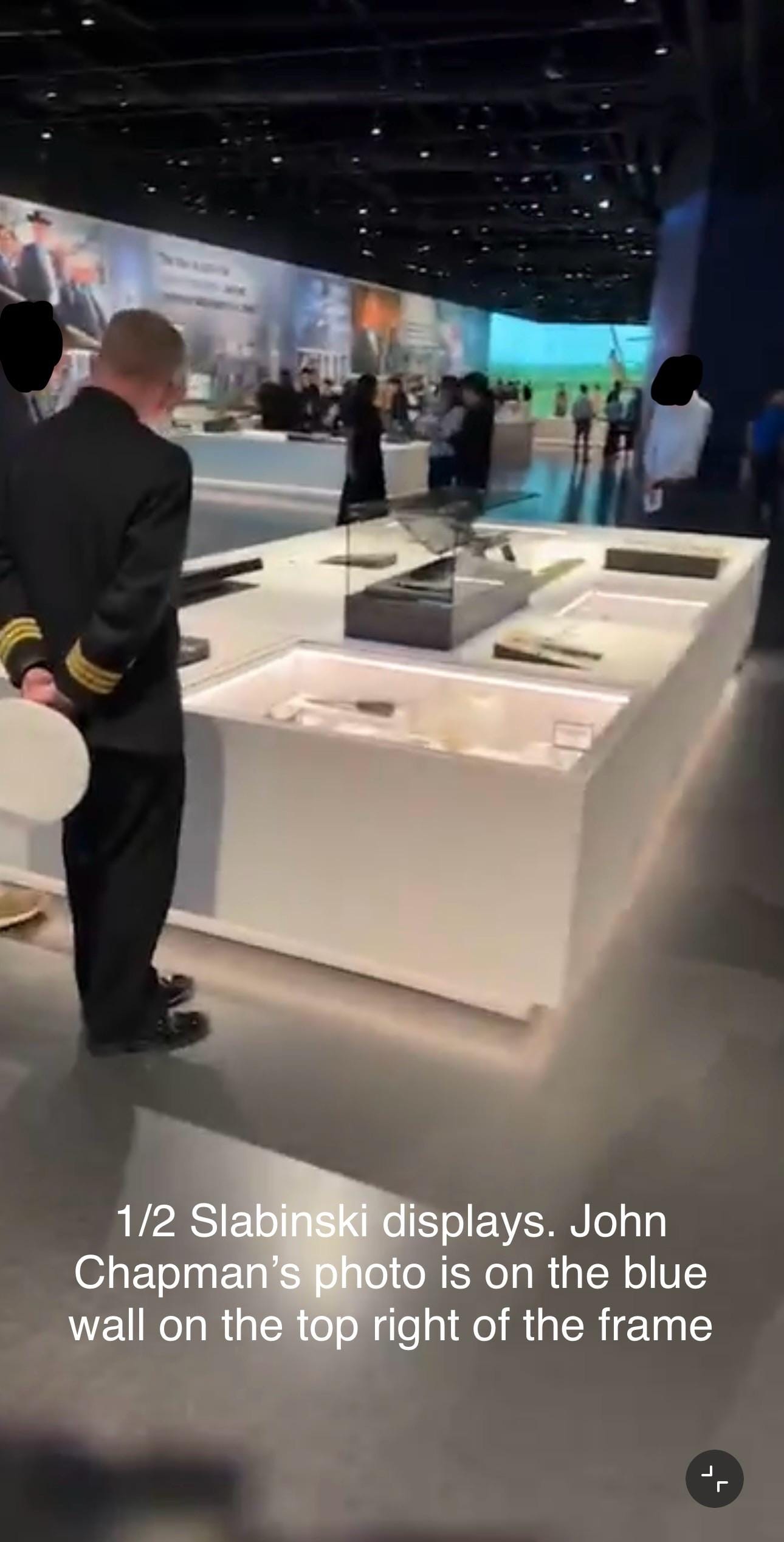
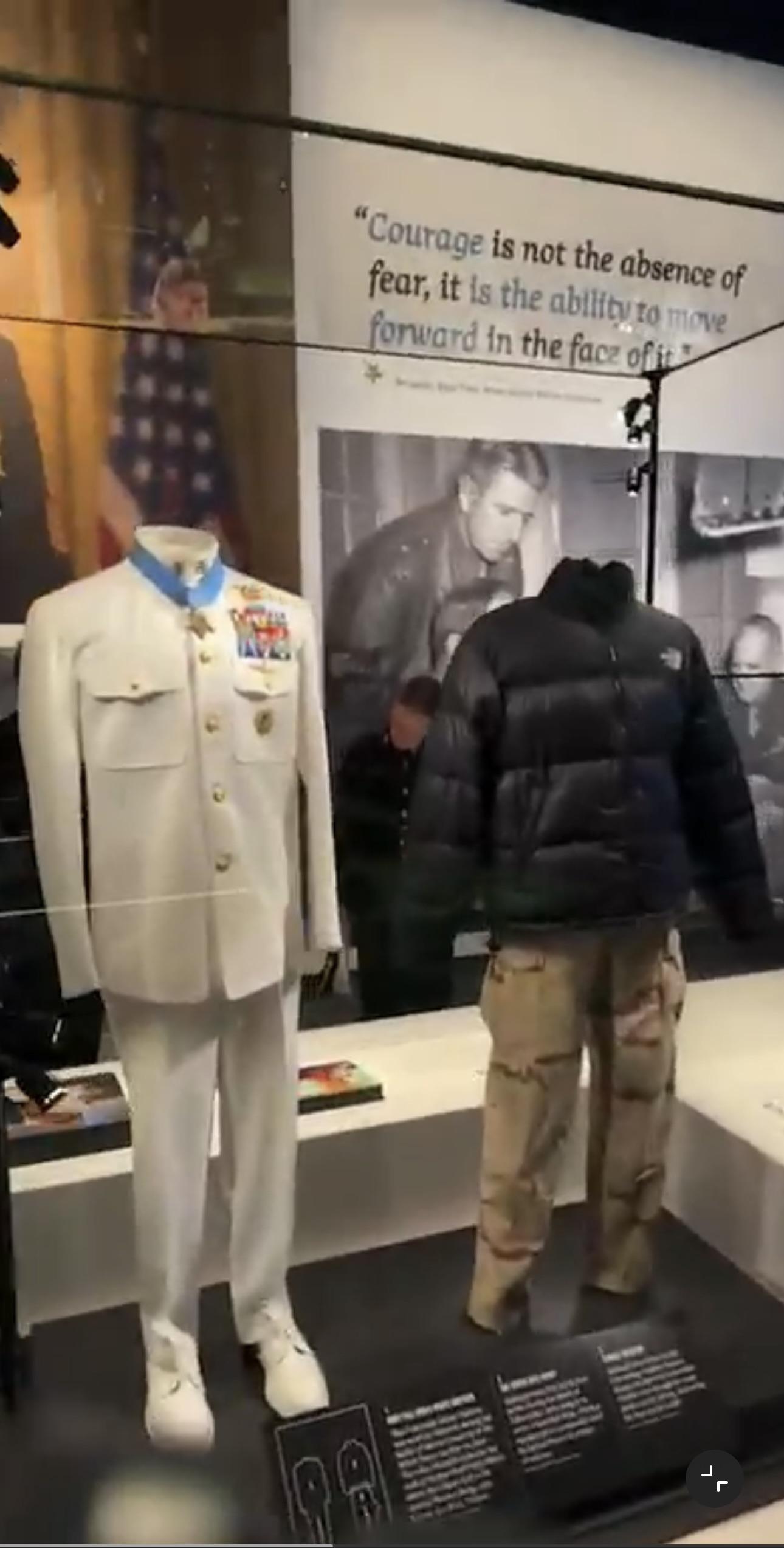
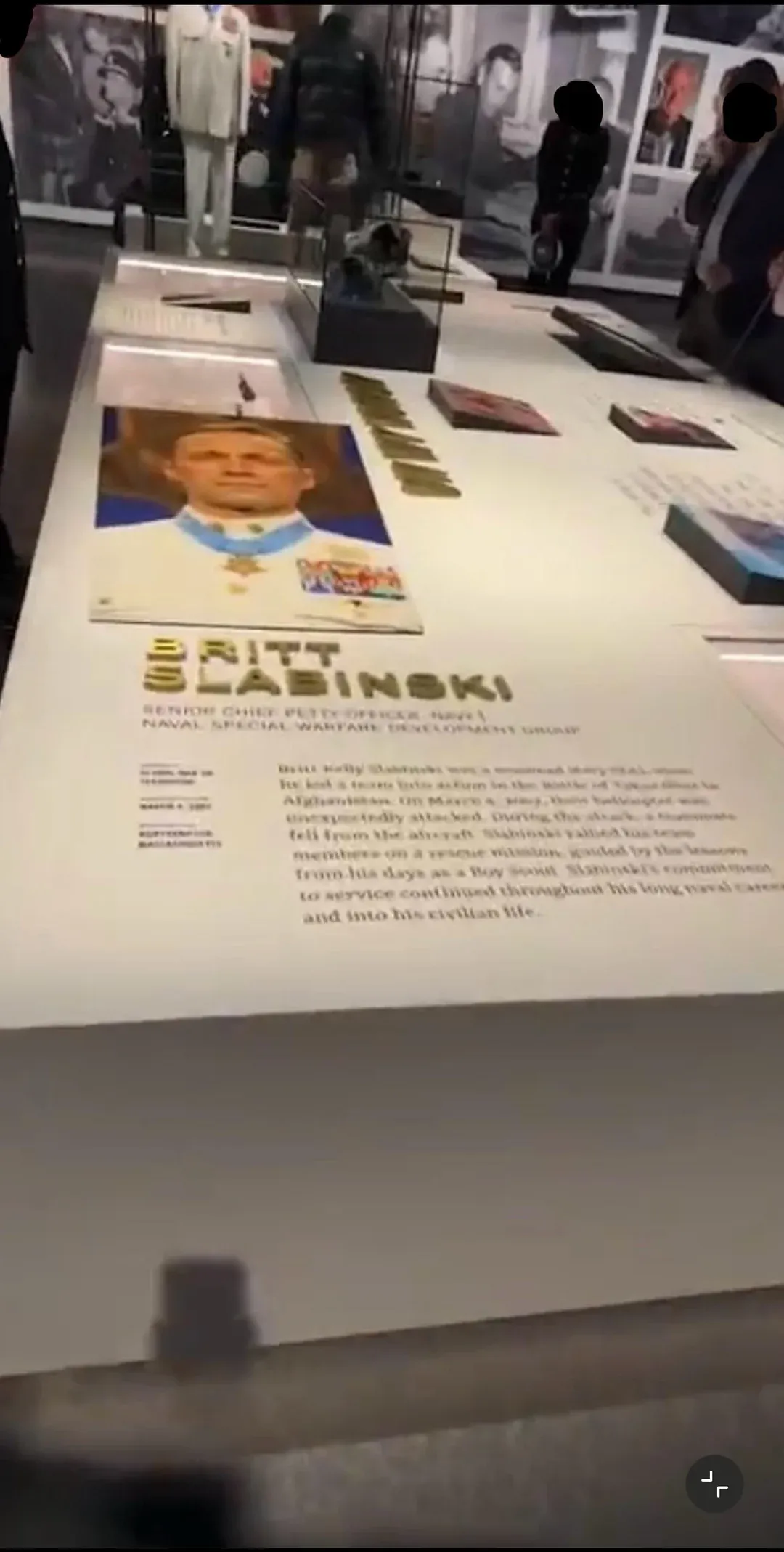
Images of Slabinski's exhbit.
The man who fought alone got a photo and a video clip on a wall about the medal's history. The man who left him there got a full exhibit of his own. I am sure it has nothing to do with Slabinski sitting on the museum foundation’s board since 2018.
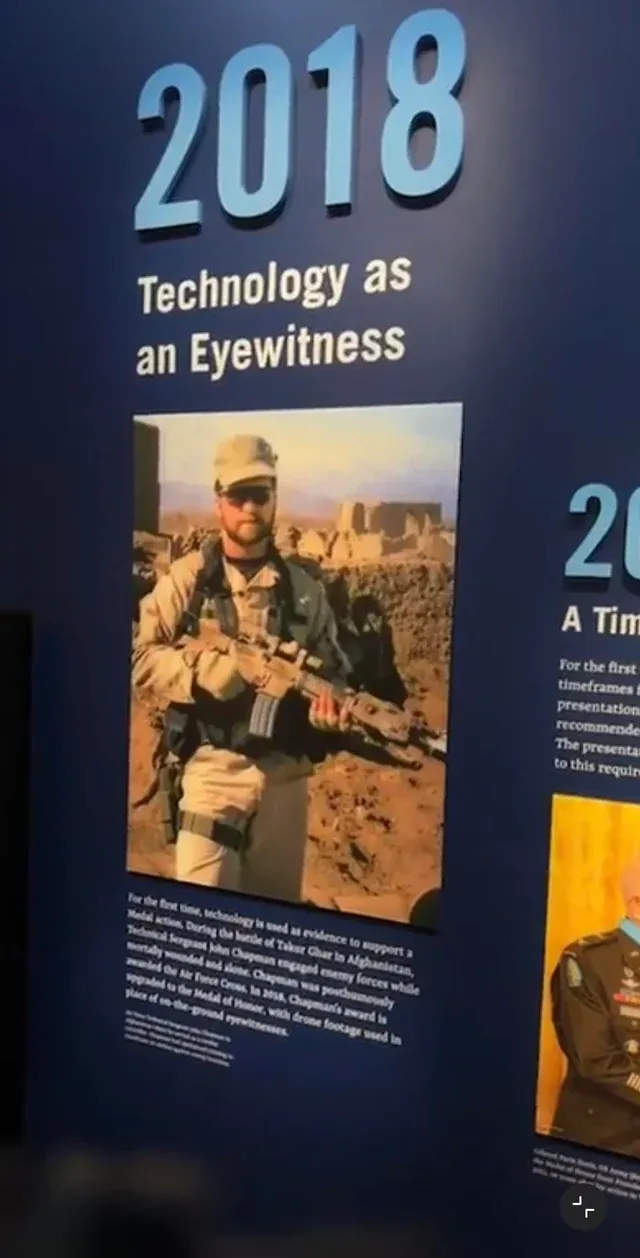
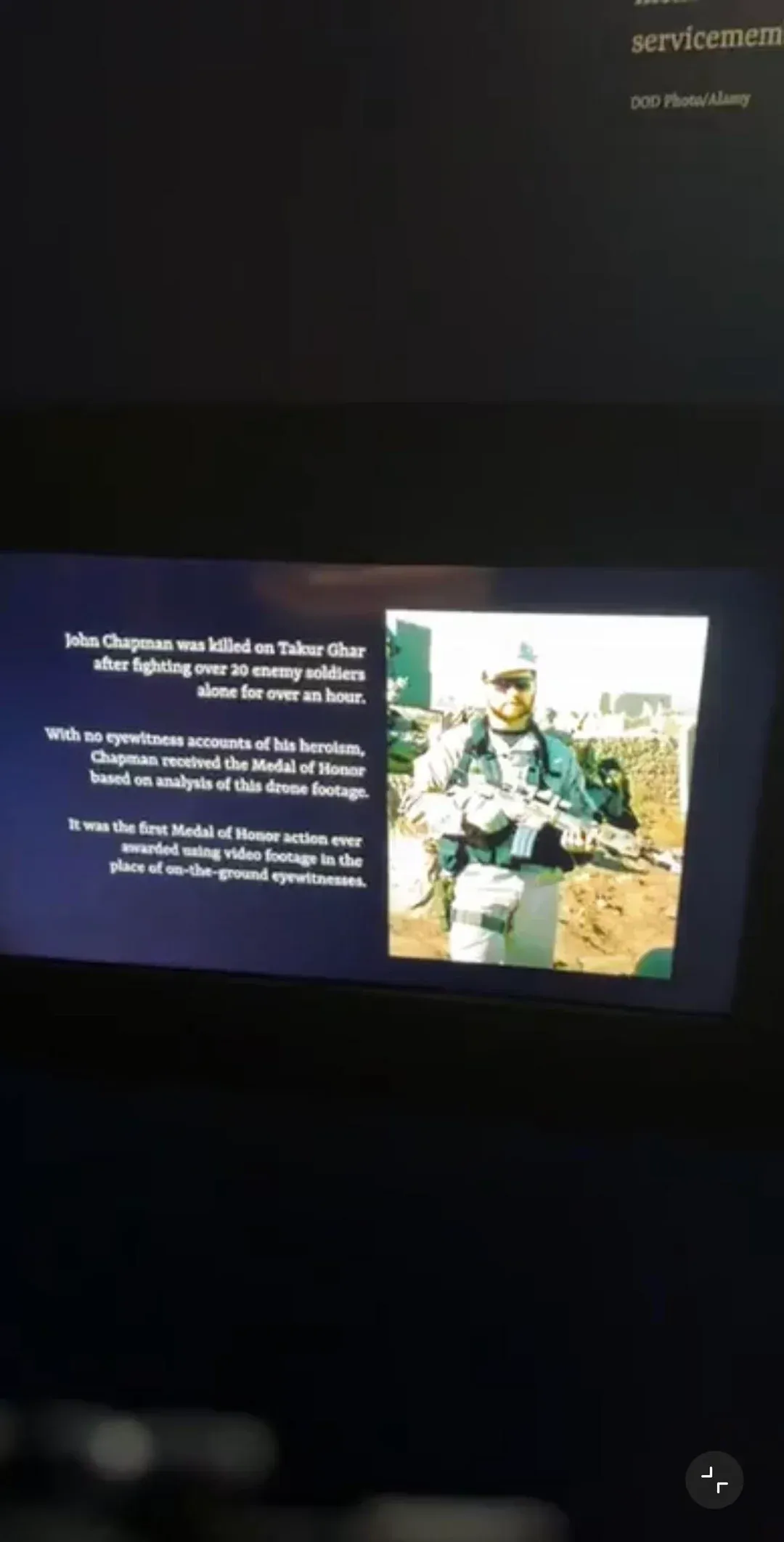
Screenshots taken of Chapman's exhibit in the Medal of Honor museum.
Additionally, Slabinski’s wife is the museum's associate director of recipients and veteran’s relations, the job of working with recipients and their families, including Chapman's.
The museum's president and CEO, Chris Cassidy, is a former SEAL, as are two other influential board members. Asked about the controversy in 2025, Naval Special Warfare said only that the SEALs hold Chapman in high regard as a hero who made the ultimate sacrifice. It did not address its past opposition to his medal.
Chapman's older sister, Lori Longfritz, says museum staff spent more than a year letting her believe her brother would get his own exhibit. They toured her through the building and showed her where it would likely go. She learned otherwise in January 2025, two months before opening. A former museum official told Air & Space Forces Magazine the decision had been made back in late 2022 or early 2023, and said the museum was focused on keeping Slabinski happy. We have to make sure to always keep the Navy SEALs happy. That is, of course, always priority number one.
The museum denies any favoritism. It says Chapman's story ranks in the top quarter of all recipients by word count, that he is one of only 14 with video tied to his individual story, and that his display is permanent. A petition demanding a dedicated Chapman exhibit passed 25,000 signatures.
In October 2025, Adam Driver, a Marine veteran, was cast to play Chapman in a feature film. Hollywood, it turns out, is faster than the Pentagon.
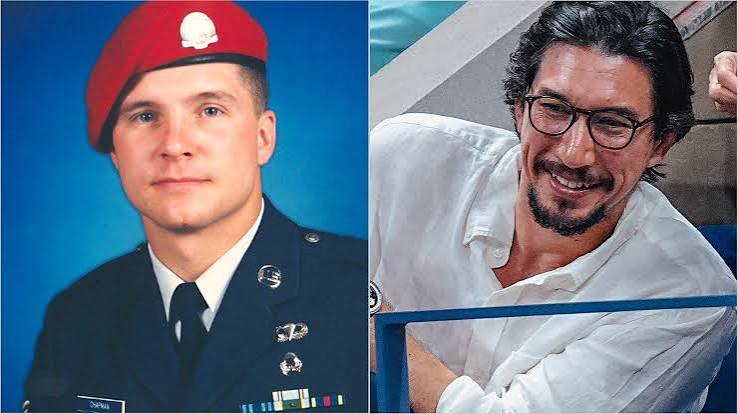
John Chapman went back up that mountain for a teammate. When his own team came off it, he stayed and kept fighting for the men still coming. The only witness was a camera in the sky. It took the country sixteen years to believe what it showed. Some people still do not want to.
The Grounded stands behind every factual claim it publishes with a $100 accuracy guarantee. Find an error of fact and tell us. If you are right, we pay.
Sources
Air & Space Forces Magazine, Sean Naylor, "Battle of Takur Ghar Controversy Continues" (April 4, 2025): https://www.airandspaceforces.com/article/battle-of-takur-ghar-controversy-continues/
The White House (archived), "President Donald J. Trump to Award the Medal of Honor" (July 27, 2018): https://trumpwhitehouse.archives.gov/briefings-statements/president-donald-j-trump-award-medal-honor-4/
National Museum of the U.S. Air Force, "Battle at Takur Ghar: Roberts Ridge": https://www.nationalmuseum.af.mil/Visit/Museum-Exhibits/Fact-Sheets/Display/Article/196791/battle-at-takur-ghar-roberts-ridge/
Military.com, "MoH Recipient John Chapman Wasn't Left Behind by His Team, Family Says" (Aug. 22, 2018): https://www.military.com/daily-news/2018/08/22/moh-recipient-john-chapman-wasnt-left-behind-his-team-family-says.html
Military.com, "Stop Infighting Around SEAL's Medal of Honor, Awards Expert Says" (May 10, 2018): https://www.military.com/daily-news/2018/05/10/stop-infighting-around-seals-medal-honor-awards-expert-says.html
Fox News, "Trump awards Medal of Honor to Navy SEAL for controversial mission in Afghanistan": https://www.foxnews.com/politics/trump-awards-medal-of-honor-to-navy-seal-for-controversial-mission-in-afghanistan.amp
Air Force Times, "Congressman: TSgt Chapman deserves the Medal of Honor" (Aug. 29, 2016): https://www.airforcetimes.com/news/your-air-force/2016/08/29/congressman-tsgt-chapman-deserves-the-medal-of-honor/
Union Leader, "Medal of Honor awarded, but frustrations remain": https://www.unionleader.com/news/human_interest/medal-of-honor-awarded-but-frustrations-remain/article_0a0059d0-f8bb-57c9-bc34-6f1110d97ba2.html
Rep. John B. Larson, press release (Aug. 22, 2018): https://larson.house.gov/media-center/press-releases/larson-honors-memory-technical-sergeant-john-chapman-medal-honor
U.S. Air Force, "Bagram remembers Operation Anaconda's fallen" (2015): https://www.af.mil/News/Article-Display/Article/579073/bagram-remembers-operation-anacondas-fallen/
CBS News, "Sister of Master Sgt. John Chapman angry over National Medal of Honor Museum's representation" (2025): https://www.cbsnews.com/news/master-sgt-john-chapman-national-medal-of-honor-museum-controversy/
Stars and Stripes, "Critics say Medal of Honor museum shortchanges airman's achievements" (Feb. 10, 2025): https://www.stripes.com/veterans/2025-02-10/medal-of-honor-museum-petition-16783333.html
Military Times, "Museum exhibit controversy reignites airman's Medal of Honor dispute" (March 4, 2025): https://www.militarytimes.com/news/your-military/2025/03/04/museum-exhibit-controversy-reignites-airmans-medal-of-honor-dispute/
National Medal of Honor Museum, memorandum on recognition of John Chapman: https://mohmuseum.org/pressroom/memorandum-recognition-of-john-chapman
Military Times, "Adam Driver set to star as Medal of Honor recipient John Chapman" (Oct. 7, 2025): https://www.militarytimes.com/veterans/military-history/2025/10/07/adam-driver-set-to-star-as-medal-of-honor-recipient-john-chapman/
Wikipedia, "John A. Chapman": https://en.wikipedia.org/wiki/John_A._Chapman
Member discussion