Karma’s Most Wanted #1: Peter Thiel
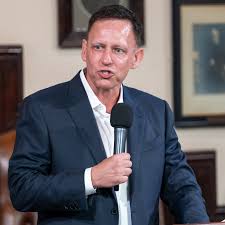
The man warning about the Antichrist while helping build the machine.
By Matt Stone
Peter Thiel is not just a billionaire investor with eccentric theories. He is the co-founder and chairman of Palantir Technologies, a company whose software is used by governments, intelligence agencies, and militaries to analyze data, identify patterns, and support decisions at scale. That matters because Palantir does not simply store information. It helps institutions decide what matters inside that information. Its platforms are built to integrate data, generate insight, and support action in environments where decisions carry real consequences. That means Thiel is not commenting on power from the outside. He is operating inside it.
In leaked 2025 lectures, Thiel framed modern politics through the concept of the Antichrist. Not as a literal figure, but as a type. According to reporting, he described the modern Antichrist as a force that would emerge through fear, particularly fear of catastrophe, and would justify control in the name of preventing disaster.
He referred to critics of technology and AI, including Greta Thunberg, as “legionnaires of the Antichrist.” This was not a joke. It was a framework.
On its own, this could be dismissed as philosophical or theological speculation.
It is not.
Thiel is not just interpreting the world. He is helping build systems that structure how the world is interpreted. Through Palantir, he is tied to tools used in intelligence analysis, military operations, large-scale data integration, and risk identification. These systems do not need to make final decisions to matter. They shape what gets seen, what gets flagged, what is treated as risk, and what enters the field of action before a human being ever steps in.
That is the contradiction at the center of the piece.
Thiel warns about a future in which fear of catastrophe justifies centralized control and limits human freedom.
At the same time, Palantir markets systems designed to increase visibility, coordinate action, and operate under conditions of uncertainty and risk. This is not a claim about intent. It is a structural observation.
The logic he warns about, systems acting preemptively based on perceived risk, is not hypothetical. It is already operational.
What makes this significant is not the rhetoric alone. It is the convergence of theological language, technological systems, and institutional power.
When those combine, something shifts. Decisions begin to feel necessary, urgent, and difficult to question, not because they have been fully explained or publicly justified, but because they are framed as unavoidable.
The public is told that the system sees more than they can see, processes more than they can process, and therefore should be trusted. By the time someone wants to ask why a decision was made, the answer is often no longer accessible. The classification has already happened. The risk has already been assigned. The system has already moved.
This is what people should pay attention to.
The modern danger is not always overt tyranny. More often, it is the quiet growth of systems that arrive already wrapped in the language of necessity, safety, efficiency, and foresight.
Thiel’s private lectures matter because they reveal that theological imagination is not sitting off to the side of technological power. It is inside it, helping define threats, identify enemies, and frame what kind of future must be prevented at all costs.
When one of the most influential figures in modern tech casts critics as “legionnaires of the Antichrist” while remaining tied to decision infrastructure used by powerful institutions, that is not just weird. It is a glimpse into how apocalyptic language and administrative power can begin to reinforce one another.
Peter Thiel warns that fear can build the machinery of control. He just seems oddly comfortable standing next to the machine.
Member discussion