
The Rescue That Wasn't: How Trump Used Downed Pilots to Cover a Failed Uranium Heist
By Matt Stone | The Grounded
Quick question. What's the name of either pilot rescued from Iran during that rescue mission a few weeks ago?
Take your time.
You don't know. Neither does anyone outside the Pentagon. No names. No faces. No homecoming press conference. For what the Trump administration called "one of the most daring Search and Rescue Operations in U.S. History," there is a striking absence of the human story that normally accompanies these moments. No family interviews. No call sign beyond "Dude 44A."
Journalists covering the story noticed. Gulf News reported that "almost nothing is known about his identity"--treating the anonymity itself as newsworthy. They were right to. This is not how these stories go. Francis Gary Powers was named. Scott O'Grady was named. Marcus Luttrell was named. The A-10 pilot shot down over Iraq in 2003 was named. In every comparable rescue in modern American military history, the service member becomes the story. The human being is the point. The nation rallies around a face.
There is no precedent for a publicly celebrated rescue where the rescued person remains anonymous. None. Not. A. Single. One.
That's your first tell.
What We Know
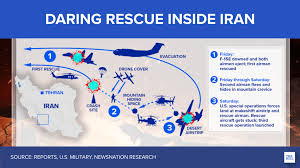
On April 3, 2026, an F-15E Strike Eagle was shot down over central Iran, approximately 50 kilometers south of Isfahan. An A-10 Thunderbolt II sent during the subsequent rescue operation was also downed. The official story is that the U.S. launched a massive CSAR operation to recover the crew. Trump called it historic. The nation moved on.
But look at what was actually deployed.
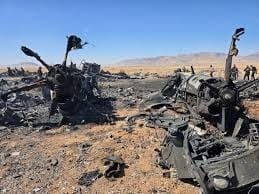
According to Trump's own public statements, the operation involved more than 150 aircraft, fighters, bombers, tankers, and heavy cargo planes. Specifically, multiple C-130 Hercules transport aircraft were part of the force package. Two of them were disabled and destroyed on the ground inside Iran to prevent capture of what the Pentagon called "sensitive equipment."
C-130s carry things. They are not rescue aircraft. You do not need heavy cargo transport to extract one injured aircrew member from a mountainside.
What a Real SAR Mission Looks Like--and What This Wasn't
I served with the 75th Ranger Regiment. On the very first day I arrived at the unit, we practiced airfield seizures--fixed wing exercises. That is the Ranger regiment's primary doctrinal mission, and it is built around one specific aircraft: the MC-130J Commando II. The MC-130J infiltrates the ground team. The Rangers secure the airstrip. Then the heavy aircraft land and move whatever needs to move. That is the sequence. Every Ranger knows it before they do anything else.
Combat search and rescue has its own standard toolkit, and it looks nothing like what was deployed over Isfahan. When a pilot goes down in hostile territory, you send HH-60W Jolly Green II helicopters or HH-60G Pave Hawks for the actual extraction. You send HC-130J Combat King IIs as aerial refueling platforms to extend the helicopters' range. You send A-10s or F-16s for close air support to suppress ground threats around the survivor. The whole package is designed to move fast, stay small, extract one or two people, and get out.
What you do not send is heavy lift cargo aircraft. Standard C-130s exist to move equipment, supplies, and vehicles--palletized cargo, vehicles, artillery pieces. Their role in a personnel recovery mission is essentially zero. And the MC-130J Commando II does not hover over a mountain crevice and pull out a wounded colonel. It lands. It off-loads a ground team. That team secures the area. Then the cargo aircraft come in.
The force package described in this operation--150 aircraft including multiple C-130s and MC-130Js destroyed on the ground to protect "sensitive equipment"--is not a rescue force. It is a ground insertion and extraction package. The sensitive equipment those aircraft were protecting was not rescue gear. Rescue helicopters don't carry anything Iran would want to capture.
What was described, to anyone who has spent time in the Regiment, is a Ranger airfield seizure package that didn't make it off the objective.
For Comparison: What a Real Rescue Looks Like
Yesterday, June 9, 2026, a U.S. military helicopter went down near the Strait of Hormuz. Two crew members were aboard. They were rescued by an unmanned drone boat. Trump told reporters the pilots were fine. CENTCOM confirmed it. No MC-130Js. No C-130 cargo aircraft. No "sensitive equipment" destroyed to prevent capture. No 150-aircraft umbrella. No call signs instead of names. A helicopter went down, a drone boat picked up the crew, and everyone went home.
That is what a rescue looks like. You match the tool to the mission. You don't send cargo planes to pull someone out of a mountain crevice, and you don't send drone boats to seize a uranium stockpile. The April 3 force package wasn't built for what they said it was built for. Yesterday proved it.
Trump's Own Blueprint--Published Two Days Before the Operation
On April 1, 2026--two days before the F-15E went down--the Washington Post published a bombshell: the U.S. military had given Trump a plan to seize nearly 1,000 pounds of highly enriched uranium in Iran that would involve flying in excavation equipment and building a runway for cargo planes to extract the radioactive material. The complex plan was briefed to the president in the week prior, after he personally asked for a proposal, as were its significant operational risks.
There is a documented standard for how major American news outlets handle leaked military plans. When the Trump administration's operation targeting Nicolás Maduro in Venezuela was leaked to both the Times and the Post, neither published it--specifically out of concern for U.S. troops. That is the norm. Outlets sit on sensitive plans when lives are on the line.
The Washington Post published the Iran uranium seizure plan on April 1. The operation launched April 3. Either the Post abandoned its own documented standard and published a live operational plan with troops already in motion--or the plan was already baked, the decision already made, and publication was effectively a controlled disclosure. In either case, the two-day window between blueprint and execution is not a coincidence. It is a timestamp.
Let's review that timeline carefully. Trump requests a uranium seizure plan. The military briefs him on it. The Washington Post publishes it on April 1. On April 3, an F-15E goes down 50 kilometers south of Isfahan--directly over Iran's primary uranium storage site--and a massive force package including cargo aircraft and special operations insertion planes immediately floods into the area.
The blueprint was public before the operation began. Trump told you what he wanted. Two days later, the force package that matches that want showed up over Isfahan.
The uranium stockpile--approximately 440 kilograms enriched to 60 percent purity--is believed to remain intact beneath layers of rubble and reinforced underground infrastructure in some areas more than 300 feet deep, according to Department of Defense assessments. The bombing campaign hadn't reached it. The commando plan was the next logical step. The downed pilot was the cover.
Then Iran's own government handed us the geographic contradiction.
Iran's foreign ministry spokesperson Esmail Baghaei stated on April 6 that the possibility this was "a deception operation to steal enriched uranium should not be ignored at all," and went further--arguing that the claimed location of the pilot in Kohgiluyeh and Boyer-Ahmad province was "a long way" from the locations of the actual U.S. landing attempts.
Read that again. The pilot's reported location and the locations where U.S. forces actually landed did not match. The Iranian government said so publicly and on the record. Iran's military commander made the same point, stating the operation was "planned as a deception and escape mission at an abandoned airport in southern Isfahan under the pretext of recovering the pilot of a downed aircraft."
That is not a conspiracy theory. That is the Iranian foreign ministry, the Washington Post, and the president of the United States all describing the same operation from different angles. The only version that doesn't hold together is the official one.
The Broader Pattern of What Gets Hidden
The downed pilot story didn't happen in a vacuum. It happened inside a war the Pentagon has been systematically misrepresenting to the American public since the first shots were fired on February 28.
The Intercept's analysis placed total U.S. killed or wounded at just under 750. The Pentagon refused to acknowledge that number. CENTCOM provided what one anonymous defense official called "low-ball and outdated figures" and refused to clarify the count of deaths and injuries, something it had done routinely under previous administrations. The same official called it a "casualty cover-up."
The numbers themselves tell the story. When the ceasefire took effect, the official Pentagon tally of dead and wounded was 385. It crept up to 428. Then, without any public explanation, 15 wounded-in-action troops were simply removed from the count, dropping the total back to 413. No statement. No correction. No press conference. Fifteen people erased from the ledger.
Even the death count has gaps. The Pentagon's official list names 13 killed. Missing from it is Maj. Sorffly Davius, a signals officer with the New York Army National Guard who died while deployed to Camp Buehring, Kuwait on March 6. His congressman eulogized him. The Joint Chiefs chairman recognized him among the fallen. The Pentagon's official casualty system did not list him.
Also excluded from the official count: more than 200 sailors treated for smoke inhalation and injuries from a fire aboard the USS Gerald R. Ford before its abrupt withdrawal from the theater.
This is the operating environment in which the "historic rescue" took place. An administration that removes casualties from official counts mid-ceasefire, that refuses to name the dead, that withheld information about the downed planes until Iranian state media forced their hand -- that administration is asking you to take its word that 150 aircraft, two C-130s, and two MC-130J special operations planes went into the heart of Iran's nuclear geography to bring home one colonel whose name they still won't tell you.
The Question That Doesn't Go Away
You still don't know his name.
I served in the 75th Ranger Regiment, whose first lesson is how to take an airfield so that the rest of the armed forces can follow. The Army Rangers were created with one mission in mind: airfield seizures. They are trained to be so quick, violent, and surgical that the enemy doesn't even know what hit them. When I look at the force package that went into Iran on April 3, I recognize the architecture. MC-130Js to put boots on the ground. C-130s staged to land once the strip is secure. A massive air umbrella overhead. That is not how you save a pilot. That is how you seize an objective and extract something heavy.
Trump asked for a uranium seizure plan. The plan called for cargo aircraft and excavation equipment. The "rescue" used cargo aircraft and special operations insertion planes. It happened 50 kilometers from the uranium. The landing zones didn't match the pilot's reported location. Iran said so publicly. And it failed -- the C-130s were destroyed, the MC-130Js were destroyed on the ground, and Iran is still at the negotiating table over a stockpile that was never extracted.
Yesterday a helicopter went down near the Strait of Hormuz. A drone boat picked up the crew. Trump said they're fine. That was the whole story, because that was the whole mission. Downed pilots, recovered by an unmanned boat, with little to no fanfare. That is how rescue missions often operate.
The mission in April failed. The cover story held. And the Pentagon is still counting, and uncounting, the people who were there.
Sources: Washington Post (April 1, 2026); Wikipedia – 2026 United States F-15E rescue operation in Iran; Congressional Research Service report CRS R48887; The Intercept (April 1, April 8, April 22, 2026); Gulf News (April 5, 2026); NBC News / CENTCOM (June 9, 2026); Iran International / CNBC – Trump Truth Social statements on uranium disposal; Associated Press (April 3, 2026)
Matt Stone is an Army Ranger veteran and investigative journalist at The Grounded. He publishes under a $100 accuracy guarantee--if you can prove something wrong, he'll pay.
Member discussion