They Were Never Supposed To Live This Long
By Matt Stone
At dawn on February 23, 2026, dozens of women rode motorcycles through the streets of Tehran toward the central headquarters of Ali Khamenei.
They were carrying grenades.
They threw them into the compound. They engaged security forces in the streets. They did this knowing the regime had already executed eight of their fellow resistance members that month and was hunting for more.
They did it anyway.
Four Years of This
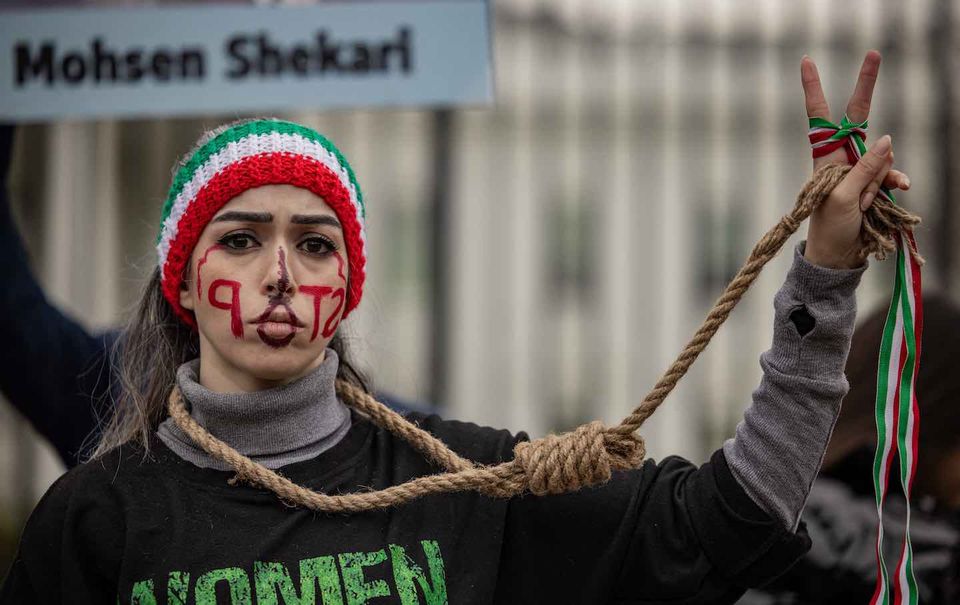
The world first paid attention in September 2022, when Mahsa Amini, a 22-year-old Kurdish woman, died in the custody of Iran's morality police for wearing her hijab incorrectly. Her death ignited mass protests across Iran. After four months of brutal crackdowns that killed more than 500 people and imprisoned over 19,000, the government forced the movement off the streets.
It did not break it.
The resistance went underground, got organized, and got harder. By January 2026, when mass protests erupted again, fueled by economic collapse on top of four years of accumulated fury, the women leading the resistance were not the same women who had taken off their headscarves in 2022. They were operationally disciplined, connected to a network that had survived everything the regime threw at it, and they were done protesting.
The January 2026 uprising was crushed with a massacre. Tens of thousands killed. The regime executed protesters publicly and kept executing them, a 21-year-old karate champion hanged in April, eight resistance members hanged in a single week in May.
The resistance is now in its 120th consecutive week of organized operations.
Who They Are

Zahra Tabari is 68 years old. She holds a master's degree in Sustainable Energy from a Swedish university. She is an electrical engineer. She was arrested in April 2025 after security forces raided her home. Iran's Revolutionary Court sentenced her to death on charges of armed rebellion.

Mahsa Jalilian was 30 years old. She was killed by direct gunfire from regime security forces while intervening to protect civilians during the January 2026 crackdown.

Shiva Esmaeili and Elaheh Fouladi are political prisoners who witnessed a fellow detainee die under suspicious circumstances at Qarchak Prison. They reported it. The regime sentenced them to additional prison time for insulting the Supreme Leader.
These are not anomalies. They are representative of a generation of Iranian women who looked at everything the regime could do to them and decided the price of staying silent was higher.
What the Regime Is Afraid Of
You can measure a regime's fear by what it executes. Iran is executing electrical engineers in their sixties. It is hanging 21-year-old athletes. It is sentencing women to additional prison time for reporting a death.
That is not the behavior of a government confident in its control. That is a government trying to cauterize a wound that keeps reopening.

A former Mossad official recently confirmed that during the twelve-day war against Iran in June 2025, Israeli intelligence was running an armed operational unit inside Iran with weapons, night vision, and the ability to guide missiles. Trump confirmed in April 2026 that the U.S. had been directly arming Iranian opposition groups during the January protests.
None of that works without a network on the ground willing to receive the arms, take the training, and use them. That network exists. It has existed for four years. And it is disproportionately built and led by women.
Give Them Their Credit
The coverage of Iran has been almost entirely about what the United States and Israel are doing to Iran. Bombs dropped. Sites struck. Negotiations stalled.
That framing erases the people actually fighting this war from the inside, the women who have been in the trenches for four years without air support, without carrier strike groups, without the protection of a uniform or a government that claims them.
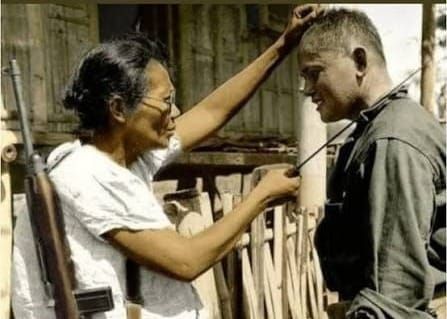
I am reminded of the Hellfighters of Harlem because they held their ground in WWI trench warfare--191 days, 1,400 casualties, not one man captured, not one yard surrendered--against an enemy that had broken every other unit it faced. The parallel to the Iranian women's resistance is not tactical. These women are not holding a trench line.
The parallel is in the refusal.
The Hellfighters faced an enemy that believed every man broke eventually. They had the body count to prove it. The Iranian regime has spent four years trying to prove the same thing, that enough executions, enough arrests, enough disappeared daughters will finally extinguish the resistance.
It hasn't.
Over 1,400 days. Still going. Still not broken.
They deserve to be known.
The Women, Life, Freedom movement. Started as a slogan, became an identity, and now it's an army. The women of Iran have shown the world time and time again, that you do. not. fuck with them.
Keep fighting, ladies. The world is behind you.
Member discussion