The Power of Never Hearing No: An Ode to Elon
How money, myth, and being surrounded by yes-men turned one billionaire into a delusional superpower
Before Elon Musk was the billionaire oracle of rockets, electric cars, social media, and artificial intelligence, he was the son of a wealthy South African father tied to emerald money from Zambia. This does not explain everything, but it punctures a lie that has gone way too far. The lie that has grown into developing the fake "boy-genius" mythos around one of the most polarizing figures today.
Musk has been sold to the public as a kind of capitalist immaculate conception, a lone genius who dragged himself out of nowhere by force of intellect and will. The record does not support that myth.
The record shows a brilliant and driven man who came from privilege, benefited from access, entered the world with more insulation than the mythology admits, and spent years helping turn that mythology into one of the most profitable personal brands on earth.
Even the emerald story, repeated a thousand sloppy ways online, is damning enough without embellishment. The strongest version is not that Errol Musk simply owned some cartoonishly evil “apartheid emerald mine” in the way people casually repeat on social media. The stronger and more defensible version is that Errol Musk was involved in emerald dealings tied to Zambia, and that the family had real money during part of Elon’s upbringing.
Elon's father, Errol Musk’s public record is ugly enough without any embellishment. First, Maye Musk has described her marriage as violently abusive. In a Harper’s Bazaar interview about her memoir, she said she was trapped in a “viciously abusive marriage” marked by physical and emotional abuse, fear, and years of custody litigation after she left.
Errol later fathered children with Jana Bezuidenhout, the daughter of his former wife Heide. Public reporting states Jana was four years old when Errol married her mother, and Errol himself later discussed the relationship publicly. The point is not just that it was scandalous. It is that it reveals a family environment that was already fractured, boundaryless, and deeply unsettling long before the world began treating Elon Musk as some kind of secular prophet.
There are also serious sexual-abuse allegations against Errol from multiple children and stepchildren. Reporting in 2025, based on a New York Times investigation, said five children and stepchildren accused him of sexual abuse dating back to the 1990s. Errol denied the allegations, and the reporting says police investigations did not produce charges.
Elon Musk did not simply come from money. He came from a household shadowed by abuse allegations, public family scandal, and a father whose record is disturbing enough on its own terms. That does not explain Elon away. It does, however, destroy any sentimental reading of the world that formed him.
Snopes found evidence that Musk himself once said his father had “a share in an emerald mine in Zambia,” while later reporting on Walter Isaacson’s biography says Errol did not own a formally registered mine outright, but got tied into emerald money through an informal arrangement after trading a plane to a businessman connected to a mine in Zambia. That is close enough. No cartoon version needed. Once the myth starts cracking, there is no reason to dress it up in extra bullshit.
Musk did not inherit his empire fully built, but he did not crawl out of the dirt either. He was born in Pretoria in 1971, raised in a family that had real money at points, and shaped inside apartheid South Africa. His father moved through property, engineering, and gemstone ventures. His mother later rebuilt her life in Canada. That does not make his later success fake. It makes the self-made myth a lie people keep telling because they want to believe in rich-man immaculate conception.
His defenders always try the same move. Fine, he did not come from nothing, but he still made himself. Not exactly. He was smart. He was ambitious. He was early. He went to Queen’s, transferred to the University of Pennsylvania, earned degrees in physics and economics, flirted with Stanford, and then bailed almost immediately to chase internet money in the nineties.
None of that should be denied. He clearly had brains. He clearly had drive. That still is not the same thing as building himself from scratch, and it damn sure is not the same thing as inventing everything people now staple to his name.
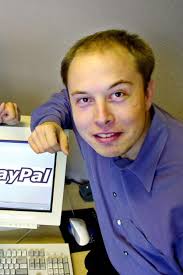
That is where the mythology really starts. He co-founded Zip2 in 1995. He co-founded X.com in 1999, which later merged into what became PayPal. He founded SpaceX in 2002. Put that on his side of the ledger. He earned it.
But Tesla was founded by Martin Eberhard and Marc Tarpenning. Musk came later with money, then authority, then image control, and eventually became the public face of the whole thing. He helped turn Tesla into a giant. He did not originally found it. That is not some tiny technical correction for nerds to squabble over. That is the difference between history and hero worship.
The same goes for Twitter. He did not invent it. He bought it for $44 billion in 2022 and rebranded it as X, which still sounds like the name a teenage boy gives a superhero lair. He did not personally invent PayPal from scratch either. His part in that story ran through X.com and a merger.
Across all of this, the real verbs are founded, co-founded, funded, bought, acquired, consolidated, branded, and dominated. Those are strong verbs. They describe a very powerful man. They just do not support the fantasy that he personally forged every machine in the empire with a soldering iron in one hand and destiny in the other.
That is why the real Musk is more revealing than the fake one. He is less a lone inventor than a collector of leverage. He keeps attaching himself to the deepest layers of modern life—transportation, satellites, launch systems, online speech, artificial intelligence, defense-adjacent technology, and politics. Most rich men own companies. Musk keeps ending up near the switches.
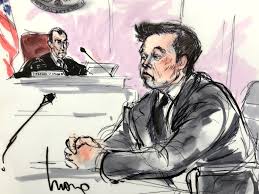
His conduct matters for the same reason. The petulance is not colorful side texture. It is part of the record. The 2018 “funding secured” fiasco brought SEC action, fines, and a settlement after regulators said he misled investors. A U.S. judge later said the claim was inaccurate and reckless. That is not a man being misunderstood for his bluntness. That is a man with massive power behaving impulsively in public and expecting reality to bend around him afterward.
The Vernon Unsworth “pedo guy” smear belongs in the file too. It was petty, vindictive, and humiliating in exactly the way weak men become when they have too much reach and no one around them willing to tell them to shut the fuck up. When criticized, Musk did not respond like a disciplined executive running major companies. He responded like an aggrieved adolescent with infinite signal boost, disrespecting the man who actually put his life on the line to save trapped children.
That episode did not become less ugly with time. It became harder to ignore once his name started turning up around Jeffrey Epstein’s orbit as well. Reuters reported in 2023 that the U.S. Virgin Islands subpoenaed Musk for documents in its lawsuit against JPMorgan over Epstein. That is not proof of criminal complicity, neither are the emails between he and Epstein. It is proof that his name surfaced close enough to that sewer to draw interest, which is bad enough without anyone pretending it says more than it does.
But Musk’s magnum opus of bullshittery is DOGE.
DOGE is where the whole story stops being about a billionaire with an ego problem and starts becoming something more serious, and a problem for all of us.
It was created by executive order on January 20, 2025, built out of the U.S. Digital Service, staffed in part by people tied to Musk’s companies, and given extraordinary room to move with very little transparency.
DOGE was the moment the costume came off. Before that, Elon Musk could still be defended as a loud, erratic billionaire with a taste for rockets, electric cars, attention, and self-mythology. After DOGE, that defense started sounding like a bad joke told by somebody already halfway through the Kool-Aid. Reuters reported that DOGE was created by executive order on January 20, 2025, built out of the U.S. Digital Service, and handed unusual access with remarkably little transparency. A federal judge later described its operations as marked by “unusual secrecy.”
The sales pitch was familiar Musk theater, cut the waste, purge the dead wood, make government move at the speed of genius. The visible result was uglier. Reuters found that within roughly its first hundred days, DOGE had contributed to bottlenecks, longer wait times, staffing shortages, procurement problems, technical failures, and a broader brain drain across agencies. Even its supposed savings kept slipping around like a drunk trying to explain where the money went. Reuters reported that DOGE’s public accounting was riddled with errors, corrections, and deletions, while Musk’s own early promise of $2 trillion in cuts had collapsed into figures Reuters could not independently verify.
That is where the whole thing stops being abstract. This was not just another rich man’s hallucination about efficiency. This was a private mythology trying to jam itself directly into the arteries of the state.
Reuters reported that DOGE approval was required for some USDA farm loans over $500,000, which meant farmers in the real world could wind up waiting on some Musk-linked layer of bureaucracy that nobody elected and few people could even fully explain. Reuters also reported judges had to step in over DOGE’s push for access to Social Security data, with one ruling finding that DOGE had failed to justify why its anti-fraud mission required “unprecedented, unfettered access” to virtually the entire system.
Social Security records are not just bureaucratic dust. They are Social Security numbers, bank data, tax data, earnings histories, immigration records, the raw nervous system of millions of lives. The image here is not one of reform. It is of a man who spent years treating normal oversight like an insult suddenly pressing his face against the control room glass and being told, somehow, that this was modernization.
And then there is the AI monitoring, which would have sounded like satire if Reuters had not reported it with a straight face. According to Reuters, DOGE used AI to monitor federal workers’ communications for signs of hostility to Trump and his agenda. Think about how far off the rails that is.
A temporary power center built around a billionaire with a persecution complex reportedly scanning internal communications for political disloyalty while waving the banner of efficiency. That is not cost-cutting. That is paranoia with top secret admin access.
It also came with warnings about disappearing messages, poor record-keeping, and behavior that pushed against the basic idea that public power should leave a public trail. Reuters further reported that DOGE sought broad access at the SEC, including sensitive communications involving investigations, while whistleblower allegations later claimed DOGE personnel may have contributed to a significant cyber breach at the National Labor Relations Board. The breach claim remains an allegation and was denied by the NLRB, but even the existence of that allegation tells you what kind of atmosphere this had become. Not disciplined reform. Not rational administration. A smash-and-grab ethic in a federal building.
The defenders always want you to believe Musk’s style is just the price of greatness, like fear is a kind of vitamin and public humiliation is merely what happens when a genius runs into lesser life forms. The people who actually worked under him tell a rougher story.
Reuters reported that former Tesla DEI officials described his leadership environment as fear-based and chaotic. Reuters also reported that SpaceX employees circulated an internal letter calling Musk a “distraction and embarrassment,” saying every one of his social media outbursts effectively became a statement by the company.
SpaceX fired employees involved in that letter. At Twitter, Reuters reported Musk told employees they could commit to “long hours at high intensity” or leave, and departing engineers mocked the macho pageant by calling themselves “softcore engineers” and “ex-hardcore engineers.”
The picture that keeps surfacing is not of a lovable mad scientist. It is of a man who gets results partly by making contradiction expensive and truth late to arrive. Some people around him admire the speed. Some admire the ambition. A lot of them still describe the same weather pattern, fear, chaos, punishment for dissent, and the constant knowledge that the boss’s petulant impulses outrank normal human process.
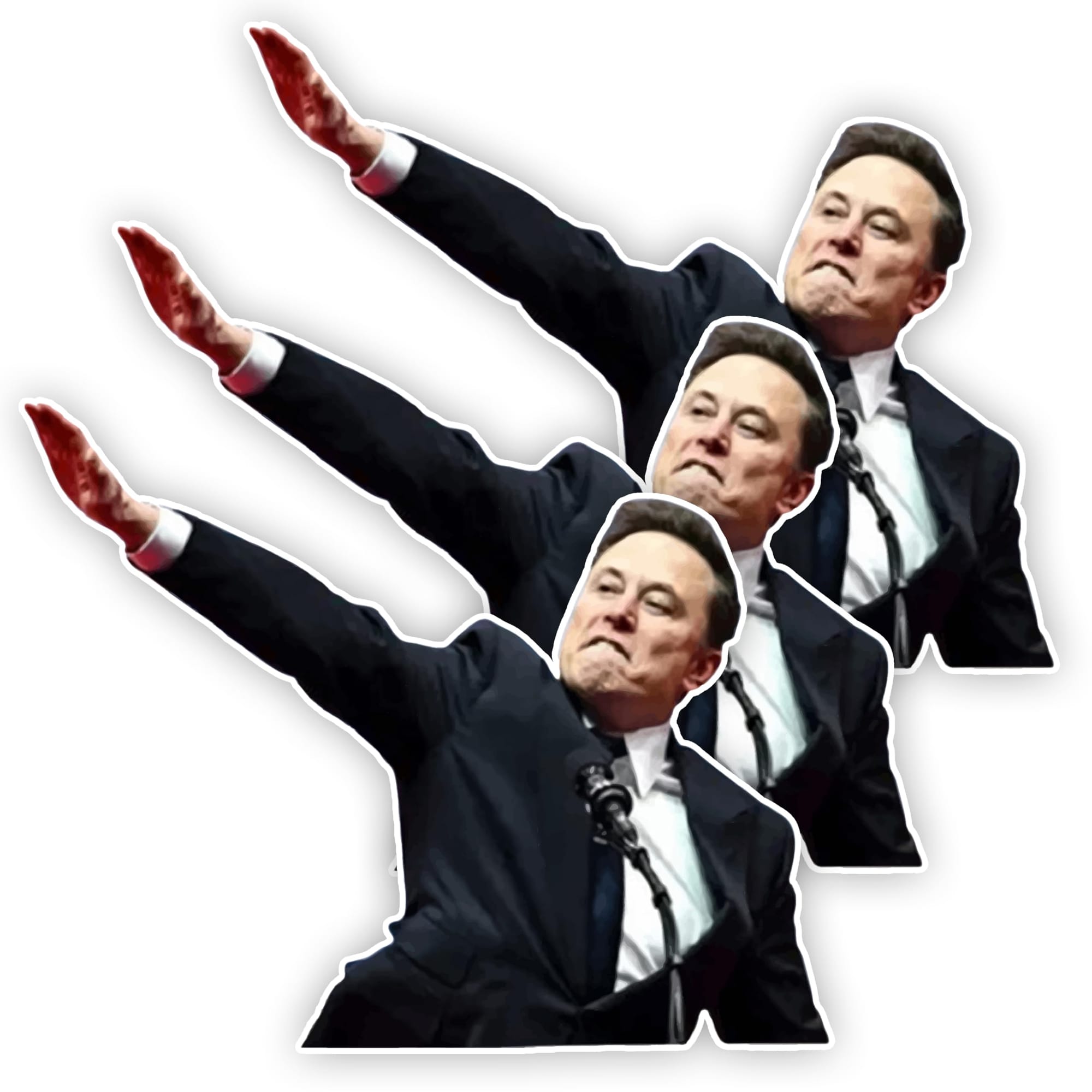
This is why the right-wing turn matters, because it is not some separate carnival tent pitched off to the side. It fits the same appetite for grievance, provocation, spectacle, and unaccountable power. The gesture at Trump’s inauguration lit up the internet because people immediately saw what they saw. The Anti-Defamation League said it viewed the motion as awkward enthusiasm, not a Nazi salute, and that narrow fact should be stated plainly. But anybody pretending the larger pattern is imaginary is either blind or lying.
Musk endorsed a post invoking the “Great Replacement” conspiracy theory as “the actual truth,” a move that drew White House condemnation and helped trigger a major advertiser exodus from X. Reuters also reported that he hosted AfD leader Alice Weidel on X, urged Germans to vote for the far-right party, and later appeared by video at an AfD campaign rally, where he praised the party and criticized Germany’s focus on its Nazi past. Spain’s prime minister accused him of helping incite hatred in Europe. German officials were so alarmed by X’s role in this political sludge that some openly considered walking away from the platform.
This is not a one-off misunderstanding. This is a man with one of the biggest microphones on earth repeatedly blowing air into the same dark corners, then acting astonished when people notice what starts crawling out.
Then there is the Epstein proximity, which does not need theater because it already smells bad enough. Reuters reported in January 2026 that released Justice Department files included emails showing Musk declined a December 2012 invitation from Jeffrey Epstein to visit the island while asking whether Epstein had “any parties planned.” Reuters also reported that Musk invited Epstein days later to join him and others for drinks in St. Barts, though it was unclear whether they actually met. Musk said he had very little correspondence with Epstein and had declined repeated invitations to go to the island or fly on Epstein’s plane.
What the record gives you is not proof of criminal wrongdoing by Musk. What it gives you is contact, invitations, social overlap, and one more example of his name appearing in an elite orbit that almost everyone involved later wished had stayed buried. In a country with functional instincts, that alone would be enough to end the childish habit of treating billionaires like secular saints.
Put it all together and the pattern gets hard to miss. DOGE showed what happened when private myth crossed into public machinery. The employee record showed what life looked like inside institutions where the boss’s mood could outrank honest correction. The far-right playacting showed that provocation had become not just a habit but a political method.
The Epstein emails showed that Musk’s name, like the names of so many rich and connected men, turns up in places it would have been wiser never to be. None of this erases the fact that SpaceX changed the launch business or that Tesla helped force the auto industry to take electrification seriously. That is what makes the whole thing worse. He is not just some buffoon with a social media addiction. He is effective enough to matter and reckless enough to make that effectiveness dangerous. Reuters’ DOGE reporting made the cost of that danger visible in the most concrete way possible, weaker services, higher privacy risk, politicized administration, and disruption that never clearly paid for itself.

There is an old American sickness that flares up every few years, the urge to believe that one rich man, if only he is ruthless enough, can cut through the rot, bypass the cowards, ignore the paperwork, and save the nation by force of will.
DOGE should have killed that fantasy for good. Instead it gave us the purest expression of it yet, a billionaire with a grievance habit, an empire of contracts and platforms, and a long history of treating criticism like treason walking into the federal government and calling the wreckage efficiency. That is the whole fucking story.
The story is what happens to a country when it starts confusing wealth with authority, disruption with virtue, and arrogance with vision. Elon Musk did not create that sickness. He is just one of its most advanced symptoms.
None of this means Musk has done nothing of value. SpaceX changed the launch industry. Tesla helped drag the auto sector toward electrification. He has been early to major sectors and effective at bending money, labor, attention, and public dependence around his firms.
That is exactly why he is more dangerous than a simple fraud. Frauds can be laughed off. But even if they are a fraud, if they are the richest man in the world they cannot be taken lightly. He is effective enough to be taken seriously and recklessly thin-skinned enough to be feared.
He is not just a billionaire with bad manners. He is what happens when intelligence, wealth, grievance, myth, and lack of natural human interaction start hardening into one man. He emerged from privilege, wrapped himself in a self-made legend, attached himself to bigger and bigger systems, treated contradiction like insult, and eventually stepped through the membrane between private empire and public power.
He has also kept drifting deeper into right-wing grievance theater, not as a passive passenger but as an accelerant. Musk leaned into it instead of backing away. That questionable gesture at Trump's rally did not stand alone. Reuters documented his support for Germany’s far-right AfD, including an event with Alice Weidel and a video appearance at an AfD rally where he praised the party and attacked Germany’s fixation on its Nazi past.
He endorsed a post invoking the “Great Replacement” conspiracy theory as “the actual truth,” helping trigger advertiser flight from X. Critics across Europe have since accused both Musk and his platform of boosting xenophobic and extreme-right politics.
This is not one gesture frozen in amber, but a growing pattern of ideological flirtation, plausible deniability, and mass amplification for people who already believe history has cheated them and have thoughts with character limits.
Then there is more self-inflicted family wreckage. Reuters reported in March 2025 that Musk had a 14th publicly known child. Reuters also reported in 2022 that Vivian Jenna Wilson changed her name and said she no longer wished to be related to her biological father “in any way, shape or form.” Those facts do not need embroidery. They are already enough to puncture the polished fantasy of the futurist patriarch that cosplayed as Tony Stark for a decade.
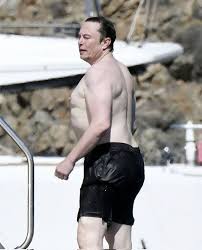
The public cult says visionary father of tomorrow. The visible record says something messier, colder, pudgier, more thin skinned, and more psychologically fractured from reality. When nobody is allowed to tell you bad news, you begin to think the world belongs to you.
SpaceX changed aerospace. Starlink gave millions access to the internet. Tesla helped force the car industry to take electrification seriously. Musk’s instincts about where power was moving were often right, and he was ruthless and prepared enough to get there early.
That is precisely why this piece should not flatter him. The danger is not that he is a fraud in the simple sense. The danger is that he is effective. Effective enough for people to confuse force with wisdom, disruption with virtue, and success with moral authority. Effective enough that they kept handing him more reach, more myth, and eventually more access than any one man should ever have.
The full consequences of which have yet to be seen.
Elon Musk is not simply a genius. He is not simply a fraud. He is what happens when a culture stops knowing the difference between innovation and license, between power and merit, between a builder and a man who has gone too long without hearing the fucking word "no."

Member discussion