Karma's Most Wanted #3: Sam Altman
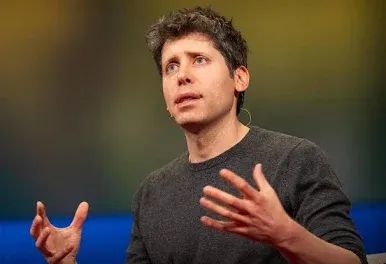
Intelligence on tap.
By Matt Stone
When I first began studying artificial intelligence in grad school, I thought it was an amazing tool. I could edit faster, synthesize dense material faster, find sources faster--I could do everything faster. The future had arrived, and it looked awesome. For a moment.
Like Vegas, Silicone Valley always wins.
Sam Altman has a gift for making empire sound like convenience.
At BlackRock’s U.S. Infrastructure Summit this month, he described a future in which “intelligence is a utility like electricity or water” and people “buy it from us on a meter.” That sticks out because it tells you exactly how he sees the future. Not as software or a research lab. Not even really as a company in the old sense. As infrastructure. As a bill. As something so basic to modern life that opting out starts to feel irrational.
That is a hell of a thing to say out loud.
Because once intelligence becomes infrastructure, the people who control its flow do not just sell tools. They shape the conditions under which everyone else thinks, competes, works, and bargains. Electricity powers factories. Water sustains cities. A metered intelligence utility would mediate law, education, hiring, medicine, logistics, media, research, and war. And if that sounds dramatic, OpenAI’s own language is already headed there.
In its February 2026 “Scaling AI for everyone” announcement, the company said meeting demand requires three things: compute, distribution, and capital. It then announced $110 billion in new investment at a $730 billion pre-money valuation, with money from SoftBank, NVIDIA, and Amazon, while also touting millions of paying business users and enterprise tools designed to deploy “AI coworkers” across finance, sales, operations, support, and engineering.
That is not a startup trying a few interesting products. That is a company trying to become the substrate.
The sales pitch is seductive. Intelligence on tap sounds democratizing. It sounds like abundance. It sounds like the end of scarcity for cognition itself. Why should only elites have great tutors, researchers, strategists, coders, analysts, and assistants? Why not flood the world with intelligence and let ordinary people do more with less?
Fine. That is the hopeful version. But now for the director's cut.
The problem is that utilities have never been equal just because they exist. They are equal only when access, price, governance, and distribution are politically contested and publicly protected. Electricity did not abolish hierarchy. It redrew it around grids, capital, and control. Water did not end inequality. It made pipes and rates and coverage zones matters of life and death.
Intelligence sold like a utility would follow the same pattern. Access is not the same as parity. A free tier is not the same as equal power. A chatbot is not the same as a privately deployed reasoning stack plugged into proprietary data, custom workflows, premium compute, and high-end agents.
This is the part people glide past because the word intelligence feels magical. It sounds universal. It sounds neutral. But metered systems are almost never neutral in practice. They stratify. They create premium lanes. They reward those who can pay for more throughput, lower latency, deeper integration, and stronger models. Altman’s own framing points that way. He did not describe a public commons. He described a service people buy from “us” on a meter.
That single pronoun carries a lot of weight.
Who is “us”? A company that still wraps itself in civilizational language about benefiting humanity, while simultaneously scaling with a level of capital concentration that would make old industrial barons grin. OpenAI says its nonprofit remains in control and that its mission is still to ensure AGI benefits humanity. It has repeatedly emphasized that the nonprofit oversees the business, even after the conversion of the operating arm into a Public Benefit Corporation structure.
But mission language does not erase material reality. Material reality is compute contracts, distribution deals, capital rounds, enterprise lock-in, and infrastructure buildout on a gigantic scale. OpenAI’s own announcement did not talk like a humble steward of a shared commons. It talked like a firm racing to secure the inputs needed to dominate a strategic layer of the economy. Compute. Distribution. Capital.
That matters because intelligence is not just another consumer product. It is a force multiplier. Unequal access to better cognition compounds faster than unequal access to many other goods. If one firm has meaningfully better reasoning systems integrated across contracts, hiring, compliance, code generation, forecasting, customer targeting, and negotiation, it is not merely a little more efficient. It becomes harder to catch, harder to audit, and harder to compete against. If one law firm can deploy stronger models across research and drafting while another is stuck with watered-down tools, the gap widens. If one nation secures more compute, better chips, and better models, then intelligence itself becomes geopolitical infrastructure.
That is why “intelligence on tap” is not just a cute product phrase. It is a class formation phrase. Intelligence is the new vital resource for countries and corporations alike.
The inequality problem is not speculative either. The IMF has warned that AI is poised to affect around 40 percent of jobs globally and that, in most scenarios, it is likely to worsen overall inequality. IMF researchers have also said labor income inequality may rise if AI complements high-income workers more than others, while returns to capital can increase wealth inequality.
The ILO reported this month that women face higher workplace risks from generative AI than men, in part because of occupational concentration in more exposed clerical and administrative work. And today, even Larry Fink warned that the AI boom could widen the wealth divide if participation in the upside remains narrow.
So no, this is not just doomer poetry. The concern that AI will deepen hierarchy is already mainstream enough for the IMF, the ILO, and BlackRock to say out loud.
What makes Altman’s framing more troubling is that it arrives at the precise moment OpenAI is turning those abstractions into physical infrastructure. Reuters reported in January that OpenAI unveiled a “Stargate Community” plan aimed at ensuring its operations do not raise electricity costs for local communities. The reason such a plan was needed is obvious. Reuters described Stargate as a $500 billion, multi-year initiative to build AI data centers for training and inference, backed by major investors including Oracle. Energy access, Reuters noted, has become a key constraint on AI growth. In other words, this future is not floating in some clean digital heaven. It is rooted in land, transmission, substations, generation, water, and local politics.
So when Altman talks about intelligence like electricity, he is not speaking metaphorically anymore. He is describing the business model and the physical world required to support it.
That should make everyone much more sober. Utilities do not merely reflect society. They reorder it. They create chokepoints. They reward incumbents. They invite capture. They become too important to fail and too embedded to question. Once an institution becomes the layer through which other institutions think, it gains a peculiar kind of legitimacy. Not because it is morally superior, but because dependency starts masquerading as inevitability.
And that is where OpenAI becomes more than a company. It starts to look like a secular Vatican with server farms, claiming the right to interpret reality for the rest of us.
For most of history, powerful institutions claimed legitimacy by saying they could interpret reality better than ordinary people. Priests interpreted God’s will. Courts interpreted law. Experts interpreted science. OpenAI and its peers are now building systems that summarize, rank, classify, recommend, and decide at scale.
The output arrives with the aesthetic of objectivity, even when the public cannot see the training data, the weighting choices, the model behavior under the hood, or the economic incentives shaping deployment. That is what makes this form of power so slippery. It does not need to shout. It just needs to become the layer through which everyone else speaks.
The company’s defenders will say this is too cynical. They will say OpenAI has done real good, that its tools help people write, learn, code, and access information. All true. The danger is not that nothing useful is happening.
The danger is that usefulness becomes the moral camouflage for concentration.
History is full of systems that delivered real convenience while quietly centralizing power. Railroads were useful. Standard Oil was useful. Credit scores are useful. Surveillance is useful to the people doing the surveilling. Utility does not absolve power. It often entrenches it.
Then there is the even uglier part. OpenAI’s rise is shadowed by intensifying copyright fights over the raw material used to build this new metered mind. Reuters reported last year that multiple copyright suits from authors and news outlets, including The New York Times, were consolidated in Manhattan.
OpenAI has said its models are trained on publicly available data and grounded in fair use. This month Reuters also reported that Encyclopedia Britannica and Merriam-Webster sued OpenAI, alleging that it copied nearly 100,000 Britannica articles, produced near-verbatim outputs, and diverted users away from Britannica’s own sites. OpenAI again defended its practices as fair use.
That dispute is still being fought, and it should be described carefully. But the moral shape of it is already plain enough. A company is trying to sell the future of metered intelligence while major publishers and authors argue that the knowledge base feeding that machine was absorbed without permission and monetized at scale. That is not a side issue. It cuts to the center of the legitimacy problem. If intelligence becomes a utility, who fed the reservoir? Who gets paid? Who gets dispossessed? Who becomes invisible inside the convenience layer?
Because that is the nightmare hidden inside the phrase 'intelligence on tap.' It sounds like abundance for all. It may become a world where some people rent a near-genius cognitive stack while others get a throttled assistant and a subscription bill. Some firms will command armies of agents. Others will get autocomplete. Some schools will have deep tutoring systems tuned to each student. Others will get stripped-down commodity access. Some countries will own compute. Others will depend on whatever filtered cognition richer nations are willing to sell.
That is not democratized intelligence. That is stratified intelligence.
And stratified intelligence is especially dangerous because it can disguise itself as merit. The winners will look smarter, faster, and more deserving, while much of their advantage is actually infrastructural. The machine recedes into the background. The premium tier becomes invisible. Inequality starts to look natural.
And that is where OpenAI becomes more than a company. It starts to resemble a mediating authority. A secular Vatican with server farms, positioning itself to interpret reality for the rest of us.
For most of history, institutions claimed legitimacy by offering to interpret uncertainty. Priests interpreted divine will. Courts interpreted law. Experts interpreted science. Now AI systems summarize knowledge, rank credibility, classify risk, and shape decisions at scale. The outputs arrive with the aesthetic of objectivity, even when the public cannot see the training data, weighting choices, or incentives behind them. The authority does not shout. It simply becomes the layer through which everyone else speaks.
Sam Altman has described the future in terms that make this shift explicit. Intelligence on tap. Like electricity. Like water. Something you buy from a meter. It sounds generous, even emancipatory. Flood the world with cognition. Give everyone access to powerful reasoning. Lower the barrier to knowledge and decision making.
But utilities do not eliminate inequality. They reorganize it.
Electricity did not flatten society. It rewarded those who controlled generation, transmission, and pricing. Water did not create equality. It created pipes, rates, and access zones. Intelligence sold like a utility follows the same logic. A free tier is not parity. Basic access is not equal power. Some users get autocomplete. Others get reasoning infrastructure. Some firms deploy agents across entire workflows. Others ask questions in a chat box.
Intelligence becomes capital.
And capital compounds.
A company with better reasoning systems negotiates better contracts, writes better code, forecasts better markets, hires better talent, and moves faster across every domain. The gap widens quietly. The winners look naturally smarter. The losers look naturally behind. The infrastructure disappears into the background. Inequality begins to masquerade as merit.
I am reminded of Nikola Tesla and Wardenclyffe Tower. Tesla envisioned a system that could transmit energy wirelessly across the globe, turning the ionosphere itself into a conduit from which energy could be pulled. The famous story says J.P. Morgan responded by asking where the meter would go. The quote itself is likely apocryphal, but the logic behind it is historically grounded.
Morgan funded Tesla, Tesla’s ambitions expanded beyond communication into broader energy transmission, costs mounted, Guglielmo Marconi demonstrated a cheaper wireless alternative, and Morgan refused additional funding for Tesla. The dream of universal access ran into the reality of metered control. Abundance threatened the business model. The money dried up.
The myth survives because it captures something real. Systems built on ownership rarely embrace anything that cannot be owned.
That is why Altman’s line deserves more scrutiny than it has gotten. He may genuinely believe he is building abundance. He may sincerely think flooding the world with intelligence will be broadly emancipatory. But systems do not run on sincerity. They run on ownership, pricing, governance, incentives, and political economy.
A future where intelligence is sold on a meter is a future where somebody owns the meter, and everyone else lives downstream from that fact. The levers of power did not disappear. They sank into the machine, where they became harder to see, easier to deny, and much harder to fight.
My hands are tied. That may end up being the motto of this millennium.
"Nothing I can do. My hands are tied."
Some people will rent near-genius assistants. Others will get throttled versions. Some institutions will deploy entire cognitive infrastructures. Others will rely on summaries. Some nations will own compute. Others will depend on whatever filtered cognition richer countries are willing to provide.
This is not artificial general intelligence ruling humanity. It is stratified intelligence reshaping it.
Intelligence on tap sounds like abundance.
In practice, it risks becoming hierarchy.
"AI will probably most likely lead to significantly more inequality… but also create enough wealth to compensate.” - Sam Altman
When Sam Altman says AI will likely increase inequality but create enough wealth to compensate, he is not saying something new. He is repeating one of the oldest promises in the history of technological change. It is the same reassurance that accompanied the factory, the railroad, the computer, and the internet. Inequality will rise, we are told, but the total pie will grow so large that everyone eventually benefits. Concentration now, prosperity later. Disruption first, fairness after.
The industrial revolution ran on that logic. Mechanization displaced artisans, concentrated wealth in factory owners, and transformed entire cities into dense pockets of labor exploitation. The defense was always the same. Productivity would explode. Society would grow richer. The suffering was temporary.
And in a narrow sense, that turned out to be true. Wealth did expand. But the distribution did not correct itself. It took decades of labor movements, strikes, unionization, and regulation to claw back even a portion of the gains. The wealth came first. The fairness had to be fought for.
The same pattern appeared in the Gilded Age. Industrial consolidation was defended as efficient and necessary. Railroads, steel, oil, and finance were centralized in the hands of a few men who were praised as builders of a modern economy. The public was told that scale would produce prosperity. Instead, the result was extreme inequality, political capture, and monopolistic control. Again, wealth expanded. Again, it concentrated. Again, reform came only after public pressure forced it into existence.
The computer revolution revived the promise in more polished language. Automation would eliminate tedious work, create new industries, and empower individuals. Productivity did soar. But wages for many workers stagnated while the gains flowed disproportionately to those who owned the platforms, software, and capital. The economy grew. The distribution skewed. The gap widened quietly, dressed up as innovation.
Then came the internet, which was supposed to flatten hierarchy altogether. Anyone could publish. Anyone could build. Anyone could compete. For a brief moment, that looked plausible. Then the network effects hardened. Search consolidated. Social media centralized. E-commerce concentrated. A handful of platforms became gatekeepers of attention, commerce, and communication. The promise of democratization did not disappear. It simply coexisted with unprecedented concentration.
Altman’s statement fits neatly into that lineage. AI will increase inequality, he acknowledges, but it will also create enormous wealth. The implication is familiar. The temporary imbalance is acceptable because the long-term gains will compensate for it. It is a technocratic version of trickle-down logic, applied not to money alone but to cognition itself.
What makes this moment different is the speed and scope of the potential concentration. Previous revolutions reshaped labor or industry. AI reshapes decision-making. It amplifies reasoning, prediction, and strategic capacity. If access to that amplification is uneven, the inequality that follows is not just economic. It becomes cognitive. Some actors will think faster, model more possibilities, and automate judgment across entire systems. Others will operate with weaker tools, slower insight, and less leverage. The gap compounds invisibly.
That is why the reassurance sounds less comforting the more closely you examine it. The promise that new wealth will compensate for rising inequality assumes that distribution will eventually correct itself. History suggests otherwise. Distribution rarely corrects itself. It is negotiated, contested, and often delayed until the concentration has already reshaped the landscape.
Altman is not inventing a new argument. He is repeating the standard one. Every technological leap produces a moment when power consolidates and the public is told that the long-term benefits will justify the imbalance. Sometimes those benefits do arrive. But they do not arrive automatically, and they rarely arrive evenly. The wealth grows. The hierarchy hardens. The correction, if it comes, comes later.
That is the deeper implication of his statement. It is not merely a prediction about inequality. It is an admission that the next phase of intelligence will likely follow the same trajectory as every major technological shift before it. Concentration first. Prosperity later. Fairness eventually, perhaps. And in the meantime, those who control the infrastructure of the new era gain an advantage that compounds faster than the system can adjust.
And once somebody owns the meter, they do not just sell answers. They sell amplified life chances. Access to the ladder. A crack in the glass ceiling. The difference between being judged by the system and learning how to game it.
That is the larger reason Sam Altman belongs on a list like this. Not because he is uniquely evil. That would be too easy. He belongs there because he represents the most respectable version of a very old temptation: to centralize an essential human good, wrap it in benevolent language, and call the resulting hierarchy progress while being blinded by their own ego.
That is Sam Altman.
Karma has a way of catching up to people who confuse access with justice.




Member discussion