The Grey Pope: The Most Powerful Man on Earth?
By Matt Stone
True or the Woo: The internet says the most powerful man in the world is an Italian prince who controls the Vatican, the Rothschilds, and the Rockefellers. His father was fired by a pope, his father-in-law helped build Europe’s billionaire class, and the most secretive banker in Italy attended his wedding. Last week, his foundation signed a deal with the Vatican. Things get stranger from there.
There is a man, according to a particularly committed corner of the internet, who sits above the Pope. Above the Black Pope too, the superior general of the Jesuits. He controls the Rothschilds, the Rockefellers, the British monarchy, the Knights of Malta, and, depending on how far down the rabbit hole you go, the Israeli mafia, an ’Ndrangheta clan, and the Cleveland crime family.
His name is Pepe Orsini. They call him the Grey Pope.
He supposedly belongs to a bloodline that has controlled the Catholic Church for centuries, passing power through popes, cardinals, bankers, and European royalty. Some versions place him at the top of the Illuminati. Others insist he answers to reptilian beings from another dimension. Apparently, even the most powerful man on Earth has a supervisor.
Finding Pepe Orsini is surprisingly difficult. There is no official biography, no documented Vatican position, and no credible record explaining how he acquired the title. The internet has plenty to say about his power and almost nothing to say about the man himself.
Then another name appears. The name of a man who really exists: Domenico Napoleone Orsini.
He is an Italian prince, the 22nd Duke of Gravina, and a member of one of the most powerful families in the history of Rome. His baptismal godfather became Pope Paul VI. His father held one of the highest ceremonial positions in the Vatican. His father-in-law was one of Europe’s most influential investment bankers. And the witness at his wedding was a man who helped decide the financial future of postwar Italy from behind closed doors.
On October 17, 2026, Vatican News announced that a foundation bearing Domenico’s and his wife’s names had entered a four-year agreement with the Vatican Apostolic Library.
Suddenly, the conspiracy has something better than a reptilian bloodline. It has a marriage certificate, banking relationships, and a Vatican press release. The question is whether any of that makes Domenico Orsini the Grey Pope.
I went looking for the answer. What follows is a collection of family scandals, financial relationships, papal connections, missing bodies, old manuscripts, and coincidences that range from genuinely fascinating to completely unhinged. The sources are collected at the bottom. Where I could not establish a claim, I have said so.
Readers can decide how much red string they want to buy.
Where the hell did Pepe come from?
The Grey Pope story has been circulating longer than most recent posts acknowledge. A surviving WordPress page dated October 28, 2011 describes a Roman named Pepe Orsini as the Grey Pope, supposedly occupying a position above the Jesuit Black Pope. It places the Orsini among ancient papal bloodlines and describes a secret hierarchy controlling humanity.
The same material discusses reptilian hybrids, mysterious beings called Reptoid/Greys, and a hidden order stretching back into antiquity.
The theory also feeds into a larger conspiracy narrative that the Roman Empire never actually fell. According to this version of history, Rome simply traded its legions for the Vatican, its emperors for popes, and eventually its territorial conquests for financial institutions. The Orsini, an aristocratic family with genuine centuries-old ties to the papacy, are cast as the dynasty that kept the whole operation running. It is an imaginative interpretation of institutional continuity, although it requires overlooking roughly fifteen centuries of wars, schisms, revolutions, and popes who could barely control Rome itself.
A July 2012 republication preserved much of the language and pointed toward an earlier, now-defunct source. There is even a reference to a June 2010 edit, although that does not establish when the Grey Pope material itself was written.
By June 2017, a blog calling itself the Human Homo-Sapiens Race Survival Resistance was repeating an expanded version. It accused Pepe Orsini of engineering Benedict XVI’s resignation, connected Tom Cruise to the Orsini bloodline, and placed the supposed Vatican hierarchy beneath Draco reptilian aliens and fallen angels.
The story was already operating at a level where ordinary evidence seemed almost beside the point. What it lacked was an identifiable man. The early material provides no verified birth date, marriage record, or institutional appointment establishing who Pepe actually is. Later posts began attaching the name to Domenico Napoleone Orsini, an aristocrat with a real family history and an actual face.
An October 2022 post on X, from an account that has since been suspended, is one reported example of that identification. Whether it was the first remains unconfirmed. And the story kept growing.
The German conspiracy site Pravda TV discussed the Knights of Malta as supposed kingmakers within the Vatican. A November 2025 post on X claimed the Grey Pope controlled organized crime networks, including the Cleveland crime family.
On October 18, 2026, AMG News published an article explicitly identifying Pepe Orsini as Domenico Napoleone Orsini and describing him as the hidden ruler of the Vatican and international banking families. The article recycled older conspiracy material but offered no independent evidence establishing that Pepe and Domenico were the same person. It appeared just one day after Vatican News announced the Orsini-Bernheim foundation's manuscript preservation agreement, although I found no evidence that the two publications were connected.
The allegations evolved, but the basic arrangement remained remarkably consistent. Somewhere above the Vatican, above the Jesuits, and above the international banking families supposedly sat a mysterious figure named Pepe Orsini. His authority was absolute, his influence was everywhere, and yet nobody seemed particularly interested in establishing where he lived, what he did for a living, or whether he had ever introduced himself to another human being as Pepe.
What bothered me was the gap between the early conspiracy material and the later identification. The Grey Pope was already circulating online by 2011, but the early accounts offered nothing that reliably identified a living person. By 2022, posts were attaching the name to Domenico Napoleone Orsini, a real Italian prince with an extensive family history. Somewhere in that interval, a character from the internet's occult mythology acquired the identity of an actual aristocrat. I wanted to know who made that connection, what evidence they used, and whether anyone had bothered to check it.
The identification was circulating even earlier. A screenshot preserving an Instagram post dated July 1, 2021, shows the now-familiar photograph of a man wearing blue sunglasses and explicitly identifies him as both “Pepe Orsini” and Domenico Napoleone Orsini. The post provides no original photographic attribution, however, leaving unanswered both who the man in the picture is and where the identification originated.
I could not find an independent Italian biography, genealogical record, or interview establishing that Domenico had ever been called Pepe. Nor could I find a document identifying him as the Grey Pope outside the conspiracy material itself. That leaves an interesting possibility: the person at the center of this mythology may have been selected because his real biography contained exactly the kind of connections that conspiracy writers were already looking for.
And those connections are substantial. The Orsini family produced popes, held hereditary positions within the papal court, married into European aristocracy, and maintained relationships with powerful banking families. Domenico himself had a future pope as his baptismal godfather, married the daughter of one of Europe's most influential financiers, and eventually established a foundation that entered into a formal agreement with the Vatican Library.
I started wondering whether the people spreading the Grey Pope story had stumbled onto a remarkable family history and built a mythology around it, or whether the identification began with someone who already knew the family. I still haven't established the answer, but the question sent me considerably further into Italian aristocratic history than I expected to go.
The real man has a Pope for a godfather
Domenico Napoleone Orsini was born in Rome on April 11, 1948. He is the 22nd Duke of Gravina and head of the Gravina branch of the Orsini family, one of the oldest noble dynasties in Italy. Genealogical records also identify him as a Knight of Honour and Devotion of the Sovereign Military Order of Malta.
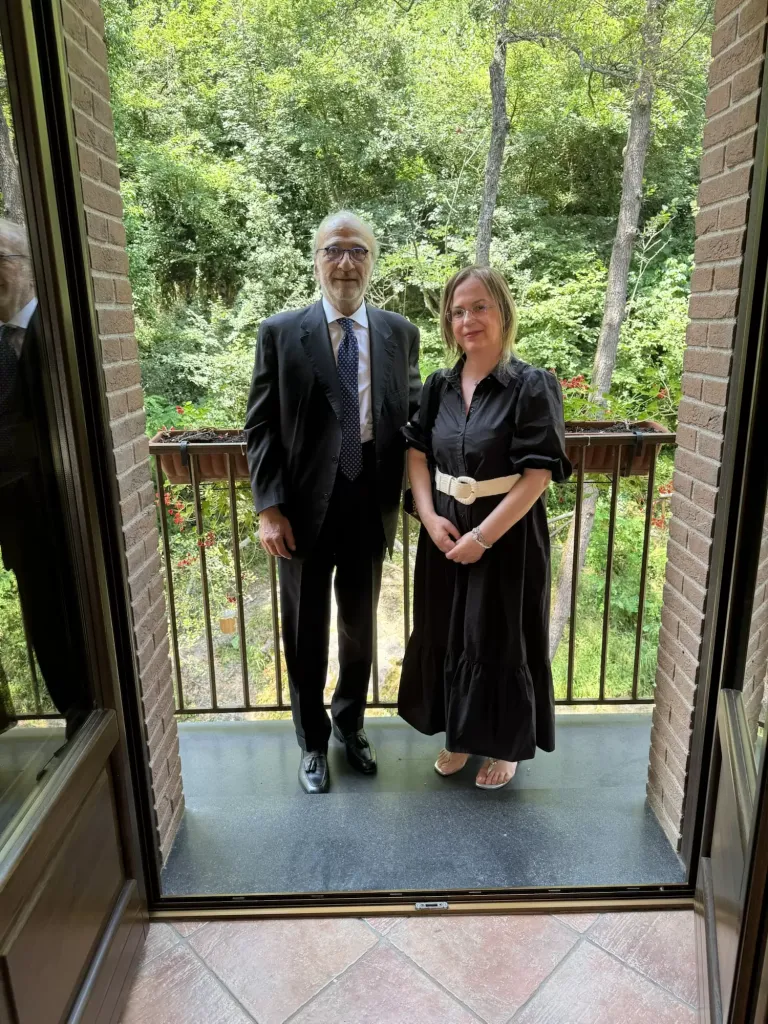
The Knights of Malta connection is real. Membership in the order does not establish command over the Vatican, but it places him within a Catholic institution with centuries of aristocratic history. Then there is his godfather.
In June 2025, Domenico gave an interview to Il Bello, a small regional publication near Salerno, while visiting Campagna for the 500th anniversary of its diocese. He discussed his childhood, his family’s history, and the importance of preserving southern Italy’s cultural heritage.
His father, he explained, had worked at the Vatican before leaving the family for an actress. Domenico was ten years old when the scandal unfolded, and photographers reportedly waited outside his school. He also identified his baptismal godfather as Giovanni Battista Montini. Montini became Pope Paul VI in 1963.
Domenico said he had known Montini, encountered the young Karol Wojtyła, who later became Pope John Paul II, and grown up around important Vatican figures.
These are his recollections, rather than independently examined baptismal or correspondence records. Still, they describe the kind of personal access that most people, including most Catholics, could never imagine.
And yet the man in the interview seemed remarkably uninterested in world domination. He discussed cultural preservation, entrepreneurship, and his desire to spend twenty days resting with his wife, children, grandchildren, and three dogs. The alleged secret ruler of the planet apparently needs a vacation.
He also explained that he had taken an early train to attend the anniversary celebrations because the occasion mattered to him. The world’s most powerful man, according to the internet, was riding the train to a diocesan birthday party.
But I will concede that the family history behind that journey is extraordinary.
The family that stood beside the Pope
For centuries, the Orsini family belonged to the highest levels of Roman aristocracy. They produced popes, cardinals, military commanders, landowners, and political officials. Their estates extended across Italy. Their marriages connected them to other major European families. Their influence survived wars, papal elections, political revolutions, and the collapse of the Papal States.
The family held a particularly prestigious position in the papal court: Prince Assistant to the Papal Throne. The heads of the Orsini and Colonna families traditionally occupied these ceremonial positions, standing near the pope during major occasions. The office represented hereditary prestige and direct access to the papal household. The Orsini held their position from 1735 until 1958. Then Domenico’s father managed to lose it.
In January 1958, Filippo Orsini became embroiled in a scandal involving British actress Belinda Lee, who was married at the time. Lee attempted suicide with barbiturates on January 28, 1958, amid the affair’s public fallout. Pope Pius XII removed Filippo from his position.
Imagine inheriting one of the most prestigious hereditary honors in the Catholic world, an office your family had occupied for more than two centuries, and losing it because you ran off to have an affair with a British actress.
The position passed to the Torlonia family. But here is a curious family connection: Domenico’s ancestors had married into the Torlonia dynasty. The two houses were already related through nineteenth-century aristocratic marriages. The family that replaced the Orsini at the papal throne was now connected to them by blood and marriage.
The Torlonia family deserves a little attention here, because their history is almost as interesting as the Orsini's. Unlike the Orsini, whose medieval influence was built around territorial power and papal politics, the Torlonia fortune emerged much later through banking and financial relationships with the Vatican. Giovanni Torlonia established the family's financial position during the late eighteenth and early nineteenth centuries, and the dynasty subsequently acquired noble titles, substantial property, and a place among Rome's leading aristocratic families.
That means the office taken away from the Orsini in 1958 passed to a family whose rise had been closely associated with financial services to the papacy. The old medieval aristocracy was replaced by a newer banking dynasty, although by then both families had been part of Rome's upper social circles for generations. Their earlier marriages also meant that the transfer occurred within an interconnected aristocratic world rather than between strangers.
I find that more interesting than the usual claims about secret Vatican bloodlines. These families had spent centuries accumulating property, marrying one another, financing institutions, and holding positions close to the papacy. When one family lost a hereditary privilege, another family from the same social environment inherited the honor. You do not need a secret council meeting in a candlelit basement to recognize that Rome's aristocratic networks were extraordinarily durable.
In 1968, Pope Paul VI issued Pontificalis Domus, reorganizing the papal household and ending hereditary positions within it. After centuries of aristocratic privilege, the old arrangement was finished. And the pope who signed the decree was Domenico's baptismal godfather.
The supposed secret ruler of the Vatican came from a family publicly stripped of its prestigious papal position. The pope who later dismantled the old court system was his godfather. That is a fairly spectacular family history, regardless of whether anybody is controlling the world.
The Orsini and the Jesuits have a complicated history
The Grey Pope mythology places the Orsini above the Jesuit superior general, traditionally nicknamed the Black Pope. The nickname itself is real. The superior general wears black, and the office carries considerable influence within the Society of Jesus.
But the alleged hierarchy placing a Grey Pope above him has no documented counterpart in Jesuit governance. And the Orsini family’s history with the Jesuits contains a rather inconvenient episode.
During the eighteenth century, Cardinal Domenico Orsini d’Aragona, a member of the Gravina line and an ambassador for the Kingdom of Naples, was associated with efforts supporting the suppression of the Society of Jesus. The Jesuits were formally suppressed by Pope Clement XIV in 1773, following years of pressure from Catholic monarchies and political factions.
That history does not rule out later alliances. Powerful families change positions over generations. But it makes the notion of an uninterrupted Orsini-Jesuit command structure considerably more complicated.
The alleged puppet masters were, at one point, aligned with forces trying to dismantle the puppets.
The family really did produce popes
The Orsini have one of the most impressive papal pedigrees in European history. Nicholas III and Benedict XIII are firmly associated with the family. Celestine III is also commonly counted, while claims involving additional early medieval popes depend on disputed genealogical traditions.
Benedict XIII is especially relevant. Born Pietro Francesco Orsini in 1649, he was the eldest son and heir to the Duchy of Gravina. He renounced his inheritance in 1669, entered the Dominican order, and eventually became pope in 1724. The family line continued through his younger brother.
That means the modern Duke of Gravina belongs to the same dynastic line as Benedict XIII, although the pope himself was not his direct ancestor.
Then there is Cardinal Domenico Orsini d’Aragona. He married Paola Odescalchi in 1738. The couple had a son. After his wife’s death, Domenico entered an ecclesiastical career and became a cardinal in 1743.
A cardinal with a biological son sounds like exactly the sort of thing that would send conspiracy forums into a frenzy. Except he married and had his child before becoming a cardinal.
The family has enough real ecclesiastical history without inventing secret papal descendants. But the Vatican connections are only half of this story. The money is where things become particularly interesting.
The Wedding
On February 21, 1977, Domenico Napoleone Orsini married Martine Bernheim in Rome. Martine was the daughter of Antoine Bernheim, a French banker whose career placed him near the center of European corporate finance. And Antoine Bernheim was no ordinary banker.
He became a major figure at Lazard, the investment bank whose partners advised some of Europe’s wealthiest industrialists and most powerful business families. Bernheim helped figures such as Bernard Arnault, François Pinault, and Vincent Bolloré navigate the acquisitions, financing arrangements, and corporate restructurings that transformed French capitalism.
Arnault went on to build LVMH into a luxury empire. Pinault built the business group that became associated with Kering. Bolloré assembled a sprawling industrial and media network. Bernheim was also deeply involved in Italian finance. He served as chairman of Assicurazioni Generali, the enormous Italian insurance company, during two separate periods: 1995 to 1999 and 2002 to 2010.
Generali was a major institutional investor, with financial interests extending across Europe and beyond. Its leadership mattered to banks, corporations, politicians, and some of the wealthiest families on the continent.
Through Martine Bernheim, the Orsini family became connected by marriage to a man whose career had unfolded near the center of European capitalism. Antoine Bernheim was associated with Lazard, Generali, and some of the businessmen who would eventually control enormous portions of Europe's luxury, industrial, and media sectors. The Orsini name carried centuries of aristocratic history, while Bernheim's professional relationships belonged to a world in which corporate acquisitions, insurance holdings, and investment banks had become instruments of modern economic power.
There is an interesting historical symmetry in that marriage. The Orsini had accumulated influence through land, papal appointments, military alliances, and dynastic relationships. The financial institutions associated with Bernheim operated through ownership structures, corporate governance, credit, and investments. These were different forms of power, separated by centuries of economic change, but marriage continued to connect the people who occupied influential positions within them.
Then I found the name of a witness at their wedding.
Enrico Cuccia.
For readers unfamiliar with Italian financial history, Cuccia was one of the most influential and famously discreet bankers in postwar Europe. He helped establish Mediobanca in 1946 and spent decades at the center of the relationships connecting Italy's largest industrial companies, insurers, banks, and wealthy families. His institution became associated with the salotto buono, a term describing the respectable inner circle of Italian capitalism where major financial arrangements and corporate alliances were negotiated.
Cuccia was not a celebrity banker who built his reputation through television appearances or public speeches. He cultivated privacy and operated in a financial environment where personal relationships could matter as much as formal corporate structures. Mediobanca became an institution whose influence reached far beyond its immediate balance sheet, particularly because of its relationships with companies and shareholders throughout the Italian economy.
And this man was a witness at Domenico Orsini's wedding.
The detail appears in a 2012 La Stampa obituary of Antoine Bernheim, which identifies Cuccia as a witness at the marriage. A wedding witness is not evidence of a secret financial arrangement, but it is evidence of a personal relationship important enough for Cuccia to participate in the ceremony. In a story supposedly involving a hidden hierarchy of European aristocrats and bankers, finding a documented connection to one of Italy's most influential financiers was considerably more interesting than anything I had encountered in the Grey Pope conspiracy posts.
I wanted to understand what Cuccia's presence meant, so I started looking into his career and the world surrounding Mediobanca. That led me into the financial scandals of the 1970s, the collapse of Michele Sindona's banking empire, the murder of a lawyer investigating financial corruption, and relationships involving institutions connected to the Vatican.
And then, because apparently this story had not become strange enough, somebody stole Cuccia's corpse.
The banker, the Vatican scandal, and the missing corpse
In 1979, Italian lawyer Giorgio Ambrosoli was murdered in Milan. He had been appointed to investigate the financial collapse of banker Michele Sindona’s business empire. Sindona had extensive connections to Italian banking, organized crime, and Vatican financial circles. Ambrosoli uncovered serious irregularities while investigating Sindona’s financial operations. Sindona was later convicted of ordering his murder.
Cuccia became an important figure in the broader history surrounding Sindona’s financial affairs and the legal proceedings that followed. The case exposed relationships among bankers, politicians, criminal organizations, and institutions associated with the Vatican. Those relationships were not imaginary.
The scandals surrounding Sindona, Banco Ambrosiano, and Vatican-linked finance belong to a documented period of corruption, political intrigue, and financial criminality in modern Italian history. It is also a period conspiracy writers have mined for decades.
Enrico Cuccia died in June 2000 at the age of 92, having spent much of his adult life operating within the highest levels of Italian finance. His career had overlapped with decades of political upheaval, industrial restructuring, banking scandals, and the transformation of Italy's postwar economy. He was buried in the family tomb in Meina, a small town overlooking Lake Maggiore in northern Italy. After a lifetime spent cultivating discretion, one of the most powerful bankers in Europe was finally laid to rest.
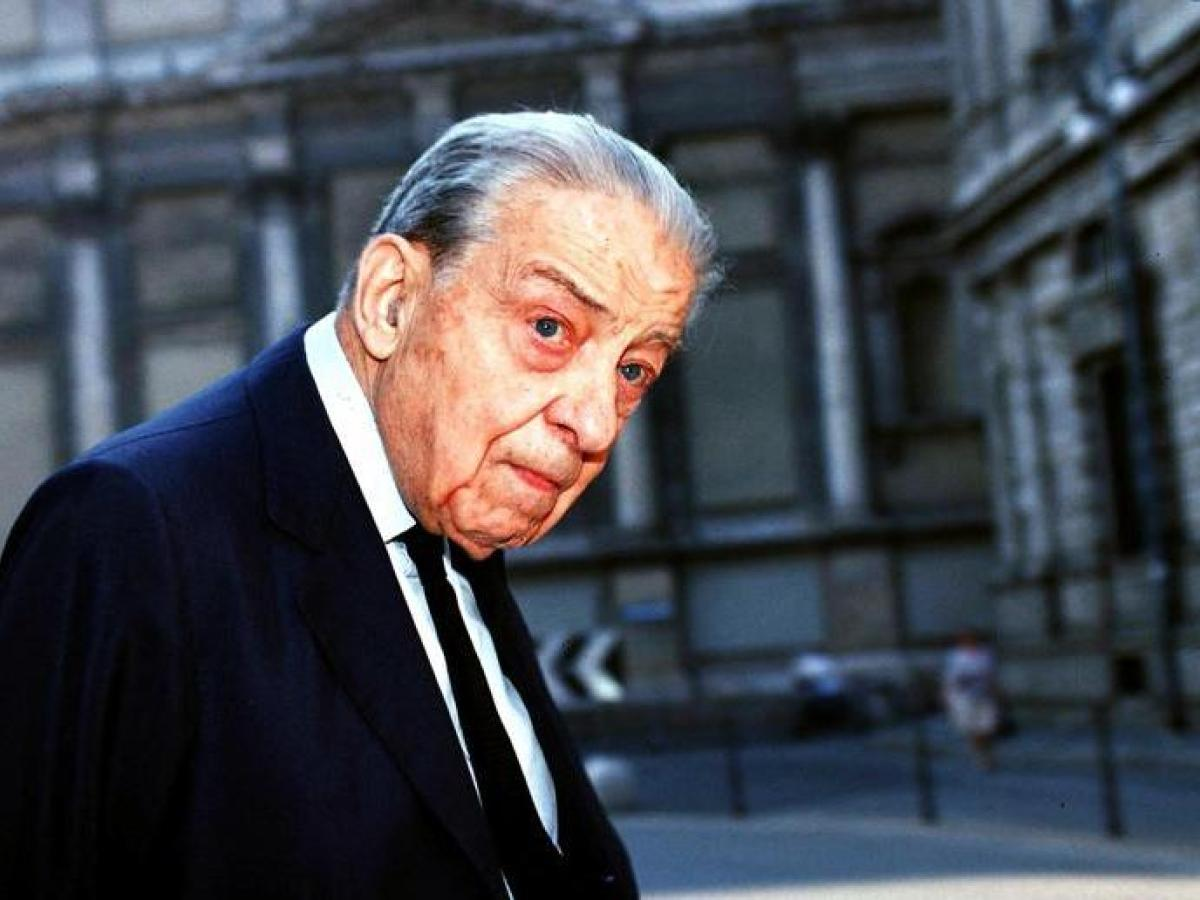
In March 2001, someone broke open his tomb and stole Cuccia's coffin.
The discovery caused a sensation in Italy. Investigators initially considered several possibilities, including extortion, revenge, and satanic rituals. Cuccia had spent decades negotiating with powerful industrialists and financiers, and the secrecy surrounding his career made it easy to imagine that someone might have wanted something from him even after his death. One theory suggested that confidential documents had been hidden inside his coffin. Another involved occult practices. For a brief period, the disappearance of Italy's most influential banker seemed to be turning into a supernatural mystery.
Then came the ransom demand. The thieves wanted billions of Italian lire, equivalent to several million dollars, in exchange for returning the remains. The demand reportedly included instructions for payment into a numbered Swiss bank account, along with a photograph of the coffin. Whoever had taken Cuccia was apparently expecting to make a fortune from the dead man's reputation.
But the operation began falling apart almost immediately.
The thieves sent their ransom demand to Paolo Cuccia, a corporate executive whom they apparently believed was related to the banker. He wasn't. They had selected the wrong Cuccia. After stealing the corpse of one of Italy's most famous financiers, they had managed to confuse him with an unrelated businessman who happened to share his surname.
Police eventually identified the perpetrators as Franco Bruno Rapelli, a truck driver, and Giampaolo Pesce, a steelworker from the Susa Valley. Both men were struggling with gambling debts. According to Italian reporting, the idea had emerged after Rapelli read about Cuccia's wealth and concluded that his heirs must have enough money to pay an enormous ransom.
The physical theft was apparently a disaster of its own. The men had reportedly called a funeral home to estimate the size of a coffin suitable for a man of Cuccia's stature. When they arrived, they discovered a much larger and heavier sarcophagus than expected. They struggled to move it, loaded it into a vehicle that could barely accommodate it, and covered the portion sticking out with a red blanket. According to accounts of their subsequent statements, they even drove backward along the final uphill stretch because they feared the coffin might slide out.
So much for the professional grave robbers.
The men eventually hid the remains in a barn in the Susa Valley, west of Turin, while attempting to negotiate their ransom. Pesce repeatedly contacted Mediobanca, including its chief executive Vincenzo Maranghi, using a public telephone booth. Police identified the location and watched for another call. On March 31, Pesce was caught while attempting to contact the bank, and investigators recovered Cuccia's remains from the barn, where they had been concealed beneath wood and wrapped in red fabric.
The entire scheme had lasted approximately two weeks.
Rapelli and Pesce were eventually convicted and received suspended prison sentences of less than two years. Their extraordinary attempt to extort millions from a dead banker was later adapted into an Italian comedy, L'ultimo Crodino. Apparently, even Italian filmmakers recognized that the actual events required very little embellishment.
There is one detail that caught my attention for reasons that should be obvious by now. Contemporary reports described the ransom instructions as involving a Swiss bank account, with some specifying a demand of six million Swiss francs. Switzerland has already appeared in this investigation through the Orsini-Bernheim foundation registered in Lugano. The overlap is geographic, and there is no evidence connecting the grave robbers to that foundation, but I was beginning to understand why this particular corner of European history produces so many conspiracy theories.
There is also an absurd detail in the thieves' personal histories. Italian reporting described Giampaolo Pesce as having the local nickname il Papa, or "the Pope," because his parents had reportedly wanted to name him Giovanni Paolo. I had started investigating a supposed Grey Pope and somehow ended up with a grave robber who was literally nicknamed the Pope.
I cannot make this shit up.
The man who witnessed Domenico Orsini's wedding was a famously discreet banker whose professional world intersected with some of Italy's darkest financial scandals. After his death, two gambling debtors stole his coffin, demanded millions through a Swiss bank account, accidentally contacted the wrong family, and got caught using a public telephone booth. One of them was apparently known around town as the Pope.
None of this implicates Domenico Orsini in the theft, the murder of Giorgio Ambrosoli, or the crimes associated with Michele Sindona. The documented connection remains Cuccia's presence at the 1977 wedding. But by this point, the real history had become so peculiar that the internet's stories about reptilian overlords were beginning to seem almost unimaginative.
And the Orsini connection to European finance does not end with Cuccia.
The Rockefeller connection that almost happened
The Grey Pope mythology also claims Pepe Orsini controls the Rockefeller family. The actual historical connection is considerably less dramatic, although still interesting.
During Mediobanca’s early development, Cuccia explored relationships with American financial institutions. One proposed connection involved Chase National Bank, associated with the Rockefeller banking empire. That arrangement did not materialize as intended.
Mediobanca instead developed important relationships with Lazard and Lehman Brothers. Lazard’s involvement eventually connected the institution to Antoine Bernheim, who became Domenico Orsini’s father-in-law.
That is the whole established Rockefeller connection.
An attempted banking relationship involving Cuccia, followed by a different relationship involving Lazard, whose prominent partner later became related to the Orsini family through marriage. It is a real network of financial institutions and powerful families. It is also several steps removed from proving that Domenico Orsini commands the Rockefellers.
Still, the network is worth examining because it illustrates how Europe’s aristocratic families remained connected to modern financial power even after their formal political privileges declined. Old titles survived. People died. New fortunes emerged. Marriage continued to connect the two.
The Rothschild claim has a particularly ugly history
Another recurring allegation is that Pepe Orsini controls the Rothschild banking dynasty. That claim belongs to a much older tradition of antisemitic conspiracy theories depicting Jewish banking families as instruments of a secret global hierarchy.
The Bernheim family history makes the allegation especially grotesque.
Antoine Bernheim came from a prominent Jewish family. His parents were deported from Drancy to Auschwitz in December 1943. They were victims of the Nazi persecution of European Jews.
Decades later, their daughter married into one of Rome’s oldest Catholic aristocratic families. That marriage is historically fascinating in its own right. It connects families shaped by profoundly different religious and political histories.
But conspiracy narratives can take that same connection and turn it into supposed evidence of an international banking cabal. The underlying relationships are real. The allegations of secret ethnic or religious control are not established by those relationships.
There is also a larger irony here.
The conspiracy portrays the Orsini as an ancient, unbroken ruling family. Yet the actual Orsini archives show a dynasty that experienced substantial financial losses, sold property, and struggled with creditors during the nineteenth century.
The UCLA Library holds an enormous collection of Orsini family records documenting estates, marriages, debts, legal disputes, and financial reversals.
The historical family was powerful, but it was not financially invincible. The dynasty survived partly because aristocratic influence could adapt to changing circumstances.
Which brings us back to Antoine Bernheim.
Two shares in Generali
One of the strangest details in this entire story involves Domenico Orsini personally appearing at shareholder meetings of Generali. Corporate meeting records describe him taking the floor after depositing just two shares. Two.
The alleged master of global finance was participating in a shareholder meeting with a holding small enough to fit in a coat pocket. His concern involved payments to his father-in-law, Antoine Bernheim, who had become honorary chairman following his departure from Generali’s leadership.
In May 2012, Domenico again became involved in efforts to resolve a dispute between Bernheim and the company. That is an actual documented intersection between the prince and the financial institution his father-in-law once chaired. And it is a useful reminder that even extraordinarily well-connected families can end up arguing about compensation, contracts, and corporate governance. The financial world is full of power struggles that never require a secret pope.
Sometimes the drama is simply an elderly banker, an insurance company, and a son-in-law who wants the dispute settled. We all can likely relate to having selfish or greedy family members, or to fighting over wills and estates once one passes away.
The palace built into ancient Rome
The Orsini family once occupied one of the most remarkable residences in Rome. Their palace incorporated portions of the ancient Theatre of Marcellus, a Roman structure begun under Julius Caesar and completed under Augustus.
The theatre originally entertained thousands of spectators beneath its enormous stone arches. After the empire declined, the surviving structure was fortified and incorporated into medieval residences. Eventually, the Orsini occupied the site, turning a monument of imperial Rome into an aristocratic stronghold.
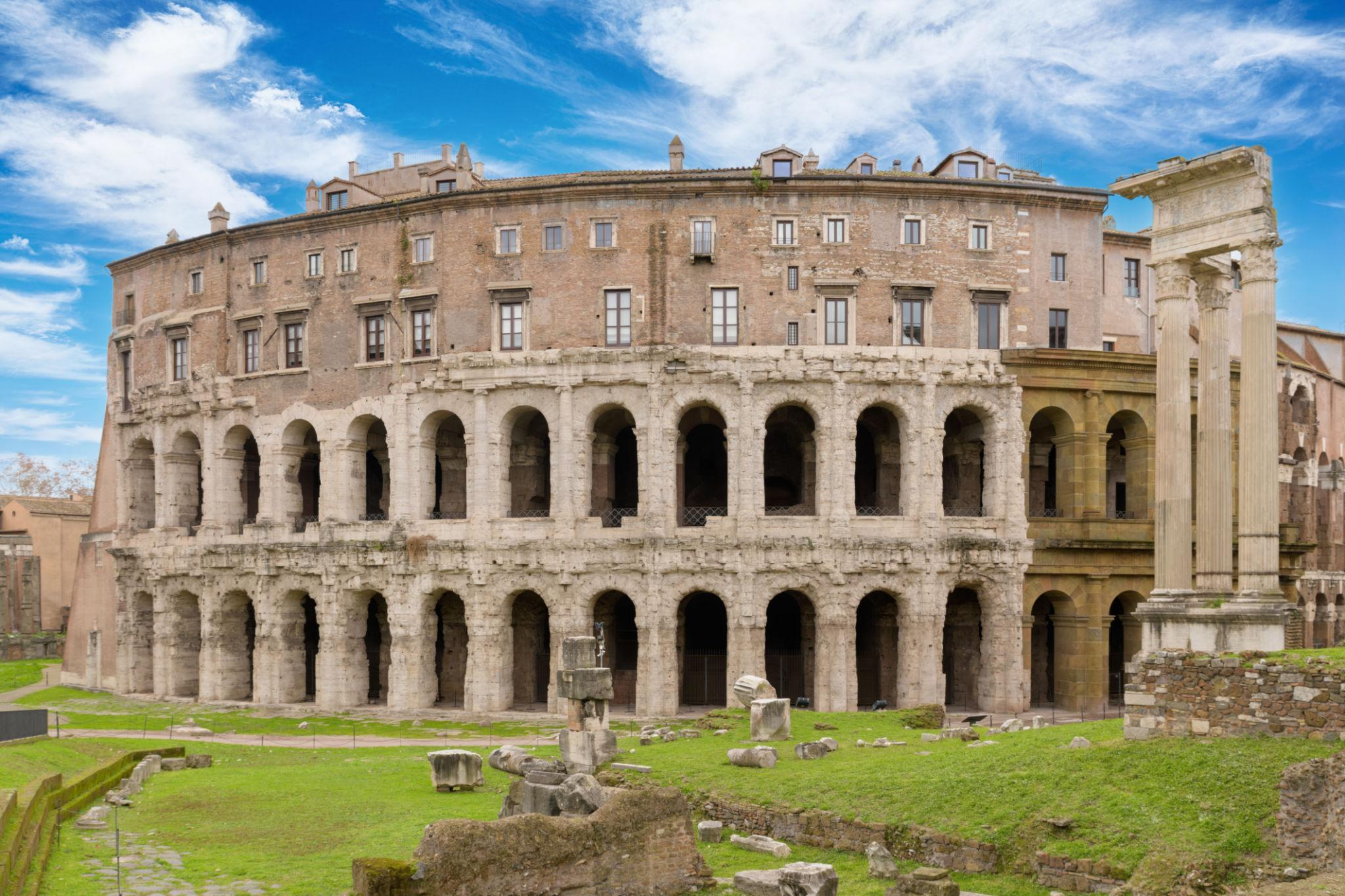
There is something wonderfully unsettling about a family living inside the remains of a civilization that disappeared nearly two thousand years ago. Emperors had come and gone, the Roman Empire had collapsed, and the city had been repeatedly conquered, rebuilt, and transformed. Yet the ancient stonework remained, eventually becoming part of the home of a family whose members would hold positions beside the popes.
The palace captures something important about Rome's aristocratic history. Power was not always expressed through an official position or public institution. It could be expressed through property, inherited relationships, and the ability to occupy places that had been important for centuries. A noble family might lose political privileges or suffer financial reversals while retaining a name, a network, and a connection to the physical history of the city.
In 2012, Domenico and Martine reportedly reacquired part of the historic family property. That same year, Antoine Bernheim died. The timing raises questions about the family's financial circumstances, but it does not establish that inheritance funded the purchase.
I had been looking for a mysterious figure supposedly controlling the Vatican from the shadows. Instead, I found a real family whose former residence was literally built into the ruins of ancient Rome. That seemed like a detail the conspiracy writers should have appreciated more.
And the Orsini story was about to acquire a Swiss chapter.
The Swiss foundation
Domenico and Martine’s names appear together on a registered Swiss foundation. The Domenico Napoleone Orsini & Martine Bernheim Orsini Foundation is registered in Lugano, in the canton of Ticino.
Its stated purposes include historical preservation, cultural programs, scientific and educational activities, and projects connected to the Orsini and Bernheim family legacies. The foundation’s registered objectives also contemplate collaboration with Vatican institutions. That is worth emphasizing.
The foundation does not merely invoke the family’s ancient papal connections. Its purposes explicitly include maintaining cultural relationships involving Vatican institutions.
Swiss registry information also places Domenico in Crans-Montana, the Alpine resort associated with wealthy international residents. Antoine Bernheim reportedly maintained a chalet there as well.
What interested me was how explicitly the foundation's stated purposes connected the Orsini and Bernheim family histories with Vatican institutions. The organization was registered in Switzerland, carried the names of an Italian aristocrat and the daughter of a major European banker, and contemplated cultural collaboration with the same religious institution that had once granted the Orsini family a hereditary position beside the papal throne.
The foundation's stated activities are cultural and educational, which is entirely consistent with the preservation of an aristocratic family's historical legacy. But its registration also creates a number of questions worth investigating. Who provided the original funding? How are its projects selected? Which institutions participate in its activities? What financial commitments have been made, and what relationships existed before the foundation was established?
These are ordinary questions to ask about an organization operating across national and institutional boundaries, particularly one associated with families whose histories intersect with European finance and the Vatican. The available registration information establishes that the foundation exists and identifies its purposes. It does not provide a complete picture of its finances or the relationships behind individual projects.
Then, in October 2026, the Vatican itself supplied an answer to at least one question. The foundation was doing more than expressing an interest in collaboration. It had entered into a formal agreement with the Vatican Apostolic Library.
The Grey Pope returns to the Vatican
On October 17, 2026, Vatican News announced a four-year agreement between the Vatican Apostolic Library and the Domenico Napoleone Orsini & Martine Bernheim Orsini Foundation. The agreement concerns 415 manuscripts once owned by Fulvio Orsini, a sixteenth-century scholar, antiquarian, and collector. Of those manuscripts, 272 require restoration, while 147 have not yet been digitized.
The foundation will support conservation, digitization, and scholarly work on the collection. The Vatican Library’s prefect, Mauro Mantovani, described the arrangement as an important cultural and scientific collaboration. The project also includes plans for an exhibition. The manuscripts are owned by the Vatican Library, and the stated purpose is to preserve and make them more accessible.
The funding amount was not specified in the Vatican News announcement. But consider the timing from the perspective of someone who has spent years reading about the Grey Pope.
An Italian aristocrat whose family once held a hereditary position beside the papal throne has a foundation bearing his name and that of his banking-heiress wife. That foundation is registered in Switzerland.
Its stated purposes include working with Vatican institutions. And now the Vatican itself announces a multiyear agreement involving hundreds of historic manuscripts.
Within days, conspiracy websites are again circulating stories about Pepe Orsini. The timing alone does not establish coordination, and the recycling of an old story is not evidence that its allegations are true.
But the announcement gives the mythology something it rarely has: a current, official, verifiable connection between the man and the Vatican. The supposed Grey Pope does have a Vatican footprint. It happens to involve book restoration.
The family’s forgotten son
The manuscripts themselves contain another unusual piece of Orsini history. Fulvio Orsini was born in 1529, an illegitimate son of the aristocratic family.
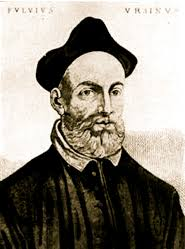
For someone born into one of Rome's most distinguished dynasties, Fulvio's position was precarious. His illegitimate birth meant he could not simply expect the inheritance, titles, or opportunities available to legitimate sons of the aristocracy. Whatever advantages his family name provided, his future depended heavily on education, patronage, and the relationships he developed within Rome's religious and scholarly institutions.
He eventually found a place in the intellectual world surrounding the great aristocratic and ecclesiastical households of Renaissance Rome. Ancient manuscripts, inscriptions, coins, and classical texts became the focus of his work. At a time when the remains of antiquity were being collected, studied, and sometimes removed from their original settings, Fulvio assembled an extraordinary collection that helped preserve knowledge of the ancient world.
When he died in 1600, he left his collection to the Vatican Library. Those manuscripts survived the fall of the Papal States, the unification of Italy, two world wars, and the enormous political transformations of the modern era.
There is something almost poetic about what happened next. The legitimate branches of the Orsini family continued their struggles over titles, property, inheritance, and political influence. Fulvio, whose place within that world had been uncertain from birth, left behind an intellectual legacy that outlasted many of their estates.
More than four hundred years after his death, a foundation bearing the names of Domenico Orsini and Martine Bernheim is helping preserve it. For once, the strangest part of the story requires no secret society.
The rose, the bear, and the mafia
The Orsini coat of arms includes a rose. That symbol has helped fuel claims connecting the family to Rosicrucian traditions, secret societies, and occult organizations.
The name Orsini also derives from orso, the Italian word for bear. Conspiracy posts have used that linguistic connection to associate the family with organized-crime groups bearing similar names. Neither connection establishes an institutional relationship.
Heraldry is particularly useful material for conspiracy theories because it was designed to communicate identity, inheritance, and authority through symbols. A coat of arms might contain animals, flowers, crosses, crowns, or objects whose meanings developed through centuries of family history. Those symbols were reproduced on buildings, seals, documents, tombs, and religious monuments, sometimes surviving long after the political circumstances that originally gave them meaning had disappeared.
The problem begins when the existence of a shared symbol is treated as proof of a shared institution. A rose on a noble family's coat of arms can be linked to a rose in a religious painting or the emblem of an unrelated secret society. A bear in a surname can become evidence of a criminal alliance. Once someone starts searching for symbolic connections with a conclusion already in mind, almost anything can become evidence.
The Orsini hardly need invented symbolism to make their history interesting. Their documented relationships with popes, cardinals, aristocratic families, and financial institutions already provide a remarkable picture of how influence could persist across generations.
But the symbolism helps explain why the mythology spreads. A modern banker may have an office and a corporate biography. An ancient Roman dynasty has a coat of arms, a papal bloodline, a palace built into an imperial ruin, and a family name that has survived for nearly a millennium.
One of those is considerably easier to turn into a legend.
The questions that still bother me
There are several parts of this story I have not been able to resolve.
After following this story through centuries of papal history, twentieth-century banking, aristocratic marriages, and a contemporary Swiss foundation, I was left with a strange imbalance. The more I investigated Domenico Napoleone Orsini, the more documentary evidence I found for his family's historical relationships and contemporary institutional activities. Yet the central claim that started the investigation, that this man was secretly known as Pepe Orsini and occupied a position above the pope, remained almost entirely unsupported.
That imbalance raises questions about how the mythology developed. Someone decided that a living Italian aristocrat was the face of an already circulating conspiracy figure. Someone began distributing photographs under that identification. Other writers repeated the claims, gradually attaching additional families, institutions, and criminal organizations to the supposed hierarchy. The resulting narrative now has a recognizable central character, even though I have not found a reliable explanation for how that identification began.
There are also unanswered questions about the real man's activities. The Swiss foundation is identifiable, its objectives are public, and its Vatican collaboration has been officially announced. But the available information does not establish its complete financial position or the full extent of its institutional relationships. Those are gaps that could potentially be addressed through records, reporting, and interviews rather than speculation.
The following questions are the ones I would most like to see answered, partly because they concern the actual history of the Orsini and Bernheim families, and partly because they might help explain how a relatively obscure contemporary prince became the central figure in one of the internet's stranger Vatican conspiracies.
Who is the man in the photograph?
One image, seen below, circulated in Grey Pope discussions shows an older man wearing distinctive blue glasses and a gold watch over his shirt cuff, standing near a television camera with a FAIC Foodservice vehicle visible behind him.
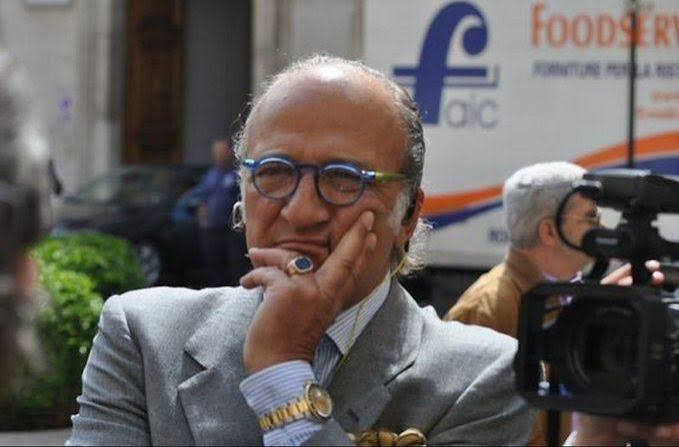
Some accounts identify him as Domenico Orsini. Others dispute the identification. The watch-over-the-cuff style is famously associated with Fiat’s Gianni Agnelli, although it was also adopted by other wealthy Italians. I could not locate a reliable original caption or photographer’s attribution.
A photograph of Domenico from his June 2025 interview with Il Bello, reproduced earlier in this article, provides a useful comparison. There is a resemblance, but without an independently verified source for the older image, I cannot establish that the two photographs show the same man.
The photograph is only one of several questions about the Orsini family that I haven't been able to answer. Domenico has said his father worked there, but the documented ceremonial position doesn't necessarily explain the full extent of Filippo's responsibilities or whether he held other positions. Then there is the question of how Domenico became the Grey Pope in the first place.
The Pepe Orsini mythology was circulating by 2011, but those early accounts did not establish a verifiable identity. At some point, someone connected the fictional-sounding Pepe to a living Italian duke, and that identification spread until it became accepted as fact within conspiracy circles. I still haven't found a reliable explanation of who made that connection, what evidence they offered, or why so many people accepted it.
The financial questions are equally interesting. The Orsini-Bernheim foundation is registered in Switzerland, and its agreement with the Vatican Library is public, but I haven't established the full extent of its assets, funding commitments, or institutional relationships. Antoine Bernheim's connections to Lazard, Mediobanca, Generali, and some of Europe's wealthiest industrialists are well documented, although those relationships don't establish that his son-in-law controlled their businesses.
What I'd like to see are the actual records: directorships, financial interests, foundation filings, correspondence, and transactions that establish who was involved in what, and when. Those documents would tell us considerably more about the family's influence than another anonymous internet account claiming the Grey Pope owns the Rockefellers.
True or the Woo?
The Grey Pope is an extraordinary figure.
He supposedly commands popes, bankers, intelligence services, royal families, and criminal organizations while remaining almost entirely invisible. The boring truth is that the evidence for that sweeping claim is remarkably thin.
But the man whose identity has been attached to the legend belongs to a family that really did occupy the highest levels of Catholic aristocracy. His father really was removed from a prestigious papal-court position after a public scandal. His baptismal godfather, according to Domenico’s own account, became Pope Paul VI.
His wife is the daughter of Antoine Bernheim, a banker who helped shape European corporate finance. Enrico Cuccia, one of the most influential figures in modern Italian banking, witnessed their wedding. Cuccia’s career intersected with the financial world surrounding notorious Italian scandals. His corpse was stolen after his death. And this month, a Swiss foundation bearing Domenico’s and Martine’s names entered an official agreement with the Vatican Apostolic Library.
Those connections are more than enough to justify looking closely at the family. They are not enough to establish the secret hierarchy described in the Grey Pope mythology.
And there is still the question that brought me here in the first place. Who decided that Pepe Orsini, the supposed Grey Pope circulating through internet conspiracy theories, was Domenico Napoleone Orsini? I found plenty of people repeating the identification, but no reliable evidence establishing where it originated. That is a rather significant problem when the entire story depends on identifying the man supposedly running the world.
There is another possibility worth considering, though. The legend may have become popular precisely because it attaches itself to relationships that ordinary people rarely get to see up close.
None of those facts requires a conspiracy.
But taken together, they describe a world in which hereditary status, financial influence, religious institutions, and personal relationships have remained intertwined for generations. That world is real, and its history is far more complicated than a secret pope commanding the planet.
The Grey Pope theory offers a simple explanation: one hidden man controls everything. The actual history offers something harder to understand, a network of people and institutions whose relationships endure long after the formal titles and political arrangements that originally brought them together have disappeared.
I cannot tell you that Domenico Napoleone Orsini secretly runs the Vatican. I can tell you that his family has been close enough to its highest offices for centuries that a pope once had to personally remove his father from one of them.
Maybe the most interesting question was never whether a Grey Pope exists. Perhaps it was how an aristocratic family could lose its formal place beside the papal throne, survive the collapse of its old political world, marry into modern banking power, and still be doing business with Vatican institutions nearly seventy years later. That is the story I want to keep following.
For now, the alleged ruler of the world is a family man with three dogs, a Swiss foundation, and 415 manuscripts to help preserve. The reptiles will have to wait.
Sources and further reading
The Grey Pope narrative
- Who Is Pepe Orsini? The “Grey Pope” Claim, Traced to Its Source — September 2026 investigation of the claim’s origins, including the October 28, 2011 webpage, early republications, and Karen Hudes’s later involvement. Useful for provenance, not proof of the allegations.
- Pealing back the onion layers. The Power behind the Power and some more — WordPress, October 28, 2011. Early surviving conspiracy narrative naming Pepe Orsini as the Grey Pope; linked and discussed in source 1.
- The Real 13 Zoroastrian Bloodlines of the Illuminati — Ascension With Earth, July 18, 2012. Early republication discussed in source 1.
Orsini genealogy and Vatican history
- Orsini, Dukes of Gravina — Genealogical Register — Birth, marriage, ancestry, and family relationships, including the 1977 Bernheim marriage and membership in the Order of Malta.
- Interview with Prince Domenico Napoleone Orsini — Il Bello, Ornella Trotta, June 21, 2025. Primary interview covering his father, Montini, Wojtyła, family life, cultural foundation, and three dogs.
- Orsini Family Papers, UCLA Library Special Collections — Archival collection covering the family’s political, financial, and genealogical history.
- Pontificalis Domus — Pope Paul VI, March 28, 1968. Apostolic letter reorganizing the papal household and its traditional court structure.
Banking and financial relationships
- La Stampa, June 5, 2012 — Obituary of Antoine Bernheim identifying Enrico Cuccia as a witness at Martine Bernheim’s wedding.
- Le Monde, June 2012 — Obituary and career retrospective of Antoine Bernheim, covering Lazard, Generali, and relationships with major French industrialists.
- Assicurazioni Generali shareholder meeting records — Proceedings concerning Domenico Orsini’s participation, Antoine Bernheim’s honorary chairmanship, and the 2012 dispute. Exact meeting-document URLs should be checked before publication.
- Historical reporting and judicial records concerning Michele Sindona, Giorgio Ambrosoli, Enrico Cuccia, and the 2001 theft of Cuccia’s remains. Individual primary references still need to be attached before publication.
The contemporary foundation
- Swiss Commercial Registry: Fondazione Domenico Napoleone Orsini e Martine Bernheim Orsini — Registration CHE-303.085.827, Lugano. Registered objectives and organizational information.
- Vatican Library and Orsini Foundation: Agreement for 415 Manuscripts — Vatican News, Paolo Ondarza, October 17, 2026. Official report of the four-year restoration, digitization, and research agreement.
- The Vatican Library and the Orsini Foundation: Spanish-language coverage — Vatican News, October 2026. Additional official description of the manuscript collection and collaboration.
- El País, April 1, 2001 — Arrest, ransom demand, mistaken identity, and recovery of the remains.
- la Repubblica, January 25, 2011 — Names, gambling debts, sentences, and film adaptation.
- Corriere della Sera reporting, reproduced by Cinquantamila — The red blanket, driving backward, and Pesce's nickname il Papa.
- l'Unità, December 6, 2001 — Contemporary coverage of the convictions.



Member discussion