Don't Tell The Vendor
Don't Tell the Vendor
By Matt Stone | The Grounded
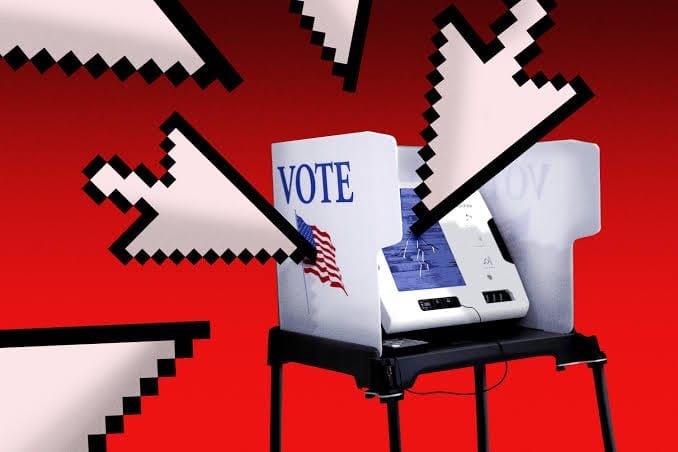
A few months into President Donald Trump's second term, political appointees at the Department of Homeland Security made a request of the Cybersecurity and Infrastructure Security Agency, better known as CISA. Get a voting machine. Hack it. Send what you find to the White House. And do not tell the company that made it.
That is not a theory. ProPublica reported it on October 19, based on two former administration officials who knew about the request. DHS and CISA did not answer ProPublica's questions. The White House defended Trump's record on election security and sent specific questions to DHS.
CISA's career staff said no. They told the appointees, more than once, that it could not be done. Part of the reason: the agents who could have pulled it off had just been laid off by Elon Musk's Department of Government Efficiency. The appointees eventually stopped asking.
Sit with that for a second. The thing that stopped it was not a law, a judge, or a principle. It was that the experts had already been fired.
A Security Test With No Fix
Here is how a normal security test works. You find a weakness. You tell the people who make the machine. They fix it. Everybody's vote is safer for it.
This request skipped the fix. Acquire, hack, report up, tell nobody but the White House. CISA was directed not to alert the vendor if it found flaws, which ProPublica notes went against the agency's standard practice. The findings were not to even be shared with the company that could patch them.
A test with no repair step is not a test. It is an inventory. One former official told ProPublica they feared the findings would be held in reserve, ready to be used against election results the administration did not like. You do not have to prove that intent. The plan itself left no room for a good one.
How the Watchdog Got Gutted
Trump signed the law that created CISA in 2018. After Russia's interference in 2016, elections were named critical infrastructure, and CISA spent years earning the trust of state election officials. The deal at the center was simple: states share sensitive information about their systems, and CISA keeps it private.
In 2020, CISA joined state officials and voting machine companies in calling that election the most secure in American history. Trump fired its director, Chris Krebs, over Twitter.
Since Trump returned in 2025, according to ProPublica:
•More than 1,000 CISA employees have been laid off or pushed out, about a third of the agency.
•DOGE cut the staff who worked closely with states on elections.
•The administration cut funding for the sensors that watched election networks for intrusions.
•Trump's 2027 budget proposes cutting another $700 million, which could mean 900 more layoffs.
•State officials say CISA was effectively missing through mid-September 2026, when most midterm preparation normally wraps up. It released a 13-page election security plan on September 24.
Then the trust broke. To back up claims Trump made in a July 16 national address, the administration published records states had handed CISA in confidence, including a log of activity monitored on Election Day 2020. Some state officials told ProPublica they no longer trust the administration enough to share anything with CISA.
In August, acting CISA director Nick Andersen, a former Trump White House cyber adviser who is also a district representative for the Virginia Republican Party, finally met with state election officials by video. When they asked where CISA had been, he blamed the 2025 government shutdown.
The administration has also shown what happens when independent experts give the wrong answer. Under then-Director of National Intelligence Tulsi Gabbard, the government seized election machines in Puerto Rico and hired a contractor, Mojave Research, to examine them. When Mojave found no evidence supporting claims about 2020, its CEO said the government stopped renewing its contract. ODNI claims the work ended because the contract was complete.
The Playbook
There is always a pattern. Trump says America's elections are wide open to hackers. His administration strips out the agency built to protect them. When states ask where the help went, the answer is a shutdown. When confidential state data gets published, the White House calls it transparency.
Point at the threat. Cut the defense. Blame whoever is left holding it. Never admit any wrongdoing.
Meanwhile, in Tennessee
Tennessee is in early voting right now. It runs through October 29, and Election Day is November 3. The top race is for governor: Republican U.S. Senator Marsha Blackburn against Democrat Jerri Green, a Memphis City Council member.
Voters in Davidson and Williamson counties have told Nashville's WSMV that the touchscreen registered a candidate they did not pick. Jackie Herrud, voting at the Longview Recreation Center in Spring Hill, said she kept selecting Green and “it kept punching back to Marsha Blackburn.” Toni Fitzgerald, at a different Williamson County site, described pressing one candidate and watching the machine land on another. Stella Parton, Dolly Parton's sister, wrote that she had to correct her selection three times at Nashville's Hermitage Library because it kept defaulting to Blackburn.
It is not only Middle Tennessee. On October 17, the Jackson-Madison County NAACP and other local groups held a press conference about complaints that Madison County machines were changing voters' selections. The county's administrator of elections, Lori Lott, called it user error.
Tennessee has seen this before. In 2024, Shelby County voters reported the same kind of problem. Officials traced it to the ballot layout: the Republican was listed above the Democrat, so a touch near the top edge of the Democrat's box could land on the Republican. That same year, Davidson County handed out coffee stirrers so voters could tap more precisely.
What the State Says
On October 20, the Secretary of State's office told WSMV it had received one complaint of this kind out of roughly 400,000 ballots cast. A day later, state elections coordinator Mark Goins said a few more calls had come in since the first story aired. WSMV, meanwhile, described dozens of voters reporting the problem.
Goins says this is not vote flipping. He blames unintended touches and compared it to typing on a phone with long fingernails. He says that when a problem is reported, his office sends both a Republican and a Democratic technician to examine the machine. Davidson County is bringing the coffee stirrers back for any voter who asks. Tennessee elections rely, in part, on coffee stirrers.
There is a real safeguard here, and it matters. Tennessee law has required a voter-verified paper trail since 2024. In Davidson and Williamson counties, the touchscreen does not store votes. It prints a paper ballot, and the scanner counts the paper. Goins points to three chances to catch a mistake: the candidate's name lighting up green, a review screen, and the printed ballot itself.
So here is what is established: voters caught the wrong selection and fixed it before casting. Nobody has shown that any cast vote was changed or that any total was altered.
And here is what's still wrong:
•The official count does not match the reporting. One complaint to the state is not dozens of voters on the evening news.
•The only fail-safe is the voter. Someone in a long line who does not read the paper before feeding it to the scanner casts whatever the machine printed.
•This is a known problem from at least 2024, and it is back in a high-turnout governor's race.
•The state is inspecting its own machines with its own technicians. The federal backstop that used to help states chase down problems like this is the one that went missing.
Where Does a Request Like That Go?
Back to Washington. When CISA said no, did the idea die, or did the quest for the hacked election machine continue?
It could have been dropped. It could have gone to another federal office, a private contractor, or somewhere outside government entirely. No reporting so far shows it went anywhere, which is expected. Nobody has shown that it did not, either. That question has a paper answer: DHS appointee communications from 2025 about acquiring or testing voting equipment. The people who could have done the job were laid off, not erased. Their skills went with them, and anyone with a contract and a checkbook can hire them, especially a trillionaire.
What Fixes This
•Paper that voters can read. Hand-marked paper ballots for most voters, with machines for the voters who need them. If a machine marks the ballot, the part that gets counted should be the part a human can read.
•Audits that are actually independent. Researchers with real access, methods published, results released no matter which way they cut, and the vendor told what is broken. Mojave shows what happens when the people paying want a certain answer.
•States checking their own machines. In 2007, California's Secretary of State brought in University of California experts to attack every voting system certified in the state. They found serious security holes, and the state pulled or restricted those systems until security improved. Tennessee already has the start of this. After every November election, the Secretary of State randomly picks six counties for an audit, and counties with scanners that are not picked must audit the top race. Davidson and Williamson should get a full audit this year, and the machines named in complaints should get a real inspection with the results made public.
•Voters protecting themselves today. Tap the middle of the candidate's name. Make sure it lights up green for the person you picked. Check the review screen. Read the paper before it goes in the scanner. If anything is wrong, get a poll official and ask them to write it down. Davidson voters can ask for a coffee stirrer. The Tennessee Division of Elections is at 1-877-850-4959.
The Pendulum
It seems to be forgotten amongst all the rabid tribalism that empowering one party empowers both parties. Every tool you let your side use belongs to the other side the day they win.
A voting machine quietly hacked, with its flaws kept secret, is a weapon. Whoever holds the White House holds it. Gut the watchdog because it embarrassed your guy in 2020, and it will not be there when the other guy is in charge either.
It is not only machines. In the 2025 Wisconsin Supreme Court race, Elon Musk handed out $1 million checks to voters who signed his group’s petition, saying the money was ‘in appreciation for you taking the time to vote.’ Wisconsin law bars paying anyone more than $1 to get them to vote. In July 2026, the state’s bipartisan Elections Commission voted 5-1 that there was probable cause he broke that law. In August, the special prosecutor declined to charge, saying a jury would not convict. If a billionaire can do that and walk, the next billionaire will too, whichever side he is on.
The Democrats who insisted American elections could never be rigged helped too. Call a system perfect long enough and nobody can make the case for paying the people who check it. One side declared it unbreakable. The other side fired the people checking whether it was broken. That gap is where someone walks in and a fair election walks out.
The pendulum always swings back. Build the guardrails for the day your side loses, because that day always comes.
The Grounded stands behind every factual claim it publishes with a $100 accuracy guarantee. Find an error of fact and tell us. If you are right, we pay.
Sources
•CISA: 2026 Election Security Plan (Sept. 24, 2026)
•WSMV, Oct. 20, 2026: Early voters report challenges casting their vote at Middle Tennessee locations
•WBBJ, Oct. 21, 2026: Secretary of State stops in West Tennessee with two weeks until Election Day
•PolitiFact, Oct. 24, 2024: Votes in Shelby County, Tennessee, not swapped by voting machines
•Verified Voting: Tennessee audit laws
• BillTrack50: Tennessee voter-verified paper audit trail requirement
•Williamson Herald: Williamson County completes first election performance audit in Tennessee
•California Secretary of State: Top-to-Bottom Review (2007)
• EFF, Aug. 2007: California decertifies voting systems after Top-to-Bottom Review


Member discussion