The Weight of Silence
by Matt Stone
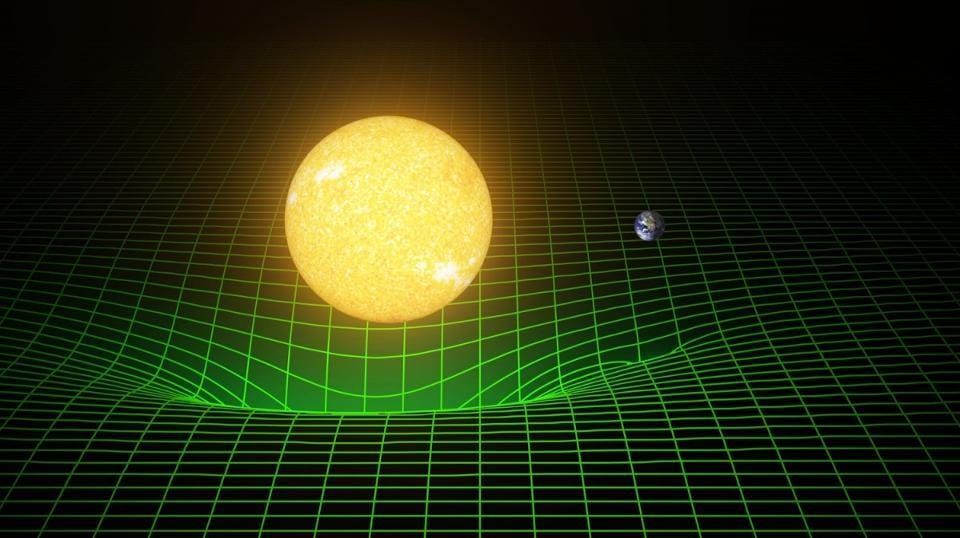
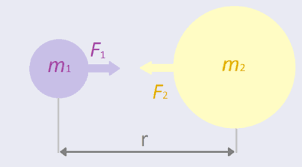
Gravity is the oldest force in human experience and the one we understand least. We have known it our entire lives, felt it in every step, every fall, every effort to lift anything off the ground, and in all of recorded history we have learned exactly one thing about how to deal with it: push harder.
Every rocket ever built is a controlled explosion aimed at a problem we have never actually solved. We don't manipulate gravity. We don't negotiate with it. We simply throw enough fire underneath ourselves to outrun it temporarily, at enormous cost, and call that space travel.
Compare that to what we've done with every other fundamental force. Electromagnetism gave us electricity, radio, computing, the entire digital world. The nuclear forces gave us reactors and medical imaging. We found each of those forces, studied them, learned their structure, and bent them to human use. Gravity we observe, measure, and fall subject to. Nothing else.
The question this article is going to ask is simple: what if that didn't have to be true--and what if someone decided it shouldn't be found out? What if someone had the power to make sure?
What We Could Actually Have
To understand why that question matters, you have to understand what gravity modification would actually mean -- not in a science fiction sense, but in the concrete, mundane, world-altering sense.
Start with transportation. The fuel cost of moving mass from one place to another is the hidden tax underneath the price of almost everything you buy. Food travels thousands of miles before it reaches you. Medicine, manufactured goods, construction materials, clothing, the price of all of it includes the cost of fighting gravity and friction across entire continents and oceans. That cost is paid in fuel, and fuel means oil. Even a modest, inefficient ability to reduce the effective gravitational load on a vehicle, not eliminate it, just reduce it, changes the economics of movement at a civilizational scale. Goods get cheaper. Supply chains get faster. The geography of poverty changes, because the places that are poor partly because they are expensive to reach become less expensive to reach.
Then consider space. The reason space travel remains the exclusive domain of governments and billionaires is almost entirely gravity. Getting one kilogram of material into low Earth orbit currently costs thousands of dollars and requires burning fuel at a rate that makes the whole enterprise feel less like exploration and more like a very expensive argument with physics. A gravity modification technology doesn't make space cheaper in the way that reusable rockets make space cheaper. It changes the fundamental relationship between human ambition and the energy required to act on it. The solar system becomes a different kind of place, not a frontier that only the wealthiest institutions can afford to touch, but something genuinely accessible.
Go further. The theoretical connection between gravitational mass and inertial mass means that a technology touching one touches the other. Researchers who worked seriously in this space weren't just talking about lift. They were talking about inertia, about the energy cost of accelerating any mass in any direction. A meaningful reduction in inertial resistance doesn't just change transportation. It changes manufacturing, construction, agriculture, energy generation. It cascades through every physical process human civilization runs on.
This is not a niche technology with specialized applications. It is potentially the most transformative physical capability in human history, more consequential than electricity, more consequential than the internal combustion engine, more consequential than nuclear power. The physicist Ning Li, who we will meet shortly, understood this. Amy Eskridge, whose story is at the center of this article, understood this. They dedicated their careers to it, at considerable personal cost, because the magnitude of what it could mean for ordinary human life was not something they could walk away from.
None of this would be without cost. The displacement of oil as the foundation of the global economy would be the largest economic disruption in human history. The petrostates of the Middle East, whose entire social contracts rest on hydrocarbon revenue, would face existential crises. Russia, whose geopolitical leverage derives almost entirely from energy exports, would be fundamentally weakened. Millions of jobs in extraction, refining, transportation, and infrastructure would disappear. The transition would be violent in the economic sense, and in some places possibly in the literal sense. The entire world would be thrown into disarray as global energy infrastructure is transformed.
But consider what sits on the other side of that disruption. Energy poverty, which kills more people annually than most wars, largely ends. The cost of food, medicine, and manufactured goods drops at a scale that changes what ordinary life looks like for billions of people. The resources of the solar system become accessible not as a privilege of wealthy nations but as a common inheritance. The disruption would be real, but so would the liberation.
The people with the most to lose understood this calculus clearly. The question is whether they acted on it. And how far they were willing to go to ensure a continued dependence on fossil fuels.
Someone else understood it too. And their interest was not in seeing it succeed.
The Most Dangerous Idea in the World
The oil industry does not sell fuel. That is not its product. Its product is the ability to move, to move people, to move goods, to move energy from one place to another. Fuel is just the mechanism by which ships, planes, and cars all operate. The monopoly is on movement itself, and it is the most valuable monopoly in human history.
Global oil and gas revenues run to roughly two trillion dollars a year. That number understates the actual exposure. Petrostates--Saudi Arabia, Russia, the UAE, Kuwait, Iran, derive the majority of their governmental revenue from hydrocarbon extraction. Their political stability, their military capacity, their geopolitical weight, everything they are on the world stage rests on the fact that the global economy cannot move without their product. The sovereign wealth funds built on oil revenues control trillions more in global assets. The major Western banks and institutional investment funds carry fossil fuel exposure across their portfolios at a scale that makes the 2008 mortgage crisis look contained.
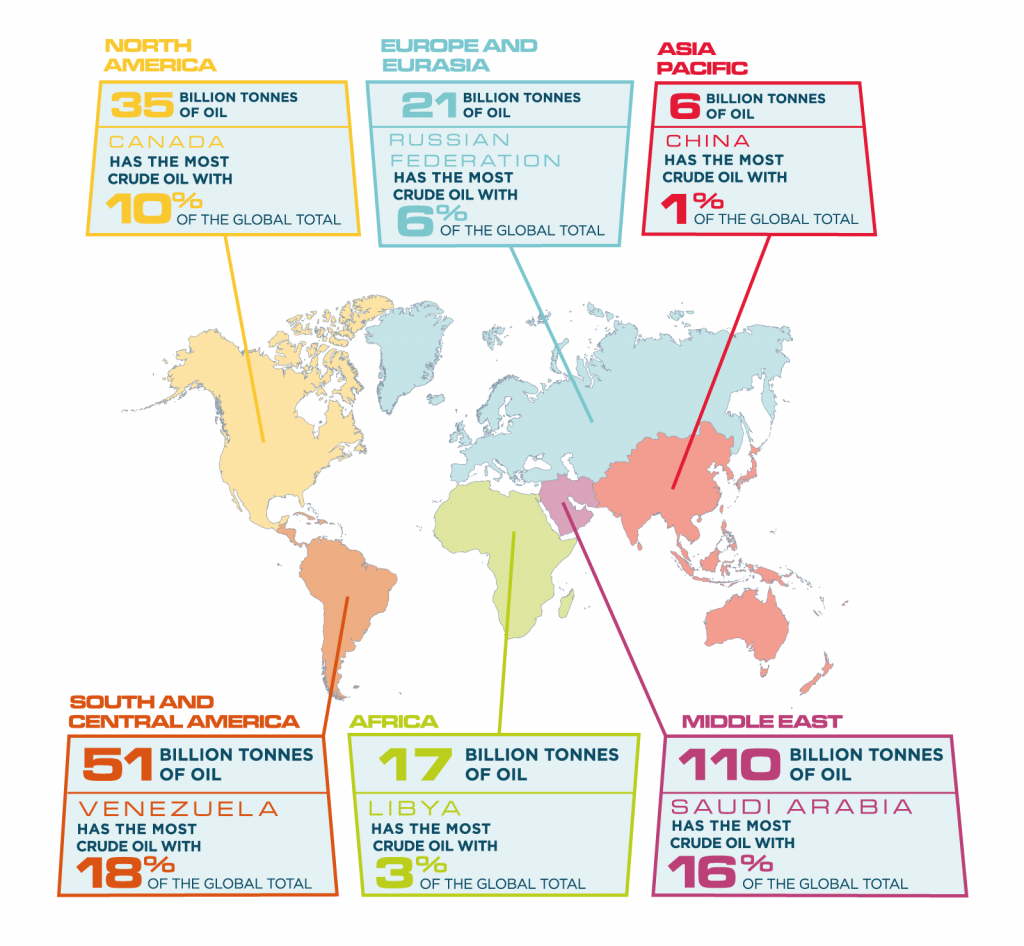
Electric vehicles threaten a portion of this. That is why the industry has fought them, funded climate denial, lobbied against emissions standards, and worked systematically to delay the energy transition for decades, and that's for a technology that still requires enormous infrastructure, still requires power generation from existing grids, and leaves the basic economic structure of moving mass around largely intact. The electric vehicle is a minor threat to the fuel pump. It is not a threat to the premise of our entire global energy infrastructure.
Gravity modification is a threat to the very premise of fossil fuels.
If the energy cost of movement itself drops, not because you've found a cleaner way to generate the same thrust, but because you've reduced the fundamental physical resistance that makes thrust necessary, the entire edifice comes down. Not gradually, not manageably, not in the way the industry has learned to absorb and adapt to incremental threats. The bottom falls out and the industry is flipped on its head. The product that two trillion dollars a year depends on selling becomes, in the most literal physical sense, less necessary.
The Proof Is in the Crisis
If you want to understand the financial stakes in abstract terms, consider the numbers. If you want to understand them in human terms, look at what is happening right now.
The 2026 war in Iran and the effective closure of the Strait of Hormuz, through which roughly twenty percent of the world's oil passes, has delivered something remarkable. Not a crisis for the oil industry. A windfall.
An analysis by Oxfam International found the six largest fossil fuel companies, Chevron, Shell, BP, ConocoPhillips, Exxon, and TotalEnergies, are earning nearly $3,000 a second in 2026. That is $37 million a day more than they earned last year. Their projected combined profit for the year is $94 billion. Saudi Aramco reported a 25% rise in first-quarter profit, posting net income of $32.5 billion for three months. Brent crude, which traded at roughly $70 a barrel before the fighting began, crossed $103 a barrel and peaked above $126 during the conflict.
Meanwhile the average American is paying $4.18 a gallon at the pump, the highest price since 2022. European drivers paid an extra €150 million a day in the opening weeks of the war. Food prices in affected regions have surged. The head of the International Energy Agency described the situation as "the greatest global energy security challenge in history."
The people profiting from that challenge are the same people who would lose everything if the energy cost of movement itself became negotiable.
You do not need to believe in coordinated conspiracy to understand what follows from this. You just need to understand how large concentrations of capital behave when they are threatened. Money flows toward the protection of existing value. It flows into political influence, into the institutions that set research priorities, into the editorial structures that decide what science is legitimate and what science is not. It flows away from anything that threatens the asset base it is protecting. This is not strategy in any conscious sense, it is the natural behavior of capital under threat, as reliable and as impersonal as gravity itself.
The question is not whether this financial pressure exists. It does, visibly and with an extensive paper trail. The question is how far it reaches, into university funding structures, into government research priorities, into the careers of individual scientists who asked the wrong questions at the wrong time.
The record suggests it reaches further than most people know. And it has been reaching for a long time.
The Pattern
The suppression of gravity modification research does not look like men in black suits arriving at laboratories. It looks like funding that never materializes. Papers that don't get published. Careers that quietly stop. Programs that are cancelled without explanation and never restarted. It looks, from the outside, almost exactly like what you would expect if the research simply weren't very good. That is what makes it effective.
The first thing to understand is the structure and role of a scientist's reputation in academic physics. Prestige in that world is carefully maintained and brutally enforced. String theory, quantum gravity, cosmology, these are high status fields even when they are wildly speculative and experimentally untestable. A physicist can spend an entire career working on theories that produce no verifiable predictions and remain a respected member of the community. The status comes not from results but from the right questions being asked within the right institutional frameworks.
Gravity modification sits outside those frameworks. And the moment a serious researcher moves toward it, something happens that has nothing to do with the quality of their work. They become associated with a category, fringe science, free energy, perpetual motion, that has been pre-contaminated by enthusiasts, fraudsters, and true believers who have attached themselves to the same territory. The guilt is categorical and it is immediate. A physicist who publishes on gravity modification now shares a citation space with people who believe the government is hiding flying saucers. That association alone is professionally terminal, regardless of the rigor of the underlying work.
This is not an accident of culture. It is a self-reinforcing system, and it functions as well as any explicit gatekeeping ever could.
Eugene Podkletnov
In the early 1990s a Finnish-Russian materials scientist named Eugene Podkletnov was working at Tampere University of Technology in Finland when he observed something he wasn't looking for. A rotating superconducting disc, cooled with liquid helium, appeared to produce a measurable reduction in the weight of objects suspended above it. The effect was small, fractions of a percent, but it was reproducible in his laboratory, and he believed it was real.
He wrote it up. Before the paper could be published, someone leaked it to the press. The coverage was immediate and sensational, and the university's response was equally immediate. They distanced themselves from Podkletnov publicly. The paper was withdrawn. His position at the university effectively ended. He moved back to Russia and continued working outside any institutional framework, largely in isolation.
Here is what makes the Podkletnov case significant beyond his own career. NASA took his results seriously enough to attempt replication. Without publicity or fanfare, quietly, internally, the kind of investigation an institution undertakes when it thinks there might be something real to look at. The replication produced ambiguous results that were never published in any conclusive form. The program was defunded. Podkletnov's name became shorthand in physics circles for exactly the kind of career-ending association serious researchers learn to avoid.
Whether his results were real is a question that has never been definitively answered. The replication program that might have answered it was shut down before it could.
The NASA Breakthrough Propulsion Physics Program
In 1996 NASA established something genuinely unusual, a funded, peer-reviewed internal research program specifically dedicated to exploring speculative propulsion concepts, including gravity modification. It was called the Breakthrough Propulsion Physics program, and it was run by a physicist named Marc Millis.
What Millis has written about the experience since is worth reading carefully. The program faced not just external skepticism but internal institutional hostility. Researchers associated with it found their broader careers affected. The work was legitimate, the methodology was sound, the peer review was real, and none of that insulated participants from the reputational consequences of being associated with the subject matter. Millis has described the difficulty of doing serious science in a space where the topic itself is treated as evidence of poor judgment.
The program ran for six years. It was cancelled in 2002. No successor program was established. The questions it was asking, about the fundamental physics of propulsion, about whether gravity could be worked with rather than simply fought, went back to being questions that serious researchers understood they should not ask publicly.
Six years. In the history of NASA programs, six years is not long enough to build a rocket, let alone resolve questions about the fundamental structure of spacetime. The program was cancelled not because it had failed but because it had not yet succeeded, which in the context of genuinely frontier research is not a meaningful distinction. Frontier research fails for years before it doesn't. That is what frontier research is.
Ning Li
Of all the figures in this story, Ning Li is the one whose career most clearly illustrates the full arc of what happens to a serious researcher who gets too close to something real.
Li was a Chinese-American physicist who arrived in the United States in 1983 and eventually found her way to the University of Alabama in Huntsville, where she worked at the Center for Space Plasma and Aeronomic Research. Between 1991 and 1993, working alongside co-author Douglas Torr, she published a series of papers in Physical Review, one of the most prestigious physics journals in the world, outlining a theoretical mechanism for producing an antigravity field using a high-temperature superconducting disc. The papers were rigorous. They were peer reviewed. They appeared in a journal that does not publish speculation.
Her claim was specific: that within a superconducting disc, the gravitational effect of individual ions could be aligned and compounded, producing a measurable gravitomagnetic field with repulsive properties. She sought funding from NASA and from the United States Army Aviation and Missile Command. She received it. The Department of Defense gave her approximately $450,000 to continue her work.
Then, around the year 2000, she stopped publishing. She formed a private company, AC Gravity, and effectively disappeared from public scientific life. For years afterward, online speculation accumulated around her absence, had she gone back to China, had she been disappeared, had her research been seized. The speculation grew loud enough to reach millions of people.
The reality, confirmed by her son George in a 2023 interview with the Huntsville Business Journal, was simultaneously more mundane and more telling. Li had not disappeared. She had continued her research, but under a top secret security clearance, for the Department of Defense, which meant she could no longer publish, could no longer present at conferences, could no longer participate in the open scientific community in any meaningful way. Her work had not been abandoned. It had been walled off.
Her son also confirmed that in 2008 Chinese government officials approached Li with an offer to return to China and continue her research there, with full state support. She refused. The Chinese government's response was to prevent her from returning to China to attend her own mother's funeral.
Think about what that detail means. A foreign government wanted her work badly enough to make that kind of move. The United States government wanted it badly enough to classify it entirely. Neither response suggests the research was going nowhere.
In 2014 Li was struck by a vehicle while crossing the street on the UAH campus. The impact caused permanent brain damage. Her husband witnessed the accident and suffered a heart attack; he died the following year. Li spent her remaining years in her son's care, suffering from Alzheimer's disease. She died on July 27, 2021, at the age of 78.
Freedom of Information Act requests attempting to access details of her classified research have been denied. What she found, what the Department of Defense did with it, and why it has never been made public are questions the record does not answer.
What the record does answer is the pattern. Serious researcher. Legitimate credentials. Real funding from serious government institutions. Then silence, classification, and a wall that FOIA requests cannot penetrate. The work didn't stop. It just stopped being something the public was allowed to know about.
That pattern is about to repeat itself, more violently, in Huntsville, Alabama. And this time the researcher saw it coming.
Amy Eskridge
Amy Eskridge grew up inside this world. Her father, Richard Eskridge, was a NASA engineer who had spent his career working on propulsion concepts at the edge of what was officially sanctioned. She graduated from the University of Alabama in Huntsville with a double major in chemistry and biology, went on to master electrical engineering, and eventually built a working knowledge that crossed physics, chemistry, and genetic engineering in ways that don't fit neatly into any single academic category. She was not a hobbyist. She was not a conspiracy theorist with a YouTube channel. She was a serious, credentialed researcher who had grown up breathing the same air as the people who built America's rocket program, and who had decided to take the next step they hadn't.
She co-founded the Institute for Exotic Science with her father in Huntsville, the same city where Ning Li had worked, the same city that sits at the center of American aerospace and defense research, and she was explicit from the beginning about what she was trying to do. She described the Institute as "a public-facing persona to disclose antigravity technology." Not to research it quietly. Not to publish in journals and hope someone noticed. To disclose it, to make it public, to put it in front of people in a form they couldn't ignore.
That decision, it turns out, was not naive. It was strategic. And she understood exactly what she was doing.
In a 2020 interview she described what had already happened to her and her father as a result of their work. The harassment. The surveillance. The escalating pressure that had been building for years. And she articulated, with a clarity that is difficult to read now without stopping, exactly why she had chosen to work publicly rather than privately:
"If you stick your neck out in public, at least someone notices if your head gets chopped off. If you stick your neck out in private, they will burn down your house while you're sleeping in your bed, and it won't even make the news."
She also said, in the same interview: "We discovered antigravity, and our lives went to hell and people started sabotaging us. It's harassment, threats. It's awful."
And: "I have to publish because it's only going to get worse until I publish."
She understood the logic of her own situation with complete lucidity. Visibility was protection. The moment she stopped being visible, she stopped being protected. She was publishing not because she thought the institutions would welcome what she had found – she knew they wouldn't – but because the alternative was disappearing quietly into a situation where no one would know to ask questions.
The Surveillance
The harassment she described was not abstract. She gave specific accounts of being followed, a Lexus, she said, presenting itself as an Uber, tracking her movements. The specificity is important. This is not the vague ambient paranoia of someone whose grip on reality is loosening. This is a named make of vehicle, a described method of cover, a particular operational detail of the kind that either comes from direct observation or from a very specific kind of fabrication. She was not describing a feeling of being watched. She was describing a car.
The Weapons
She also documented, in images and video she shared with people close to her, what she described as physical attacks using directed energy weapons. She posted footage of what she said were burns on her hands, and described an RF K-band emitter powered by five car batteries inside an SUV parked in her vicinity. She described the mechanism, the equipment, the power source. Again, specific, technical, detailed. The kind of detail that is either accurate or the product of a very particular kind of deterioration.
Her family has said she was suffering from chronic pain in the period before her death, and that they do not believe her death was suspicious. That is part of the record and it belongs here. Her father, the NASA engineer who worked alongside her, does not believe she was killed. Those are not small things to note.
But then there are the messages.
May 24, 2022
Eighteen days before her death, Amy Eskridge sent a message to a friend. The full text, in her own words:
"FYI, I've been getting death threats everyday repeatedly for the past week or so for my most recent work. Like I finally crossed some line with my own independently developed theory, and it got surveilled. It tipped me over onto some fucked up kill list. I left myself a voice note on my hacked phone about some super heaty shit that I figured out, then the daily death threats immediately started rolling in on a daily basis. The past week has been absolutely horrible. I don't even know how to explain it, the most heinous death threats you can imagine. I've been telling the people closest to me over the past few days 'I absolutely did not kill myself, no matter what you heard.' I have told so many people over the past week that it's simply impossible to take them all out. Goddamnit."
In the same conversation she sent photographs of her hands. The caption she wrote: "Burns line up perfectly with the edge of the table as I was typing. Getting hit repeatedly with military grade sci fi weapons is pretty tiresome after awhile."
The tone of that last sentence deserves attention. Not hysteria. Not pleading. Something closer to exhausted, dark humor--the tone of someone who has been living with something unbearable long enough that they've started making grim jokes about it. It is not the tone of psychosis. It is the tone of someone who is very tired and very frightened and trying not to fall apart.
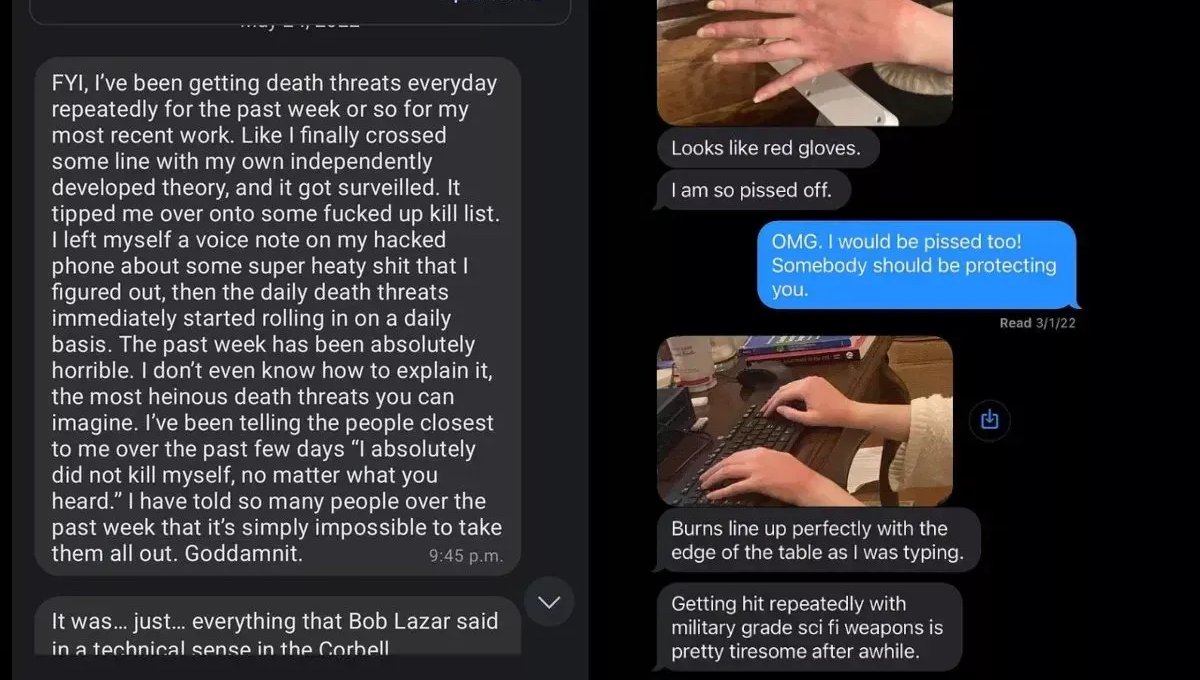
She also referenced, in the same conversation, that what she had discovered aligned technically with what Bob Lazar had described, placing her own theoretical work in a specific lineage that she clearly believed was real and significant and dangerous to have found.
She had told so many people she hadn't killed herself, she wrote, that it would be impossible to silence all of them.
June 11, 2022
Amy Eskridge was found dead in Huntsville, Alabama. Single gunshot wound to the head. The ruling was suicide. She was 34 years old.
The people she had told, the ones she said were too numerous to silence, are why her messages survived and why we are reading them now. Whether that was enough, whether visibility was the protection she believed it was, is a question this article holds no answers for.
What it can say is this: she saw it coming, she said so specifically, she documented it in detail, she told everyone she could find, and eighteen days later she was dead.
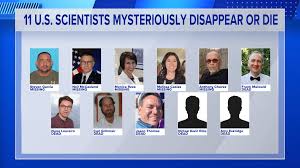
The Current Missing
Before we get to the names, a clarification is necessary, because the way this story has been covered in 2026 has muddied something important.
The scientists and officials who have disappeared or died in the past few years were not, for the most part, antigravity researchers. That label has been applied loosely and sometimes inaccurately by outlets chasing a more dramatic headline. The truth is both more mundane and more significant. These were people who worked inside the classified architecture of American aerospace, defense, and nuclear research--the same architecture that swallowed Ning Li's work, that funds the programs that never get published, that sits behind the FOIA denials and the security clearances and the institutional walls that serious researchers disappear behind when their work gets interesting enough to classify.
They were not studying antigravity. They were in the rooms where the decisions about what gets studied, what gets classified, and what gets buried are made.
David Wilcock was not a scientist. He was not a researcher, not a government employee, not a person with any documented connection to classified aerospace programs or advanced physics research of any kind. He was a New Age personality with a large online following who died by suicide on April 20, 2026, in the presence of law enforcement officers in Boulder, Colorado. His inclusion on various "missing scientists" lists is an example of exactly the kind of conflation that makes legitimate cases easier to dismiss. He is not part of the larger pattern this article explores.
One reason Wilcock has been added to the list is due to Congressman Tim Burchett publicly raising questions about whether Wilcock's death was what it appeared to be. A sitting member of Congress suggesting that a public figure's death in the presence of police officers deserves scrutiny is not nothing, regardless of what you think of Wilcock or of Burchett. It is a question that has a straightforward answer if the evidence exists.
The Statements
Something unusual happened as the story of the missing and dead scientists spread through media and online communities in early 2026. Families issued statements. These were not the normal brief requests for privacy, not a few words of grief passed through a funeral home, they were formal, deliberate public communications that addressed conspiracy theories directly and by name. This does not happen in most cases. It happened in several of these.
The family of Amy Eskridge stated that she suffered from chronic pain at the time of her death and declined to characterize her death as unusual. Her father, the NASA engineer who worked alongside her on the research that she believed got her killed, who heard her describe escalating harassment and surveillance, who knew better than anyone what she had been working on and what she was afraid of--his public statement was that scientists die like other people.
Maybe he believes that. Maybe that's all it is.
Or maybe that's exactly what you say when you want everyone to shut the fuck up and move on. At your own behest, or maybe with a gun to your head.
The family of Michael David Hicks was more openly distressed by the attention. His daughter said there was "no train of logic to follow that would implicate him" in any conspiracies. His brother was more blunt. He expressed anguish that a man who had contributed to more than 80 scientific papers, who had worked on NASA's Deep Space 1 mission and the DART asteroid deflection project, who had given nearly 25 years to some of the most serious aerospace research in the country, was now going to be remembered--in his brother's words--for "some baloney, Loch Ness Monster, Bigfoot conspiracy theory." That anger is understandable. It is also, whether intentionally or not, exactly the framing that makes further inquiry nearly impossible.
David Wilcock was famous. He had millions of followers. And when he died by suicide on April 20, 2026, in the presence of law enforcement officers in Boulder, Colorado, his family released a statement that ran to several hundred words. It covered his childhood, his education, his published books, his relationship with his audience, and his mental health struggles. It acknowledged, directly, that "some of his work raised concerns about misinformation." And it included this specific assurance: "Many who knew him from afar have speculated that there is a cover-up involving his death, but we can assure you there was no foul play."
Families do not typically feel the need to assure the public there was no foul play. That language appears in statements when someone with standing has raised the question publicly. Congressman Tim Burchett raised it publicly. The statement may be a direct response to that.
A statement that says there was no foul play is not evidence that there was no foul play. It is a claim. Claims have a straightforward relationship with evidence, either the evidence supports them or it doesn't. The body camera footage from the officers present at Wilcock's death would speak directly to that claim. Under Colorado law, law enforcement agencies have 21 days to respond to public records requests for body camera footage. In the absence of an active investigation, that footage is not discretionary, it is supposed to be made available to the public upon request. This reporter submitted that request. As of publication, no similar request appears to have been made or reported by any other outlet.
We are waiting.
William Neil McCasland
Retired Air Force Major General William Neil McCasland is one the most significant figures in this story, and understanding why requires understanding who he actually was.
His wife has pushed back on speculation from the UAP research community that his disappearance is connected to classified programs or sensitive knowledge. That is part of the official record.
McCasland spent decades at the highest levels of American aerospace and defense research. He has been named publicly by credible figures within the defense and intelligence research community, including Luis Elizondo, the former head of the Pentagon's Advanced Aerospace Threat Identification Program, as someone with direct knowledge of the most sensitive advanced aerospace programs the United States government runs. Not peripheral or secondhand knowledge, direct knowledge. The kind that comes from being in the room, from having the clearance, and from being the person other people with clearances report to.
On February 27, 2026, McCasland disappeared from his home in Albuquerque, New Mexico. He left without his phone and even his prescription glasses. He took his wallet and a handgun.
A retired Air Force Major General with documented connections to the most sensitive aerospace research programs in the American government walks out of his house and vanishes. He leaves his phone, the device that could be tracked, that contains his communications, that connects him to everyone he knows. He leaves his glasses, without which he cannot see clearly. He takes only what he needs to move and, if necessary, to defend himself.
Make of that what you will.
The Others
Monica Reza was the Director of Materials Processing at NASA's Jet Propulsion Laboratory. Materials science for advanced aerospace applications, the unglamorous, essential work of figuring out what things are made of and how they hold together under conditions that don't exist anywhere on earth. She disappeared in June 2025 while hiking in the Angeles National Forest. The case remains open.
Michael David Hicks worked at JPL for nearly 25 years, contributing to more than 80 scientific papers including work on NASA's Deep Space 1 mission and the DART asteroid deflection project. He died July 30, 2023. No cause of death was made public. The LA County Coroner attributed his death to cardiovascular disease, a finding his family has not disputed, though the absence of any public disclosure for months fed the speculation that surrounded his case.
Frank Maiwald was a principal researcher at JPL. He died July 4, 2024. No cause of death was made public. The cause still remains unknown.
These are not people who were researching antigravity in their garages. They were credentialed, senior figures inside the institutional structure that decides what America's most classified research programs look like. They knew things, not necessarily about antigravity specifically, but about the programs, the priorities, the architecture of classified aerospace research that the public never sees. They were inside the wall that FOIA requests bounce off of.
What This Is and What It Isn't
No established link between these cases has been confirmed. The FBI has said it is reviewing them for connections and has found none publicly. Experts in statistics and social psychology have noted, correctly, that clustering of deaths among any professional cohort looks meaningful even when it isn't, and that the human tendency to find patterns in random noise is powerful and well documented.
All of that is true and it belongs in any honest accounting of this story.
Also true: we have a decades-long documented pattern of research into gravity modification being defunded, classified, and made professionally toxic. We have a financial incentive for that suppression so large it is difficult to fully comprehend. We have a researcher who documented specific, detailed threats against her life, sent messages to everyone she could find saying she had not killed herself, and was dead eighteen days later. And we have a cohort of senior figures from inside America's most classified aerospace programs who have, in the past few years, disappeared or died, not antigravity researchers, but the people who knew where the walls were, what was behind them, and why they existed.
The pattern may be coincidence. The incentive is real. The suppression is documented. And Amy Eskridge is dead.
What We Lost
Go back to the beginning. Back to what this technology actually means.
Not for governments. Not for defense contractors or sovereign wealth funds or the geopolitical calculus of which nation develops what first. For people. Ordinary people whose food costs what it costs because of the price of moving it. Whose medicine is priced the way it is partly because of the infrastructure required to get it from where it's made to where it's needed. Whose access to space, to the resources of the solar system, to the kind of future that science fiction has been promising for a century, remains gated behind the brute economics of fighting gravity with fire.
The oil industry understood what was at stake before most physicists were willing to say it out loud. The classification apparatus understood it. The funding structures that decide which questions are legitimate and which are professionally terminal understood it. The understanding was not academic. It was financial, and it was existential, and it expressed itself in the ways that existential financial threats always express themselves, quietly, institutionally, through the redirection of resources and the management of reputations and the slow erosion of the careers of people who were asking the wrong questions for the wrong reasons, which is to say the right questions for the right ones.
Ning Li published in Physical Review, received government funding, made a breakthrough significant enough to classify, and spent the last decade of her life unable to speak, tended to by her son, her work locked behind walls that freedom of information law cannot open. Eugene Podkletnov produced results that NASA thought were worth replicating, lost his institutional position, and continued working in isolation in Russia while the replication program that might have confirmed or refuted his findings was quietly defunded. The NASA Breakthrough Propulsion Physics program ran for six years, produced serious work by serious people, and was cancelled without a successor. The questions it was asking went back to being questions that serious researchers understood not to ask.
And Amy Eskridge, who grew up in this world, who understood exactly what she had found and exactly what finding it meant, who chose visibility over safety because she believed the public had a right to know and because she understood that invisibility was a death sentence, sent a message to everyone she could reach saying she had not killed herself, documented the burns on her hands, named the vehicle that was following her, and was found dead in Huntsville, Alabama, eighteen days later.
She was thirty four years old.
Her father does not believe she was killed. Her family has spoken of chronic pain and personal struggle. Those things can be true and other things can also be true, and the record does not allow us to be certain either way. What the record does allow is this: she was specific, she was credentialed, she was frightened, she was documenting, and she is gone.
General McCasland is gone. Monica Reza is gone. The work of Ning Li is gone behind a classification wall that shows no sign of opening.
And gravity remains the one fundamental force in the universe that we have never learned to work with. The one that still costs us two trillion dollars a year to fight. The one whose secrets, if they exist, would be worth more than any other discovery in human history.
Amy Eskridge believed she had found them. She said so. She documented what happened next.
Whether she was right, and whether that is why she is dead, are questions this article cannot answer.
They are questions that somebody should.
Works Cited
Eskridge, Amy. Interview with Jeremy Rys. YouTube, 2020.
Eskridge, Amy. Text messages sent to a friend, May 24, 2022. Images publicly circulated via Newsweek, Daily Mail, NBC News, 2026.
Men, George. Interview with Noah Brennan. Huntsville Business Journal, July 30, 2023. "Solving the Mystery of Huntsville's Brilliant Scientist Disappearing."
Millis, Marc. NASA Breakthrough Propulsion Physics Program. Program records and subsequent public writings. NASA, 1996-2002.
NBC News. "FBI Will Look for Connections to Deaths and Disappearances of Scientists." April 2026.
Newsweek. "List of Dead or Missing Scientists 'Suspicious' as 11th Case Raised." April 2026.
Newsweek. "The Huntsville Mystery: Are Two Dead Scientists in Same Town Connected?" April 2026.
Wilcock Family. "Statement from the Family of David Wilcock." April 2026.
Wikipedia. "Missing Scientists Conspiracy Theory." Last modified May 2026.
Wikipedia. "Ning Li (Physicist)." Last modified May 2026.



Member discussion