9 min read

Deotis Roberts: Liberation and Reconciliation

Deotis Roberts: Liberation and Reconciliation

By Matt Stone                                                                                                                       

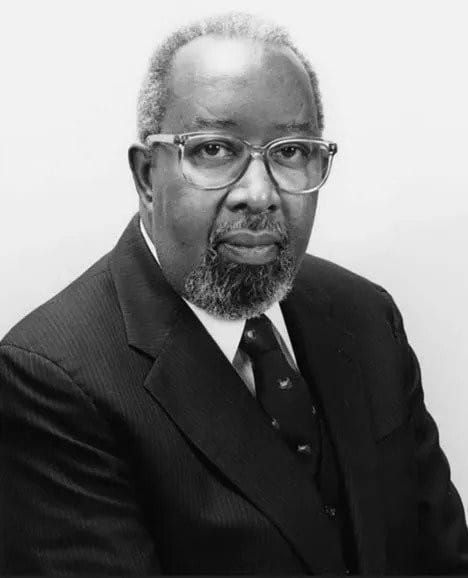
            J. Deotis Roberts’s Liberation and Reconciliation argues that Black theology must hold liberation and reconciliation together. His central claim is that reconciliation without liberation is false, because there can be no real unity while oppression remains, but liberation without reconciliation is also incomplete, because the goal is not endless separation but restored human relationship. My thesis is that Roberts’s most important contribution is his insistence that Christian theology must begin in the lived experience of Black suffering while still pressing toward a future shaped by justice, equality, dignity, and healed relationship.

            In Roberts’s work, God is understood as both Liberator and Reconciler, and that double emphasis is what gives his theology its distinct shape. He shares with James Cone the conviction that Black theology is necessary in a racist society, but he parts ways with Cone by arguing that liberation alone cannot be the final horizon of Christian thought.

            What makes Roberts especially significant is that he is trying to answer a harder question than simple resistance. He is asking what kind of human future should exist after liberation. That is where his work takes on its distinctiveness. He rejects cheap racial harmony, sentimental unity, and any call for peace that leaves power structures untouched. He insists that justice must come before reconciliation. That sequence matters. Roberts does not begin with unity, and he does not tell Black people to reconcile themselves to degradation. His basic order is liberation first, then reconciliation. Reconciliation, for Roberts, means a new relationship built on equality, justice, and dignity, not forgetting history or overlooking injustice.

            Theology, for Roberts, must begin with the lived experience of Black people, especially the reality of racism, segregation, oppression, and dehumanization. This is why his work belongs firmly within Black theology rather than outside it. He is not doing abstract doctrine for its own sake. He wants theology to be contextual, rooted in actual historical suffering rather than floating above it. That is one of the strongest features of his project. Like Cone, he understands that theology is never neutral. It always speaks from somewhere, and the choice to begin with Black experience is not a detour from theology. It is the black theologian’s choice because theology that ignores the suffering of Black people in America is already morally compromised. Roberts’s work gains force from this refusal of abstraction. Yet, Roberts work would likely not have existed without Cone blazing the trail first.

            At the same time, Roberts is critical of approaches that leave theology trapped within permanent antagonism. He critiques Cone’s Black theology as too narrow and argues that it will not lead to real intercommunication between the races. That critique is important because it shows Roberts is not just offering a softer tone. He is making a real theological argument about ends. He believes Christianity is not only about freeing the oppressed but also about restoring broken relationships.

            Oppression damages everyone, though not in the same way, and reconciliation is necessary for the full humanity of both oppressed and oppressor. That does not level the moral field between them. Roberts is clear that oppression falls most brutally on the oppressed. Still, he believes the social and spiritual damage of racism extends across the whole community, and that Christian theology has to address both liberation from domination and the healing of shattered human bonds.

            This is one reason Roberts’s thought is shaped so strongly by Martin Luther King Jr. He emphasizes love, justice, and nonviolent transformation. That does not mean weakness, and it does not mean bypassing power. It means he believes that the Christian goal is not endless conflict as an end in itself. It is transformed relationship. Roberts’s concern is that if theology stresses liberation without reconciliation, it may leave people with struggle as the only horizon. He wants more than that. He wants a society where Black dignity is affirmed and genuine interracial community becomes possible. In that sense, his work stands partly between Cone’s emphasis on liberation and more traditional Christian language about reconciliation. Unlike soft liberal theology, Roberts does not begin with unity. Unlike separatist or purely conflict-based approaches, he does not end with division.

            One of the most compelling parts of Roberts’s theology is his treatment of God. God is not described as a distant abstraction but as both Liberator and Reconciler. That means divine action is understood in relation to history, suffering, and moral transformation. Roberts sees racism as both a social and spiritual problem, which means it cannot be solved merely by private goodwill or vague moral language. White Christianity in America, in his view, has often failed because it preached unity while tolerating racial domination. That is one of Roberts’s sharpest insights. A Christianity that talks reconciliation while leaving oppression intact becomes fraudulent. It blesses domination under the language of peace. Roberts rejects that kind of theology outright. He insists that any real theology of reconciliation must pass through liberation and justice first.

            His treatment of liberation is equally important. Roberts sees liberation as necessary for the full humanity of the oppressed. One of the lines in the notes captures this difference clearly: “Freedom sums what is, liberation is what ought to be.” That is a strong way of naming the problem. Formal freedom can exist on paper while actual liberation remains absent in lived life. Roberts therefore treats liberation as more than a legal or political word. It involves the restoration of dignity, humanity, and social reality. It means confronting structures of domination that have reduced Black life through racism, segregation, and economic exclusion. This makes his theology morally serious. He is not satisfied with symbolic change or rhetorical inclusion. Liberation has to be real.

            Roberts also pays close attention to the Black family and to the damage slavery inflicted on Black communal life. He argues that slavery destroyed the Black family, forcing Black women into roles of household leadership under brutal conditions, while Black women were also left out of the so-called “right to work” feminist movement. That concern broadens his theological vision. He is not only talking about race in the abstract. He is tracing how oppression deforms intimate life, gendered expectations, family structure, and social participation. That gives his work a stronger social texture. Theology, in Roberts, cannot stop at broad declarations about justice. It has to ask what racism has done to actual people, actual families, and actual communities.

            This also explains why Roberts thinks the church should be an agent of both freedom and healing. The notes put it bluntly: the church should be using its vast resources to fight racism. That is fully consistent with Roberts’s larger argument. A church that speaks of love while doing little about racial injustice is not practicing Christian reconciliation. It is protecting comfort. Roberts believes the church has a responsibility to participate in liberation and then in the long labor of healing what oppression has destroyed. In that sense, he treats the church as a historical actor, not just a spiritual shelter. It should fight racism directly, and it should help build the conditions for restored human community.

            Another important dimension of Roberts’s thought is that he does not pretend to solve the full mystery of suffering. One of the notes points out that God’s will transcends human comprehension regarding why God allows Black people to be oppressed. That tension matters because Roberts does not reduce theology to social theory. He still leaves space for the unresolved problem of theodicy. Racism is not merely a political fact. It raises theological questions about providence, suffering, and divine justice that cannot be solved cleanly. Roberts’s strength is that he does not let those questions become an excuse for passivity. He acknowledges the mystery, but he still insists on moral action. In other words, uncertainty about why God allows suffering never becomes permission to tolerate it.

            If Roberts’s project is compared directly with Cone’s, the clearest way to put it is this: Cone had the stronger argument on power, while Roberts had the stronger argument on relationship. Cone is harder to get around when the issue is domination, because he begins from the reality of power and refuses to let theology hide above suffering. He is stronger at diagnosis. Roberts is stronger at aftermath. He is stronger when the question becomes what comes after confrontation, whether there can be shared life without denial, and how reconciliation can happen without collapsing into sentimentalism.

            That is why Cone is better on who has power, who is being crushed, how theology has sided with whiteness, and why neutrality is nonsense. Roberts is better on what redemption looks like once oppression has been named and fought. I think Robert’s work has aged well into today’s political and social climate, especially about the oppressed representing a much larger swath of the population can just those with darker skin.

            This comparison also clarifies Roberts’s weakness. His language of reconciliation can be too easily stolen by people who want peace without justice. That is where Cone protects against misuse. Cone makes it much harder for white Christianity to hide behind politeness. Roberts’s strength, however, is that he refuses to let struggle itself become the final theological horizon. He insists that the goal is not permanent conflict but transformed relationship. That is not softness, it is a serious theological claim about what redemption requires.

             If I had to put it plainly, Cone had the better argument first, and Roberts had the better argument second. Without Cone, Roberts can slide into cheap reconciliation. Without Roberts, Cone can risk leaving permanent conflict as the horizon. The strongest reading is not Cone or Roberts in isolation. It is that Cone sets the terms, and Roberts asks what redemption looks like once those terms are honored.

            Overall, Roberts’s theology is compelling because it refuses two false choices. It refuses reconciliation without liberation, and it refuses liberation without a vision of restored human community. That double refusal is what makes the book important. He is trying to hold together justice and healing, power and relationship, historical suffering and theological hope. His cleanest position can be summarized this way: there can be no real reconciliation without justice, and no full justice without a vision of restored human community. That is why his work still matters. He saw that Christianity cannot stop at naming oppression, but he also knew that any talk of unity before justice is fraudulent. Roberts’s theology is demanding precisely because it will not let either side off the hook.

            In conclusion, Liberation and Reconciliation is a significant work in Black theology because Roberts insists that liberation and reconciliation belong together in the right order. Theology must begin in the lived reality of Black oppression, it must name racism as a social and spiritual evil, and it must treat liberation as necessary for the full humanity of the oppressed. But Roberts also argues that reconciliation remains necessary for the full humanity of both oppressed and oppressor, provided it is built on justice, equality, and dignity rather than sentimentality. His work is shaped by Black experience, by the struggle against racism, and by a King-like vision of love joined to justice. Where Cone offers the sharper diagnosis of domination, Roberts offers the deeper reflection on what a redeemed future might require. That is what gives his theology its lasting value, even though Cone’s work was foundational to the position Roberts later refined. In simpler terms, Cone walked so that Roberts could run.