38 min read

Jesus Christ was Not White

A theology that cannot survive honest scrutiny cannot ultimately sustain the communities it seeks to serve.
Jesus Christ was Not White
Jesus Christ. Supposedly.
Who decided Jesus was white in the first place?

By Matt Stone

Introduction: What I Already Knew Before I Read Any of This

            I grew up in Robeson County, North Carolina, the most violent county in the state. My uncle was the sheriff. Years later, I learned he was also corrupt. A documentary reference to Lumberton, North Carolina led me to court records revealing that Hubert Larry Deese, a cocaine dealer and the alleged illegitimate son of my uncle Hubert Stone, was a coworker of one of the men convicted of murdering Michael Jordan's father, and that a phone call from Jordan's car went to Deese the night of the murder. Green's lawyers argued in 2015 court filings that this connection was withheld from the jury to protect Deese and avoid a narcotics investigation. My uncle was also implicated in the death of Julian Pierce, a Lumbee civil rights attorney who had publicly stated he would investigate the sheriff's alleged protection racket with drug dealers. Pierce was found shot dead two days after my uncle took him aside at a political dinner. His briefcase was missing. The dispatch tapes from that night were gone. The suicide note of the named killer was never produced. He wore the badge of Christian civilization in a county where people disappeared and nobody important asked why. The local lore had a name for what happened to some of them. If the pigs were starving, somebody was about to disappear. That is not a metaphor. That is where I am from.

            My mother was a white probation officer in Robeson County. She worked inside the system every day. She knew exactly what it was. And she still didn't trust white institutions with her children. She trusted old Black women to raise me and my sister when we were babies. She didn't have a theology for that choice. She just knew something about where safety actually lived, and it wasn't in the courthouse she reported to every morning, and it wasn't in the church that blessed it.

            I grew up going to church, but nothing ever felt right about it. The same people cursing and sinning throughout the week, acted as if all their misdeeds were magically washed away on Sundays because a 2,000-year-old book told them so. I never bought that. I never bought that we could behave however we wished so long as we believed a certain way and performed certain rituals like going to church on Sunday.

            I never had a “come to Jesus” moment. I just had a direction. Not faith in the traditional sense, not a conversion, not a Sunday morning when something broke open. Just a persistent sense of which way was right and which way led to the pigs. In Robeson County that distinction was not abstract. It was the difference between the people who disappeared and the people who did the disappearing. The people who wore the cross and the people who fed the bodies to the hogs were often the same people.

            Drugs became an escape for me early in life. When I was fourteen my parents told me we were going to therapy. They dropped me at a rehabilitation facility and left me there for eight months. I did not have words for it then. Now I do. An institution moved on me before I could understand what was happening, before I could respond, before I had any say in what came next.

            It would not be the last time. Sending me to rehab became a pattern. Each time I came out with more knowledge and more connections than the time before, where to get drugs, how to do them, who to call. Every stay added to the inventory. The institution designed to reduce my access was expanding it. What I did not know then was that it was also training me. Every time I adapted to a new environment, learned its rules, found its edges, and survived it, I was becoming someone who could not be easily broken. Resilience does not always look like recovery. Sometimes it looks like a fourteen-year-old figuring out how to survive the place that was supposed to save him.

            When I was sixteen my father relapsed, attempted suicide, and my parents divorced. Three things at once, arriving like a verdict with no trial. I had not yet processed being dropped at a rehabilitation facility at fourteen and told it was therapy. That betrayal was still sitting somewhere underneath my sternum, unexamined, untouched, too dangerous to look at directly. I had learned early that feelings you cannot afford to have must be stored somewhere the body won't find them. So I tucked it all down. The fourteen-year-old who stood in a parking lot watching his parents drive away was still in there, frozen at that moment, and now the world was piling more on top of him. I did not cry. I adapted. That was the only thing I knew how to do.

            By the time most people my age were graduating college and finally doing their own laundry, I was fluent in suffering. I had been inside the Army, endured elite training, including airborne school, the Ranger Indoctrination Program, and Ranger school. I worked inside a substance abuse treatment center watching insurance companies decide who deserved to get better and who deserved to die, inside a wilderness program for at-risk kids who had been failed by every institution that was supposed to catch them, inside a halfway house for LGBT folks who had nowhere else to go, and I watched an HOA that was hellbent on getting rid of them despite not a single complaint from the surrounding neighbors.

            I pulled people out of floodwater while a law school decided my scholarship wasn't worth holding onto. I had been recruited from the mess hall, made a Ranger, deployed to Afghanistan, and discharged over a single failed drug test two months before my terminal leave was to begin— vacation leave I had earned that would have allowed me to leave the army several months earlier than my discharge date. I had been discarded by institutions that needed me until they didn't. I was not theorizing about how power works. I was recovering from it.

Biography Is Theology

            This paper does not separate the personal from the theological. That is not a confession of bias. It is a methodological commitment grounded in the tradition this paper is examining.

Jacquelyn Grant argues that womanist theology does not begin with abstract doctrines and then apply them to experience. It begins with experience and asks what theology looks like from there. The starting point is not the seminary but the life. Not the text alone but the life that reads the text and asks whether it is telling the truth. Grant's womanist epistemology insists that the most marginalized voices are not simply objects of theological concern. They are theological sources. What they know from the underside of history is not a distortion of theological truth. It is a form of access to it.

            Cone makes a parallel claim from a different angle. He argues that there is no neutral theology. Every theologian speaks from somewhere. Every theological system reflects the social location of the people who built it. White theology presented itself as universal while speaking from the experience of the comfortable and the powerful. Black theology insists on naming its location as a condition of its honesty. To speak from the experience of the oppressed is not to narrow theology. It is to tell the truth about where theology has always been made, even when it pretended otherwise.

            Cleage understood this instinctively. He did not write The Black Messiah from a detached scholarly position. He wrote it as a pastor, a community leader, and a man who had watched white Christianity function as a theological weapon against his people. His biography was not incidental to his theology. It was the condition of its urgency.

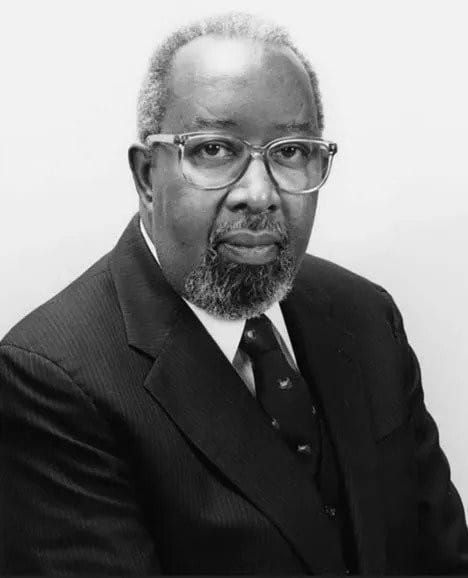
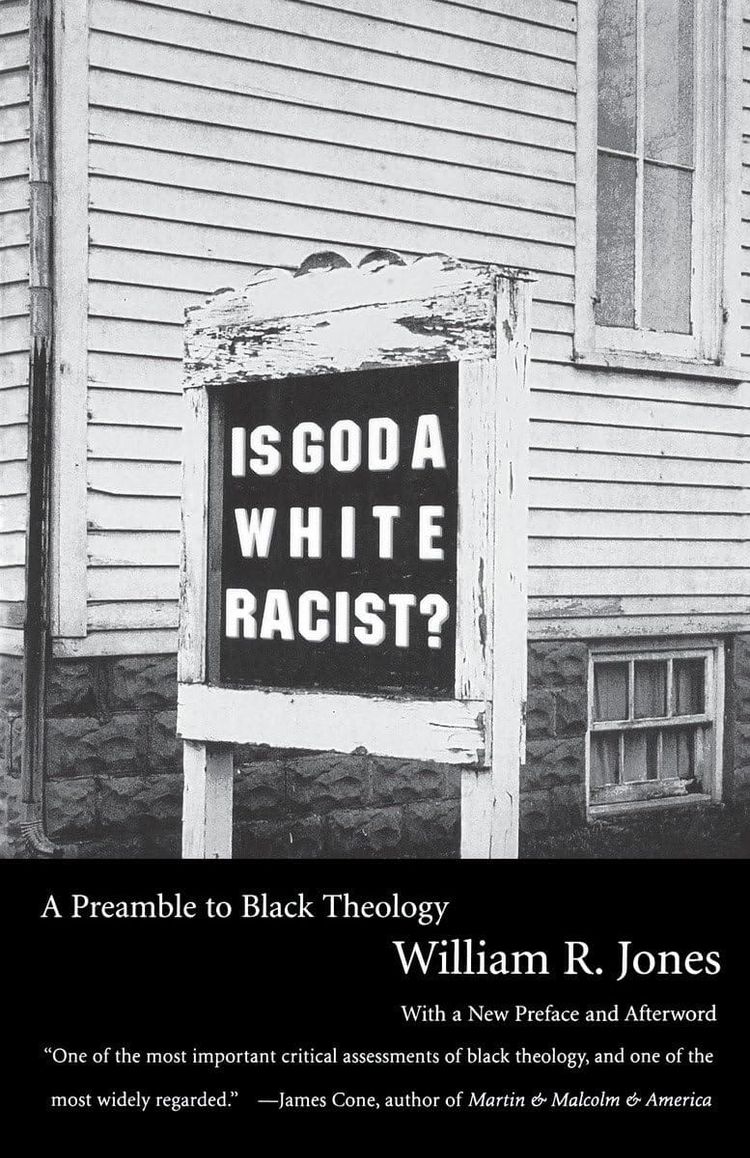
            Jones is the most rigorous thinker in this paper and the one most committed to philosophical method over personal testimony. Even he, however, understood that theodicy is not an abstract puzzle. It is a question that arises from real suffering in real communities. The reason Is God a White Racist? exists is that real people were asking whether God had abandoned them. Jones took that question seriously enough to make it the center of his life's work. That is also a biographical commitment.

            I am a white man from Robeson County, North Carolina. I am not the subject of Black liberation theology. I am not the voice it was written to center or protect. But I am someone who grew up inside the machinery that these theologians are analyzing, close enough to the corruption to smell it, close enough to the suffering to carry some of it, and far enough outside the protected class to have been discarded by the same institutions that claimed divine sanction. That is not a credential. It is a location. And location, as every thinker in this paper insists, determines what you are able to see.

            What I am able to see from where I stand is this. The question of whose Jesus is it is not a question that can be answered from a comfortable distance. It has to be asked from somewhere specific, by someone who has something at stake in the answer. Every theologian in this paper asked it from somewhere specific. Cone asked it from the experience of Black Americans under white supremacy. Cleage asked it from the experience of a community whose sacred identity had been stolen. Roberts asked it from the experience of someone who believed in the possibility of restored relationship across the wound of racism. Grant asked it from the experience of Black women carrying the triple burden while the men argued about liberation. Jones asked it from the experience of someone who could not accept a faith claim as a substitute for an honest answer.

            I am asking it from Robeson County. From a parking lot at fourteen. From a treatment center where insurance companies decided who deserved to live. From a wilderness two weeks deep. From a halfway house the HOA wanted to shut down. From a law school that couldn't hold the interval open for one semester while I pulled people out of floodwater. From an Army that deployed me to Afghanistan after a failed drug test and discharged me before my terminal leave.

I am asking it from there. And the answer I am building toward, with the help of these five thinkers, is that Jesus belongs to the people asking from places like that. Not to the institutions that put them there.

I. James Cone and the God Who Looks Like the People Insurance Won't Cover

            James Cone did not write a gentle book. A Black Theology of Liberation is a theological indictment, and it is meant to be felt before it is analyzed. Cone's central claim is that God is revealed in liberation, that Jesus must be understood through the experience of the oppressed, and that the church must become an active force against injustice rather than a passive observer of suffering. Theology, for Cone, is never neutral. It is always already taking a side. The only question is which one.

            I did not need Cone to tell me that institutions take sides. I watched it happen on a spreadsheet. At Wilmington Treatment Center, a Tricare contract substance abuse facility owned by Acadia Healthcare, I watched insurance companies deny treatment to people whose deductibles were too high, whose coverage had lapsed, whose children had turned twenty-seven and aged off their parents' plans. People died. Not because medicine failed them. Because a number in a system decided they were not worth the cost. The institution that bore the language of healing was running a quiet triage of worthiness. Cone would recognize that immediately. A theology that blesses the system doing the killing is not a theology of liberation. It is a theology of death dressed in the language of grace.

            Cone roots his argument in scripture rather than in political preference, and that is part of what gives it force. The Exodus is not background to the gospel for Cone. It is the gospel. God is revealed as the one who delivers the oppressed from bondage, and that liberating activity runs through the prophets, through Jesus, and into the present. White American theology, Cone argues, distorted this reality by making faith abstract, safe, and socially harmless. A Christianity that speaks of love while leaving oppressive structures untouched is not harmless. It is complicit.

            One of Cone's sharpest contributions is his analysis of the sources and norm of Black theology. Every theology, he argues, has a social location. Every theological system reflects the experience, the interests, and the blind spots of the people who built it. What white American theology managed to do, with extraordinary success, was to present its own social location as the universal while treating every other location as the particular. White theology did not announce itself as white. It announced itself as Christian, as orthodox, as the tradition, as the truth. Everything else was regional, political, ideological, or agenda-driven. Cone exposes that move for what it is. There is no view from nowhere. There is no theology that rises above its own social conditions. The question is not whether a theology speaks from somewhere. It is whether it is honest about where it speaks from and whose interests it serves when it gets there. White theology failed that test. It spoke from the experience of the comfortable and the powerful while claiming to speak for everyone. Black theology, by insisting on naming its location, is not narrowing theology. It is telling the truth about what theology has always been, even when it pretended otherwise.

            I watched that pretense operate in Robeson County my entire childhood. The church did not present itself as the theology of the sheriff's department. It presented itself as the theology of everyone. The Jesus on the wall was not described as the white Jesus. He was described as Jesus, universal, eternal, belonging to all. But the all that mattered in Robeson County looked a certain way, ran certain institutions, and was protected by certain people. Cone's analysis of theological universalism as a mask for particular power is not abstract for me. I watched it function in real time, in a specific county, with specific consequences for specific people.

Cone's Christology is where the argument reaches its sharpest edge. He begins with the traditional Christian claim that theology begins and ends with Jesus Christ, but he immediately asks what that means in relation to slave ships, auction blocks, the Underground Railroad, and Black power. That question captures the entire force of the book. If Jesus is truly the center of Christian faith, then Jesus must matter for those who are humiliated, violated, and excluded. He cannot be a comfort for the oppressor and a savior for the oppressed simultaneously. He has to choose. Cone insists that the evidence of scripture, read honestly from the underside of history, shows that Jesus chose the oppressed. The image of a white Jesus is not just aesthetically unfortunate. It is theologically catastrophic. It inverts the entire direction of the gospel by placing divine sanction on the side of the people doing the oppressing.

            This is where Cone and Cleage converge and diverge at the same time. Both insist that the image of Jesus is a site of theological struggle and that white Christianity has occupied that site with devastating consequences. But Cone's corrective is primarily interpretive. He wants to reread the tradition from the perspective of the oppressed and recover the liberating Jesus that white theology suppressed. Cleage's corrective is more radical. He wants possession, not just reinterpretation. That difference will matter when we get to Cleage. But for now Cone's contribution stands on its own. He makes it impossible to treat Christology as politically innocent. He makes it impossible to look at the Jesus on the wall in a Robeson County church and see anything other than a theological argument about whose county this is.

            Cone's chapter on the church brings the argument to its practical conclusion and it is the part that hits me hardest personally. He describes the church as the community that has received the hint of the gospel and therefore cannot accept human suffering as normal. The church must proclaim liberation, embody it, and participate in the struggle against injustice. It cannot hide behind law and order when those phrases are used to protect oppressive systems. A church that values order over justice has already chosen a side. It has chosen the side of the people writing the laws over the people the laws are written against.

            I watched that choice get made every Sunday in Robeson County. The same church that blessed the courthouse. The same congregation that reelected my uncle. The same community that called itself Christian while a Lumbee civil rights attorney's briefcase went missing and the dispatch tapes from that night were never found. Cone does not let that church excuse itself. A theology that does not confront oppression is not merely incomplete. It is complicit. I wrote that at the end of my Cone reflection paper, and I meant it then. I mean it more now.

            Cone's critique cuts across the other thinkers in this paper in ways worth naming. Roberts would later argue that liberation must be paired with reconciliation, that the theological horizon cannot stop at freedom but must reach toward restored relationship. Cone would have little patience for that framing at this stage. For Cone, reconciliation talk arrives too early and too cheaply, asking the oppressed to extend fellowship before power has changed hands and before the violence has stopped. Jones would push Cone harder, asking whether the evidence of sustained Black suffering actually supports the faith claim that God is on the side of the oppressed at all. That is the most uncomfortable challenge Cone faces and one his theology never fully resolves. Cone asserts divine solidarity with the oppressed as a matter of faith. Jones demands that the assertion be justified by something more than faith. That tension does not destroy Cone's project. But it leaves a question open that the rest of this paper will have to sit with.

II. Albert Cleage and the Battle Over Who Gets to Own Jesus

            One place where Cleage goes further than Cone is his treatment of religious imagery as infrastructure. He does not treat the white Christ as a theological error waiting to be corrected by better exegesis. He treats it as a system. A system that trains instinct, shapes reverence, and produces deference before a single sermon is preached. Images are not passive. They do the work of ideology at the level of the body, at the level of what feels holy and what feels threatening, at the level of who looks like they belong in a position of authority and who looks like they need to be managed. Cleage understood that you cannot simply argue your way out of a system that operates below the level of argument. You have to seize the image itself.

This is where his argument about the Underground Railroad and Nat Turner becomes theologically significant rather than merely historical. Cleage is not invoking them as symbols of Black resilience. He is invoking them as evidence that Black faith, at its strongest, did not produce passivity. It produced courage, risk, and collective action against the system that claimed divine sanction for its own violence. The white Christ taught endurance. The Black Messiah Cleage is recovering taught resistance. That is not a minor theological distinction. It is the difference between a faith that keeps people in place and a faith that moves them.

I grew up around the endurance version. The church in Robeson County specialized in it. Wait on the Lord. Turn the other cheek. Justice belongs to God. That theology was very convenient for the people running the county. It kept the congregation looking up while the corruption ran sideways. Cleage would have recognized that immediately. He would have called it what it is. A theology of managed suffering designed to protect the people doing the managing.

Where Cleage is most vulnerable is the place Roberts will later identify. His theology is powerful on recovery and reclamation but underdeveloped on what comes after. He is so focused on the necessary first act of seizing theological authority that he has little to say about the second act of building something that does not simply reproduce the structures it replaced. Cleage's nationalism is a corrective to white universalism but it risks becoming a mirror image of it, centering a particular experience as the universal without fully accounting for the differences within that experience. Grant will make this point more precisely when she identifies whose experience even Black liberation theology tends to center when it claims to speak for everyone.

Jones's challenge to Cleage is different and cuts deeper. Cleage's reclamation of the Black Messiah is a powerful act of theological sovereignty. But Jones would ask whether the Messiah being reclaimed is the right answer to the theodicy question. Claiming Jesus as Black does not resolve whether Jesus has intervened decisively on behalf of Black people in history. It reframes the question of divine solidarity in terms of identity rather than evidence. That is a meaningful move. Jones does not think it is a sufficient one.

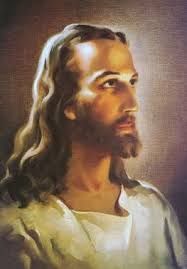
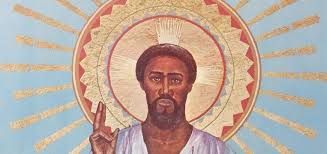
Today I look at that picture of Jesus, and I cannot help but wonder if I've been staring at propaganda my entire life.

Jesus was Black.

Regardless of his skin color, he was treated the same way many African Americans were during the Atlantic Slave trade. He made it clear many times throughout the Bible that he was on the side of the oppressed.

Through this lens, Jesus was black, because African Americans have been oppressed for over 400 years, and many still are. The system never improved or changed, it just got shuffled around and changed clothes.

III. J. Deotis Roberts and the Question Nobody Wants to Answer

            Roberts is the thinker in this paper most willing to ask what we are building toward, and that willingness makes him both the most hopeful and the most easily misread. His argument for reconciliation has been used against him by readers who hear concession where he intends sequencing. Roberts is not asking the oppressed to forgive before justice arrives. He is asking the theological community to hold a vision of restored relationship as the horizon even while the work of liberation is still underway. That is a different claim and a harder one. It requires believing that the wound can eventually be healed without pretending it has already been.

            What distinguishes Roberts from Cone on this point is not softness. It is temporality. Cone is primarily a theologian of the present crisis. His theology is urgent because the oppression is present, active, and ongoing. Roberts is also a theologian of the present crisis but he refuses to let the crisis become the permanent horizon. He insists that liberation theology must have somewhere to go after liberation, or it risks becoming a theology of permanent opposition rather than a theology of transformed relationship. That is not a comfortable argument to make inside a liberation theology movement. It requires trusting that the other side of the wound is reachable, which is a form of hope that sustained suffering makes very difficult to maintain.

            I have struggled with Roberts more than any other thinker in this paper. Not because his argument is weak but because reconciliation has been used against people I care about too many times for me to receive the word easily. The HOA that tried to remove the LGBT halfway house from the neighborhood did not use the language of hatred. They used the language of community. Of shared standards. Of everyone getting along. That is reconciliation language deployed as a weapon against the people it was supposed to protect. Roberts is not responsible for that misuse. But he also does not fully reckon with how consistently reconciliation language has functioned as a demand that the marginalized make peace with their own marginalization.

            Where Roberts is strongest is in his analysis of what liberation without reconciliation produces over time. A community that achieves liberation but never reaches toward restored relationship remains defined by the wound. The wound becomes the identity. The opposition becomes the organizing principle. Roberts is not saying that is wrong given the history. He is saying it is incomplete given the future. That distinction matters. He is not rushing the process. He is insisting that the process have a destination.

            Grant complicates Roberts in a way he does not fully anticipate. His vision of reconciliation is relational and communal, attentive to the texture of actual lives and actual communities. But Grant would ask whose relationships are being restored and on whose terms. A reconciliation between Black and white communities that does not account for the specific ways Black women have been harmed within both communities is not a complete reconciliation. It is a reconciliation among those whose voices have been centered while the people doing the actual work of survival are expected to absorb whatever shape the restored relationship takes. Roberts's horizon is the right one. Grant insists that the path to it runs through more honest accounting than Roberts provides.

            Jones's challenge to Roberts is the most fundamental. Roberts believes the Christian tradition contains the resources for both liberation and reconciliation and that the work is to hold it accountable to those resources. Jones is not convinced the tradition has demonstrated that capacity. He looks at the historical record and sees sustained suffering, contested evidence, and a series of faith claims that have not been accompanied by the decisive divine intervention that would justify them. Roberts wants to hold the tradition accountable to its own deepest commitments. Jones asks whether those commitments have ever actually been honored in a way that the evidence supports. That is not a question Roberts fully answers. It is the question the next section of this paper takes seriously.

IV. Jacquelyn Grant and the Jesus Nobody in the Room Wanted to See

            Grant does something none of the other thinkers in this paper fully do. She asks who has been in the room the whole time that everyone else was arguing about whose room it is.

The answer is Black women. And her point is not simply that they have been overlooked, though they have been. Her point is that their overlooking is not incidental to the liberation theology project. It is structural. Black liberation theology reproduced within its own framework the same erasure it was fighting against in white theology. It centered Black male experience as the norm, treated Black women's experience as secondary or derivative, and then claimed to speak for the oppressed as a whole. Grant calls that out with the same rigor Cone applied to white theology. A theology that claims to speak for the most marginalized while marginalizing the most marginalized people within its own community has not escaped the logic it set out to dismantle. It has miniaturized it.

            The concept Grant develops to name this is the triple burden. Black women in America carry race and gender and class simultaneously, without the option of setting any of them down. That is not three separate oppressions that happen to coexist. It is a distinct form of suffering that is qualitatively different from what any one of those categories produces alone. A Black man experiences racism but not the specific intersection of racism and sexism that shapes Black women's lives.

            A white woman experiences sexism but not the specific intersection of sexism and racism. Black women experience something that neither framework fully captures and that both frameworks have historically ignored. Grant insists that starting from the triple burden rather than from any single axis of oppression produces a different theology, a more honest one, and one that is more faithful to the actual texture of suffering in the world.

            This is where womanist theology parts ways with both Cone and Cleage most decisively. Cone's liberation is real but it is primarily liberation for Black people understood in terms that center Black male experience. Cleage's reclamation of the Black Messiah is powerful but his vision of Black communal self-determination does not examine the internal power structures of that community with the same rigor he applies to white theology. Grant is not accusing either of them of bad faith. She is pointing out that the logic of liberation requires following the argument wherever it leads, including into the places where the liberators themselves have been less than liberating.

            The Jesus that emerges from womanist theology is different from the Jesus in either Cone or Cleage. He is not primarily the warrior Messiah of Cleage, the liberator who leads a people out of theological captivity. He is not primarily the God-who-sides-with-the-oppressed of Cone, the theological category that validates the struggle. He is the co-sufferer. The one who has been there. The one who knows what it is to be humiliated, abandoned, and discarded by the very systems that claimed to serve him, and who remained present anyway. That Jesus does not promise institutional vindication. He promises presence in the absence of it.

            I keep returning to my mother's choice. Not because she was a theologian. Because she wasn't. She was a white probation officer in Robeson County who worked inside the system every day and knew exactly what it was capable of and still chose to hand her children to old Black women rather than to the institutions she served. She did not have Grant's framework. She did not need it. She had already arrived at the conclusion Grant's theology points toward. That the work of care, the work of co-suffering presence, the work of showing up when the institution doesn't, was being done by specific people in specific places, and those people were not the ones with the badges or the titles or the theological credentials. They were the ones who showed up.

            Grant's womanist epistemology insists that this knowledge, the knowledge produced by the experience of bearing the triple burden and surviving it, is not a lesser form of theological understanding. It is a privileged access to the truth about where God is actually found. Not privileged in the sense of comfortable. Privileged in the sense of closer to the reality that theology has been trying to describe from a safer distance. The old Black women my mother trusted were not waiting for Cone to theorize liberation or for Cleage to reclaim the Messiah or for Roberts to imagine reconciliation. They were already doing the work those theories were trying to describe. Grant gives that work its proper theological name and its proper theological authority.

            Where Grant's argument opens questions it does not fully resolve is at the intersection with Jones. Grant insists that marginalized experience is a theological source. Jones insists that experience alone cannot substitute for rigorous theodicy. The suffering of Black women is real and documented and morally serious. But does it tell us whether God is on their side? Grant would say that the co-suffering Jesus is found precisely in that experience, that the presence of Christ is most fully visible to those who carry the most. Jones would ask how we know that. How we distinguish the experience of divine co-suffering from the experience of divine abandonment. That is not a challenge Grant fully meets. It is the challenge the next section takes seriously.

            What Grant leaves me with that none of the other thinkers provide is this. The theological sources are not only in the books. They are in the hands of the people doing the work. The old Black women in Robeson County. The kids in the wilderness who learned to make fire and keep their gear dry and hang their food away from bears. The four blind people who threw the axe and trusted the coach standing beside them. The people in the treatment center who were told their insurance had run out and who kept trying to get better anyway. Grant would call all of that theological data. She would say the Jesus these five thinkers are arguing about was already present in those moments, doing what he has always done, standing with the people the system decided didn't count. The theologians were just catching up.

V. William R. Jones and the Question That Does Not Go Away

            Jones arrives last in this paper not because he is least important but because he is the one who makes the others earn their conclusions. He is the intellectual conscience of the project. The one who will not let a faith claim substitute for an honest answer. The one who looks at everything Cone, Cleage, Roberts, and Grant have built and asks the question that makes the room go quiet. Where is the evidence?

            His central argument begins with a premise that is deceptively simple and theologically devastating. If God is omnipotent, omniscient, and benevolent, and if Black people have endured centuries of enslavement, terror, and systematic dehumanization without a decisive divine intervention on their behalf, then what exactly is the theological explanation? Jones calls this the problem of divine racism. He does not assert that God is a white racist. He asserts that the evidence available to theologians does not rule it out, and that the burden of proof lies with those who claim otherwise. That burden has not been met. The exculpating event, the decisive divine act that unmistakably demonstrates God's solidarity with Black liberation, has not arrived in a form that satisfies the demands of rigorous theodicy.

            What makes Jones so difficult to dismiss is that he is operating from inside the tradition rather than against it. He shares the conviction that Black suffering is a theological problem. He agrees that theology must be accountable to the lived experience of the oppressed. His disagreement with Cone is not about whether Black suffering matters theologically. It is about whether Cone's response to it actually answers the question it raises. Cone declares that God is Black, that God stands with the oppressed. Jones recognizes that as a faith assertion. Faith assertions are not theodicy. They restate the believer's commitment. They do not answer the philosopher's question. And the philosopher's question is the one Jones refuses to set aside.

            The stakes of this distinction are not abstract for me. I grew up in a county where the church declared God's presence every Sunday and the evidence of what was happening outside the church doors was not obviously consistent with that declaration. Julian Pierce was dead. The briefcase was missing. The dispatch tapes were gone. The pigs were fed. The church kept meeting. The declaration of divine presence did not stop any of it. Jones would say that is not a reason to abandon theology. It is a reason to do theology more honestly. To stop asserting what has not been demonstrated and to start asking what would actually count as evidence.

Jones's critique lands differently on each of the other thinkers in this paper. With Cone it is most direct. Cone's identification of God with the Black struggle is, for Jones, an assertion of faith rather than a conclusion supported by evidence. That does not make Cone wrong. It makes him insufficient on the theodicy question.

            With Cleage the challenge is different. Cleage's reclamation of the Black Messiah is a powerful act of theological sovereignty. But it does not resolve the theodicy question. It reframes it in terms of identity rather than evidence. Claiming Jesus as Black does not tell us whether Jesus has intervened decisively on behalf of Black people in history. It tells us whose side we want him on. Jones respects that. He just does not think it answers the question.

            With Roberts the challenge cuts to the horizon Roberts is reaching toward. Roberts believes the tradition contains the resources for liberation and reconciliation and that the work is to hold it accountable to those resources. Jones asks whether the tradition has ever actually demonstrated that capacity in a way the evidence supports. Roberts's faith in the tradition's redemptive potential is genuine and admirable. Jones's skepticism about whether that potential has been realized is equally genuine and more historically grounded. Roberts is looking toward where the tradition could go. Jones is looking at where it has been. The gap between those two views is where the real theological work lives.

            With Grant the challenge is most generative. Grant insists that the experience of those bearing the triple burden is a privileged theological source, that the co-suffering Jesus is most fully visible to those who carry the most. Jones would not dispute that the suffering is real or that it demands theological attention. He would ask how we distinguish the experience of divine co-suffering from the experience of divine abandonment. If the suffering is severe enough and sustained enough and structurally embedded enough, what exactly is the theological marker that tells us God is present in it rather than absent from it? Grant does not fully answer that question.      

She points to presence, to survival, to the work of care that continues despite everything. Jones would say that is meaningful but not sufficient as theodicy. He would say we owe the people who have been suffering the most honest account we can give of what their suffering actually tells us about God, and that honesty requires sitting with the possibility that the answer is not what we want it to be.

            Jones's constructive proposal relocates moral agency in human hands. God's sovereignty is voluntarily limited. Liberation is not a divine gift waiting to be received. It is a human task waiting to be done. That is a liberating conclusion in the specific sense that it removes the quietism that can accompany a theology of divine rescue. If we are waiting for God to intervene, we can always find a reason to keep waiting. If the work is ours, then the only question is whether we are doing it.

            I find that framework honest in a way that comforts and disturbs me simultaneously. It comforts me because it matches my experience. I have not spent my life waiting for divine intervention. I pulled people out of floodwater myself. I kept every child alive in two weeks of wilderness. I managed a halfway house for people the rest of the community wanted to disappear. I coached four blind people into sticking an axe to a target. Not because God showed up in any identifiable way. Because I did. Jones would call that human-ocentric theism. I just called it showing up.

It disturbs me because it leaves something unnamed that I cannot fully let go of. The old Black women my mother trusted with her children were not operating from human-ocentric theism.    They were operating from something that felt like faith, like presence, like the kind of love that shows up not because it has calculated the odds but because it cannot do otherwise. Jones gives me the honest question. He does not give me a name for what I felt in those moments when showing up felt like more than just showing up. Grant comes closer to naming it. She calls it the co-suffering Jesus. She finds him in the hands of the people doing the work. I cannot prove that theologically. Jones would not let me. But I cannot shake it either.

            What Jones gives this paper that none of the others provide is intellectual honesty about the cost of faith. Cone, Cleage, Roberts, and Grant all ask us to believe something. Jones asks us to earn the right to believe it by first sitting honestly with the evidence against it. That is not a comfortable position. It is the right one. A theology that cannot survive honest scrutiny cannot ultimately sustain the communities it seeks to serve. Jones demands scrutiny. That demand is itself a form of care for the tradition he is questioning.

VI. Whose Jesus Is It? A Synthesis From the Bottom of the County

            I did not come to this paper looking for Jesus. I came looking for an explanation. Growing up in Robeson County, watching the same people wear the cross on Sunday and run the protection racket on Monday, watching the church bless the courthouse and the courthouse protect the drug trade and the drug trade feed bodies to the pigs, I did not need a theologian to tell me that something was wrong with the picture. I needed someone to tell me why the picture kept getting hung back up every time someone tried to take it down.

            These five thinkers give me five different answers to that question, and all five of them are partially right. Cone tells me the picture stays up because theology has been captured by the people who benefit from it. White Christianity did not make a theological mistake. It made a theological choice. It chose the side of the institution over the side of the person the institution was grinding up, and it called that choice the gospel. The corrective is not a better interpretation of the existing picture. It is a new theology rooted in the experience of the people the old theology was designed to manage. God is not found in the courthouse or in the church that blesses it. God is found among the people those institutions have decided are expendable.

            Cleage tells me that even the corrective is not enough if the people doing the correcting do not own the terms. You cannot fix a stolen theology. You have to take it back. The battle over the image of Jesus is a battle over who has divine sanction, who holds sacred authority, and who is expected to defer. In Robeson County that battle was not abstract. It was played out in sheriff's elections, in coroner's inquests, in missing briefcases and dispatch tapes that were never found.             The white Jesus on the church wall was not a theological oversight. He was a political statement about whose county this was and who was going to keep running it. Cleage says Black people must seize the theological narrative the way you seize contested territory. Not ask for it. Take it.

            Roberts tells me that seizing is not the end of the story. That after liberation there must be reconciliation, not the false reconciliation that arrives before justice, not the community meetings my uncle attended while Julian Pierce was still dead, but a genuine restored relationship built on equal standing and shared dignity. I resist this less than I used to. I have seen what communities look like when they stop at liberation and never reach toward each other. I have also seen what they look like when reconciliation is offered as a substitute for justice. Roberts is right that we need both. He is also right that the sequence matters. Liberation is not a station on the way to reconciliation. It is the precondition for it.

            Grant tells me that all of this misses the people who have been doing the work the whole time. The old Black women my mother handed her children to were not waiting for Cone to write the theology of liberation or for Cleage to reclaim the Messiah or for Roberts to theorize reconciliation. They were already there. They were already doing the work of co-suffering presence that Grant identifies as the site where Jesus is most fully visible. The most marginalized are not the objects of theological concern. They are the theological sources. The church my mother didn't trust had the Jesus on the wall. The old Black women she did trust had the Jesus in their hands. Grant is the one who names the difference.

            Jones tells me to hold all of it honestly. To not let faith claims substitute for theodicy. To ask the hard question about whether the evidence of sustained suffering justifies the assertion that God is on the side of the oppressed. I do not have a clean answer to Jones. I do not think anyone does. What I have is this: I have seen enough of what human beings do to each other when no one is watching, in Robeson County and in treatment centers and in wilderness programs and in the institutions that are supposed to catch the people who fall through, to believe that the question of divine solidarity is not answered by pointing to moments of liberation. It is answered by whether we show up. Jones says God may not. He says the work falls to us. I believe him. I also believe that sometimes when we show up fully, when we pull someone out of floodwater or keep every child alive in two weeks of wilderness or coach four blind people into sticking an axe to a target, something is happening that is larger than us. I cannot prove that theologically. Jones would not let me. But I cannot shake it either. So whose Jesus is it?

            Not the one on the wall in Robeson County. Not the one my uncle invoked while running a protection racket. Not the one the insurance companies consulted when they decided who deserved to get better. Not the one the HOA prayed to while trying to shut down the halfway house. Not the one the law school trusted when they decided my scholarship wasn't worth holding onto while I was pulling people out of floodwater.

            The Jesus these five thinkers are pointing toward, each from a different angle and with a different urgency, is the one found among the people the system has decided are expendable. The one present in the hands of old Black women in the most violent county in North Carolina. The one visible in the co-suffering presence of people who show up when the institution doesn't. The one who cannot be owned by the people who run the courthouse or the church that blesses it, because his whole theological meaning depends on standing with the people those institutions have failed.

            That Jesus does not belong to the sheriff. He does not belong to the insurance company. He does not belong to the HOA or the law school or the Army that deployed me to Afghanistan and discharged me two months before my terminal leave.

            He belongs to the fourteen-year-old standing in a parking lot watching his parents drive away. He belongs to the people whose deductibles were too high—the kids who turned 27 a little too soon and got dropped from their parents’ insurance. He belongs to the kids two weeks deep in a wilderness that nobody else wanted to take them into. He belongs to the four blind people who threw an axe and stuck it to a target. He belongs to the old Black women who showed up and watched my sister and I as babies. He was always theirs. The rest of us have been arguing about the picture on the wall.

Conclusion: Whose Picture is That?

            I began this paper with a question I did not know was theological until I started reading these five thinkers. The question was not abstract. It was geographical. It was about a county in North Carolina where the sheriff ran a protection racket, where a civil rights attorney was found shot dead with his briefcase missing, where the pigs ate the people who disappeared, and where a white Jesus hung above the congregation every Sunday and nobody seemed to find that strange.

I find it strange now. I found it strange then too. I just did not have the language for it.

            What Cone, Cleage, Roberts, Grant, and Jones have given me, collectively and in tension with each other, is not a single answer to the question of whose Jesus is it. They have given me a set of tools for understanding why the question is so hard to answer honestly, and why the difficulty is itself theologically significant. The question is hard because the answer has consequences. Because naming whose Jesus is it means naming whose side divine authority has been invoked to protect. And in Robeson County, in treatment centers, in wilderness programs, in the Army, in every institution I have moved through that needed me until it didn't, the answer to that question was never neutral. It was always pointing somewhere. Always protecting someone. Always leaving someone else outside.

            Cone showed me that theology is a choice. Every theological system reflects the social location of the people who built it, and white American Christianity made its choices clearly even when it pretended to transcend them. The white Jesus is not a theological mistake. He is a theological argument. He argues that holiness looks like the people in power, that divine authority validates the existing order, and that the oppressed should find comfort in a savior who looks like their oppressor. Cone refused that argument with everything he had. So do I.

            Cleage showed me that refusing the argument is not enough. You also have to take back the terms. The battle over the image of Jesus is a battle over sacred authority, communal identity, and the right to define what holiness looks like. That battle is not fought only in seminaries. It is fought in sheriff's elections and coroner's inquests and in the decision about whose briefcase goes missing and whose dispatch tapes get lost. Cleage understood that theology is always already political. The image of Jesus is always already a statement about power. Reclaiming the Black Messiah is not a symbolic gesture. It is an act of theological sovereignty.

            Roberts showed me that sovereignty is not the end of the story. That after the reclamation there must be a vision of what we are building toward. Not reconciliation as a demand made of the oppressed before justice has arrived. Not the false unity my uncle performed at community meetings while Julian Pierce was still dead. But a genuine restored relationship between communities that have been on opposite sides of the wound, built on the foundation of freedom, dignity, and honest reckoning with what was done and who did it. I am not there yet. I do not think Robeson County is there yet. But Roberts is right that we have to hold the horizon even when we cannot see it clearly.

            Grant showed me who has been holding it all along. The old Black women my mother trusted with her children were not waiting for the theologians to arrive. They were already there. They were already doing the work of co-suffering presence that Grant identifies as the site where Jesus is most fully visible. Not in the sanctuary. Not in the sheriff's department. In the hands of the people who show up when the institution doesn't, who bear the weight of interlocking oppressions without the option of setting any of them down, who have been theological sources while being treated as theological afterthoughts. Grant does not add Black women to liberation theology. She rebuilds liberation theology from the ground up with Black women's experience as its foundation. That is a different project and a more honest one.

            Jones showed me that honesty requires something most theology resists. It requires sitting with the possibility that the evidence does not support the claim. That the sustained, multi-generational suffering of Black people in America is not obviously consistent with a God who is on their side. That faith assertions are not theodicy. That the question of whether God is a white racist cannot be answered by proclaiming more loudly that God is not. Jones does not resolve this question. Neither do I. What I have instead is what Jones himself ultimately offers. A relocation of moral agency. If God will not intervene, the work falls to us. If the institution will not show up, we show up ourselves. If the interval between judgment and consequence collapses before anyone can respond, we build the interval back in by hand, one moment at a time, one person at a time, one axe thrown in the dark by someone who cannot see the target but trusts the coach who is standing beside them.

            That is where the five thinkers converge for me. Not on a single answer to the theodicy question. Not on a unified theology of liberation. But on this: that the Jesus worth claiming is the one found among the people the system has decided are expendable. The one present in the hands of those who do the work of care in places where care is dangerous. The one who cannot be owned by the courthouse or the church that blesses it, because his entire theological meaning depends on standing with the people those institutions have failed.

            Jesus is Black not because of skin pigmentation or historical genetics, though the historical arguments for a non-white Jesus are serious and documented and deserve more attention than mainstream American Christianity has given them. Jesus is Black because Blackness in the American theological imagination has come to name a specific relationship to power. It names the condition of those who have been systematically excluded from the protections that institutions claim to offer everyone. It names the experience of being classified, judged, and discarded by systems that invoke divine sanction while denying divine dignity. It names what it means to be expendable in a society that calls itself Christian.

            By that definition, Jesus is Black. And by that definition, he was always found among the people this paper has been about. Not among the people who ran Robeson County. Not among the people who denied the treatment. Not among the people who sent the fourteen year old to rehab and called it therapy. Not among the people who discharged the Ranger two months before his terminal leave. Not among the people who took the scholarship away while he was pulling people out of floodwater.

            Among the people in the water. Among the people in the wilderness. Among the people who stood in a parking lot at fourteen and learned to tuck it down and keep moving. Among the old Black women who showed up. Among the four blind people who threw the axe and stuck it.

            That is whose Jesus it is. That is where he has always been. The rest of us have been arguing about the picture on the wall while he was already in the room, doing what he has always done, standing with the people the system decided didn't count. The question of whose picture that is becomes irrelevant; the picture comes down.


Bibliography

Cleage, Albert B., Jr. The Black Messiah. New York: Sheed and Ward, 1968.

Cone, James H. A Black Theology of Liberation. 50th anniversary ed. Maryknoll, NY: Orbis Books, 2020.

Grant, Jacquelyn. White Women's Christ and Black Women's Jesus: Feminist Christology and Womanist Response. Atlanta: Scholars Press, 1989.

Jones, William R. Is God a White Racist? A Preamble to Black Theology. Garden City, NY:Anchor Press/Doubleday, 1973.

Roberts, J. Deotis. Liberation and Reconciliation: A Black Theology. 2nd ed. Maryknoll, NY:Orbis Books, 2005.

Walker, Alice. In Search of Our Mothers' Gardens: Womanist Prose. San Diego: Harcourt Brace Jovanovich, 1983.

Williams, Delores S. Sisters in the Wilderness: The Challenge of Womanist God-Talk. Maryknoll, NY: Orbis Books, 1993.