The Black Messiah
Reflections on Albert Cleage Jr.by Matt Stone
Albert Cleage Jr.’s The Black Messiah argues that Christianity in America had been deeply distorted by white control and that Jesus must be reclaimed as a Black Messiah whose life, identity, and mission are bound up with the liberation of oppressed Black people. His central claim is not just that Black people should see themselves reflected in Jesus. It is that white Christianity had turned Christ into a theological weapon that helped justify Black passivity, racial hierarchy, and obedience to a social order built on domination. My thesis is that Cleage’s most powerful contribution in The Black Messiah is his insistence that Christology is never neutral, because the meaning of Jesus is always tied to questions of power, identity, and liberation.
Across the book, Cleage argues that the white image of Christ is an instrument of oppression, that the real Messiah must be understood through the historical experience of an oppressed people, and that the church must become a center of Black consciousness, communal self-determination, and liberation rather than a refuge for spiritualized surrender.
What makes Cleage’s writing so compelling is that he does not treat theology as a detached academic discipline. Like James Cone, he is concerned with whether theology tells the truth in a world marked by racism, humiliation, and oppression. But Cleage often feels even more confrontational because he is not simply critiquing white theology. He is trying to recover Christianity from white theological possession altogether.
His writing carries the force of someone who believes Black people have inherited a religion shaped against them and that they must reclaim it if they are ever going to reclaim themselves. That gives The Black Messiah a sharpness that separates it even within Black theology. Cleage is not merely asking what doctrines mean. He is asking who has controlled them, how they have functioned, and whether they can still become instruments of dignity and liberation rather than submission. Cleage is arguing for Black Human agency.
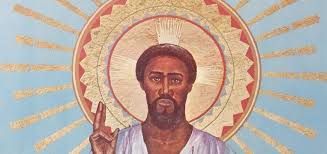
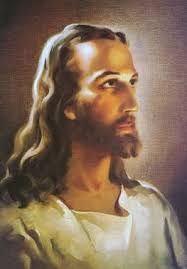
One of the strongest aspects of Cleage’s argument is the way he exposes the white Christ as a structure of power rather than a harmless symbol. He does not treat the racialized depiction of Jesus as a minor artistic problem. He treats it as a theological disaster. A white Jesus presented as universal allows white Christians to identify themselves with divine authority while leaving Black Christians alienated from sacred history. I thought this was one of Cleage’s sharpest insights because it reveals that theology and imagery work together. Religious images are not passive. They shape instinct, identity, reverence, and submission. If holiness is represented through the image of the oppressor, then faith itself can become a training ground for deference. Cleage sees that clearly. That is why his insistence on a Black Messiah is not superficial symbolism. He is trying to destroy the false neutrality of white Christology and reveal it as a political construction that has done real historical damage.
Cleage makes this argument concrete when he ties Black dignity directly to theology and collective struggle. On pages 54–55 of The Black Messiah, he insists that Black people are “God’s chosen people” and connects that claim to resistance rather than passivity. He points to the Underground Railroad and Nat Turner as evidence that Black faith, at its strongest, did not teach submission but courage, risk, and collective action. That matters because it shows Cleage’s Christology is not only symbolic. He is arguing that theology should produce a people who believe their dignity comes from God and therefore cannot be surrendered to white domination.
This point gives the title The Black Messiah its full force. Cleage is not merely saying that Jesus cared about the poor or that Black Christians may interpret him through their own social condition. He is making a stronger claim. Jesus must be understood as the liberating Messiah of an oppressed people struggling against domination. This is what gives the book its theological edge. Cleage refuses to leave Jesus as a distant spiritual comforter or a universal moral teacher who floats above racial history. Instead, Jesus becomes a revolutionary figure whose meaning is inseparable from collective liberation. I appreciated this because Cleage does not weaken Christology to make it politically useful. He radicalizes Christology by asking what “Messiah” could possibly mean in a world shaped by anti-Black oppression. His answer is that Messiah must mean deliverance, dignity, restored agency, and the recovery of a people whose humanity has been denied.
That argument also helps explain Cleage’s hostility toward the passive Christianity that many Black Christians inherited under white control. He believes white churches had stripped Jesus of his political force and transformed him into a figure of meekness, obedience, and otherworldly comfort. That softened Christ could then be preached to oppressed people without threatening the systems that crushed them. In other words, the white Christ became useful to power because he taught endurance without resistance, love without justice, and salvation without freedom.
Cleage also attacks forms of religion that make Black people ashamed of themselves. On page 55, he says that anything that makes Black people proud is good, while anything that makes Black people ashamed is bad. He contrasts Muhammad Ali with Black preachers who use the name of God while destroying Black dignity. That example is especially sharp because it reveals Cleage’s standard for judging theology. Christianity is not evaluated by how pious, respectable, or emotionally comforting it sounds. It is judged by whether it strengthens Black dignity or helps break it down.
Like Cone, Cleage roots theology in the lived experience of the oppressed rather than in abstract universal claims. One of the most important features of The Black Messiah is its rejection of the kind of universalism that erases concrete suffering. Cleage does not trust a Christianity that rushes to say “all people” while Black people remain trapped under specific forms of racial domination. I found this especially important because it exposes how often universal language functions as avoidance. White theology can talk about unity, peace, and love while refusing to tell the truth about racial violence, theft, exclusion, and humiliation. Cleage refuses that move. He insists that theology must begin where suffering has been imposed most brutally. This does not mean he denies the broader human reach of Christianity. It means he will not allow universal language to become a shield against historical truth.
This is where his work enters into especially strong conversation with Cone. In my Cone paper, the strongest point is that theology cannot be neutral and must be judged by whether it speaks to and participates in the struggle for freedom. Cleage shares that conviction, but he sharpens it through Christology and racial imagery. Cone insists that Jesus must be understood through the experience of the oppressed and that the church must become an active force against injustice. Cleage agrees, but he pushes harder on the question of who has been allowed to define Jesus in the first place. Cone is devastating on theology’s false neutrality. Cleage is devastating on theology’s racial capture. Cone shows that white theology speaks from its own social location while pretending universality. Cleage shows that white Christology has visually and doctrinally trained Black people to encounter the sacred through the face of domination.
I think Cleage also differs from Cone in the kind of political imagination his theology produces. Cone is fierce on liberation, oppression, and the church’s moral failure, but his writing often remains centered on diagnosing domination and reinterpreting theology from within the Black experience of oppression. Cleage does that too, but he presses more directly toward Black communal self-determination. His theology feels more nationalist, more separatist in mood, and more invested in reconstructing Black consciousness as a collective political force. Cone’s work is often strongest on exposing the contradiction between the gospel and white supremacy. Cleage’s work is strongest on showing why Black people must seize theological control for themselves. In simpler terms, Cone is stronger on the lie of white theology. Cleage is stronger on the need for Black theological possession.
This is where bringing in Roberts becomes useful. In the Roberts paper, the key insight is that liberation and reconciliation must be held together in the right order, with liberation first and reconciliation only afterward on the basis of justice, equality, and dignity. Cleage is a useful contrast because he is far less interested in reconciliation as a theological horizon. Roberts asks the harder second question: what kind of human future should exist after liberation. Cleage is still dealing with the first question: how does a crushed people recover its dignity, memory, and sacred identity under white domination. Roberts is worried that liberation without reconciliation may leave permanent antagonism as the horizon. Cleage seems much less worried about that. He is more suspicious that reconciliation language will be stolen by the status quo and used to disarm Black resistance before justice has been achieved.
That difference helps clarify Cleage’s distinctiveness. Roberts believes that reconciliation without liberation is false, but liberation without reconciliation is incomplete. Cleage would likely agree with the first half completely, but he seems far less eager to affirm the second half in any immediate sense. His concern is that reconciliation talk too often arrives before power has changed hands, before Black dignity has been restored, and before white theology has been stripped of its false innocence. In that sense, Roberts is stronger on restored relationship, while Cleage is stronger on recovered identity and power. Roberts is better at thinking about what redeemed human community might require. Cleage is better at refusing every cheap version of unity that asks the oppressed to reconcile themselves to their own degradation.
I thought this comparison also helped me understand why Cleage’s work feels harsher than both Cone and Roberts at certain points. Cone’s writing is sharp, but it still often reads like a sustained theological argument against white Christianity’s betrayal of the gospel. Roberts, even in his critique of oppression, keeps one eye on healing and restored human relationship. Cleage is more severe because he is trying to do something prior to both. He is trying to rip Jesus away from white control and return him to Black people as a source of sacred identity, historical agency, and collective power. That makes his work feel less like mediation and more like rupture. He is not trying to calm the theological field. He is trying to break it open.
Another major strength of The Black Messiah is that Cleage never treats theology as merely symbolic. He understands that belief shapes consciousness, institutions, family life, economic possibility, and communal identity. This is where his work connects not only to Cone’s urgency but also to Roberts’s concern for the social texture of oppression. Roberts is attentive to the ways racism deforms actual communities, families, and lived relationships. Cleage shares that seriousness, though he approaches it through the colonization of Christian imagination. If Black Christians have been taught to imagine God, holiness, and salvation through white-controlled symbols, then oppression has gone much deeper than law or economics. It has entered the imagination itself. Cleage’s theology responds by making the recovery of sacred imagery part of the recovery of Black communal life. He is not simply arguing over doctrine. He is trying to repair a people’s sense of worth and possibility.
This also explains his understanding of the church. Like Cone, Cleage believes the church must become an active force against injustice rather than a passive observer of suffering. The church must become a center of Black consciousness, self-respect, institution-building, and liberation. It cannot merely comfort the oppressed or preach vague equality. It must help build a people capable of resisting dependence. This is one of the most compelling parts of the book because Cleage understands that religion is one of the places where a people either internalize their inferiority or begin to throw it off. The church therefore becomes more than a worshipping community. It becomes a site of political and spiritual reconstruction.
At the same time, Cleage’s argument raises real problems. His strongest claim, that Jesus must be understood specifically as Black in an extremely concrete sense, creates tension. I think this is the hardest issue in the book. On one hand, his argument is a powerful answer to centuries of white universalism disguised as theology. On the other hand, there is a fair question about whether he risks replacing one racial absolutism with another. If whiteness had falsely occupied the place of the universal, Cleage’s corrective is to insist on Blackness at the center. That move is historically understandable and politically potent, but it also raises the question of whether Christian claims are being narrowed too tightly around racial identity.
Still, I do not think this criticism can be made cheaply. Cleage’s severity comes from a real historical diagnosis. Moderate Christian language had already shown itself capable of preserving domination under the language of patience, love, harmony, and law. That is part of what both Cone and Roberts help illuminate here. Cone makes it impossible to hide behind neutrality. Roberts makes it impossible to confuse reconciliation with politeness. Cleage makes it impossible to treat Christology as racially innocent. Taken together, the three theologians expose different ways Christianity can become fraudulent. Cone attacks the lie of neutral theology. Roberts attacks the lie of reconciliation without justice. Cleage attacks the lie of a universal Christ who was actually serving white supremacy all along.
Roberts shows what a redeemed future should require after liberation. Cleage shows why the battle over Christ is itself a battle over Black dignity, communal identity, and theological authority. That is why his work belongs in direct conversation with both Cone and Roberts. He sharpens Cone’s christological implications, and he resists Roberts’s reconciliatory horizon unless justice, power, and Black agency are first made real.
I think The Black Messiah is powerful because it refuses to separate Jesus from race, power, and liberation. Cleage’s argument is coherent, morally urgent, and often devastating in its exposure of white Christianity’s role in Black oppression. What impressed me most was how directly he links Christology to dignity, memory, agency, and collective self-determination. Like Cone, he makes theology feel urgent. Like Roberts, he understands that theology cannot float above lived social reality. But Cleage’s distinctive contribution is that he forces the reader to see that the struggle over Jesus is itself one of the central battlegrounds in the struggle over Black humanity.
In The Black Messiah, Cleage shows how deeply theology can be implicated in racial domination, but also how powerfully it can be reclaimed for liberation. His work is unsettling because it reveals that the image of Jesus in America has never been politically innocent. At the same time, it is energizing because it insists that Christianity can still become a force for Black dignity and collective transformation when stripped from white control and returned to the oppressed. In that sense, Cleage does more than criticize white Christology. He reconstructs the meaning of Messiah itself around liberation, peoplehood, historical truth, and Black freedom.
In conclusion, The Black Messiah is a forceful and challenging work because it insists that Christology must be accountable to the liberation of oppressed Black communities and to the recovery of Black dignity from white theological domination. Cleage’s central achievement is showing that the meaning of Jesus has never been neutral and that white Christianity’s image of Christ often served oppression rather than salvation. By exposing the white Christ as a theological weapon and reclaiming Jesus as a Black Messiah bound to the freedom of an oppressed people, Cleage creates a theology that is confrontational, morally serious, and historically grounded.
Member discussion