The Election Won by a Dead Man
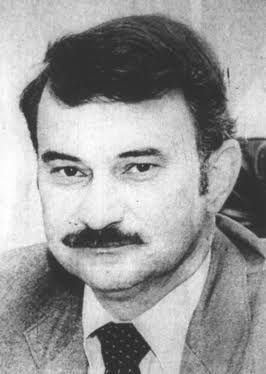
Julian Pierce was weeks from becoming Robeson County's first Lumbee judge. Someone made sure he never took the bench. My great-uncle made sure nobody answered for it.
By Matt Stone
On the night of March 25, 1988, somebody walked up to a house on a dirt road near Red Springs, North Carolina, and fired a shotgun multiple times through the kitchen door. Julian Pierce, 42 years old, a chemist turned lawyer who had come home to Robeson County to run legal services for people who couldn't afford any, died on his kitchen floor.
Ten weeks later, well after Robeson County and most of the country knew that Pierce had been murdered, he won the election.
Pierce was running for a newly created Superior Court judgeship against Joe Freeman Britt, the district attorney whom Guinness World Records had certified as the deadliest prosecutor in America. It was the first time the county's electoral math, roughly a third Native, a third Black, a third white, had ever been arranged to give a Lumbee candidate a real shot at the bench. Pierce was going to win and everyone knew it. He won anyway, dead, by roughly two thousand votes.
The sheriff of Robeson County stood in front of reporters in the first days and called the killing an assassination, one of the worst murders the county had seen in his thirty-three years. Nothing was stolen. Pierce's wallet was still there. An assassination. Those were his words.
Within days, the same sheriff had a completely different story. The assassination became a domestic dispute. The killer, the sheriff announced, was Johnny Goins, a 24-year-old with a grievance over a girlfriend, and Goins was conveniently unavailable for trial because he was dead, a shotgun suicide, before anyone outside the department had examined the case against him. A second man, Sandy Chavis, was charged as an accessory. Case closed. The county was told to move on, and for thirty-eight years, officially, it has.
That sheriff's name was Hubert Stone--the brother of my paternal grandfather--my great-uncle.
Why I'm the One Writing This
You should know that before you read another word, because you'll weigh everything that follows against it, and you should. He was my kin. I grew up with Uncle Hubert always off to the side at family gatherings. I remembered him being quiet, but I also remembered him being kind.
Hubert Stone ran the sheriff's office from 1978 to 1994 and died in 2008 without ever being charged with anything. What follows is not a defense of him. It is the investigation his office never conducted, done by the only member of the family with an investigator's license and a reason to get it right that outweighs the name. I never knew about a single allegation against my great-uncle until after his death. My family did a good job of keeping that one under wraps. Like any good Southern family, if you don't talk about it, it didn't happen.
Everything in this piece is documented or marked as unverified. Where my family appears in the record, it stays in the record. The Grounded's accuracy guarantee applies to every claim, and this story was reviewed before publication by members of the Lumbee community with standing in it. If those two commitments ever conflicted, the community's read came first. They didn't conflict. The documents are damning enough on their own.
What Julian Pierce was actually doing
The standard telling makes Pierce a civil rights symbol, which he was, but the symbol version undersells what made him dangerous.
Pierce ran Lumbee River Legal Services, and in the year before his death he was doing two specific things. He was petitioning for full federal recognition of the Lumbee tribe, work with billions of dollars of long-term consequence. And, according to what he told his own children, he was gathering information on the connection between the Robeson County Sheriff's Office and the cocaine moving up Interstate 95, information he believed implicated Sheriff Stone directly. He was not the only one gathering it. Eight weeks before Pierce died, on February 1, 1988, two Tuscarora men, Eddie Hatcher and Timothy Jacobs, walked into the Robesonian newspaper office with a sawed-off shotgun and held twenty people hostage for ten hours. Their demand was not money. It was a state investigation into county corruption and deaths of Native men, and Hatcher claimed to have a map of the county's drug distribution network and the officials protecting it. Hatcher had shared his leads with Pierce.
The takeover of The Robesonian was largely in response to the shooting of an unarmed Lumbee man, Jimmy Earl Cummings. In November 1986, sixteen months before Pierce died, a county narcotics agent named Kevin Stone shot and killed Jimmy Earl Cummings, during what was supposed to be a routine drug search. Kevin was Sheriff Hubert Stone's son--my cousin. The inquest that followed was assembled with two weeks' speed and less ceremony: the Cummings family got a few hours' notice, too little to find a lawyer, while District Attorney Joe Freeman Britt personally appeared to question witnesses, something DAs almost never did at coroner's inquests. Britt never called Kevin Stone to testify, even as other officers gave conflicting accounts of how Cummings died. The jury returned a verdict that answered nothing: the killing was either an accident or self-defense. It cleared Stone either way.
The context around the shooting was even worse. That August, $50,000 in stolen drugs and evidence tied to fifty drug cases had been illegally removed from a sheriff's office locker to which Kevin Stone was one of two deputies holding keys. Cummings's family told state media that Jimmy Earl had said he was buying drugs out of that locker cache. When a former deputy and two other men were tried for the theft that December, an SBI agent testified he had information suggesting another deputy had helped obtain the stolen cocaine, and named Kevin Stone as one of two officers he suspected.
During the 10 hours that they were at The Robesonian, Hatcher and Jacobs spoke to journalists all over the country. In that regard, they were successful. The whole world turned its focus to Robeson County.
But still, Fifty-four days after the takeover ended, Pierce was dead.
The official story, against the evidence
The Goins explanation solved every problem the sheriff's office had, which is precisely what's wrong with it. What the record actually contains:
The scene. Pierce was killed by shotgun blasts through his kitchen door late on March 25 or in the early hours of March 26. A neighbor's account places a sheriff's deputy at or near the scene around 4 a.m., hours before the body was officially discovered. That account appears in the pretrial notes of James Coman, the state prosecutor later assigned to the case, and was never investigated.
The suicide. Johnny Goins was found dead of a shotgun wound days after the murder, and the sheriff's office presented his death as the suicide of a guilty man. The medical examiner and the SBI disagreed about the physics of it. The shotgun beside him was photographed with its breech open, a condition inconsistent with a self-inflicted final shot. Gunshot residue findings did not support the official account. A suicide note was referenced by law enforcement but has never surfaced.
The footprints. Casts or observations of footprints at the Pierce scene did not match Goins' size.
The missing evidence. Pierce's briefcase, which family members say held his working files, was never recovered. The county dispatch tapes from that night went missing. Whatever was or wasn't in the case file when the SBI looked at it in 2016, the chain of custody on the physical evidence has never been publicly accounted for.
If the idea of a 1980s Southern sheriff's office running interference for the drug trade sounds like conspiracy, understand what a federal investigation later proved about this exact department.
In the 2000s, Operation Tarnished Badge, a joint federal-state investigation, convicted more than twenty Robeson County deputies and officers on charges that included drug trafficking, robbery, kidnapping, and burning the homes of people who crossed them. It remains one of the largest police corruption prosecutions in American history, and it happened in the department my uncle, Hubert Stone built. The convicted men were the institutional children of the office that investigated, and closed, the Pierce case.
Nobody, in thirty-eight years, has publicly cross-referenced the roster of personnel involved in the 1988 Pierce investigation against the list of officers later convicted in Tarnished Badge. The Grounded is building that matrix from the federal case records.
And one more name belongs in this section. In 1993, when James Jordan, Michael Jordan's father (Yes, that Michael Jordan), was murdered off Interstate 74 at the county line, calls from a phone tied to that case went to Hubert Larry Deese, a convicted cocaine trafficker. Deese was Hubert Stone's illegitimate son. That thread gets its own full accounting in part two of this series. It is mentioned here for one reason: the cocaine network Pierce told his children he was mapping did not stop existing when Pierce did.
Eight years of silence
The case has been looked at since. In 2014, attorneys with the Southern Coalition for Social Justice began pushing for a reexamination, and by 2016 the SBI had taken a fresh look, an effort that, according to the best available reporting, was shut down internally before it went anywhere. The file landed, at least nominally, in the orbit of Roy Cooper's incoming administration, which took authority over the SBI in 2017.
Then: nothing. No public findings, no reopening, no explanation. Eight years of official silence, unreported anywhere. What happened to the 2016 review, who ended it, and on what grounds, is a question with living, answerable officials attached to it. The Grounded has filed for the SBI case file status and will publish the response, including a non-response, which after thirty-eight years is itself an answer.
What this piece is and isn't
This draft is the public record, organized. What it proves already: the official story of Julian Pierce's death is contradicted by the physical evidence as described in every serious account, was produced by a department later proven to be structurally criminal, and has never been subjected to an investigation independent of the institution that had the most to lose from one.
What it doesn't yet prove: who killed Julian Pierce, and on whose instruction. This series does not promise to answer that. It promises that every document that can be pulled will be pulled, every living witness who wants to talk will be heard on the community's terms, and everything found will be published, whatever name it lands on. Including mine.
Julian Pierce would have been the first Lumbee Superior Court judge in the county's history. The voters elected him anyway, ten weeks dead, by two thousand votes. The county has been waiting thirty-eight years for the verdict that was supposed to follow.
While most articles are free, it takes a lot of time, patience, and digging to ensure we adhere to The Grounded standard. If you don’t want to subscribe but still want to show your support, you can give tips here: https://thegrounded.ghost.io/#/portal/support
I appreciate each and every dollar. But at the end of the day, just reading is what really counts. The truth…is what counts.
Sourcing status: Built on the coverage baseline (June 29, 2026 file). Primary debts: Haimes/MEL (2018), contemporaneous Robesonian and Carolina Indian Voice coverage (not yet pulled), Border Belt Independent/The Assembly (2023), federal Tarnished Badge case records (pull pending). All [VERIFY] and [TK] flags must clear before publication. Britt's Guinness certification, election margin, Stone's tenure dates, Goins and Chavis details, Deese conviction record: verify each against primary documents, not aggregators.


Member discussion