The Geezer in Gumboots
By Matt Stone
They laughed at the old farmer. Then he ran them all into the ground.
Let's get the basic facts straight before the absurdity of them swallows the whole story whole.
In May of 1983, a 61-year-old potato farmer from Beech Forest, Victoria, a man named Cliff Young, walked up to the registration desk of the inaugural Sydney to Melbourne Ultramarathon and asked for a race number. The race was 544 miles long. It crossed mountain ranges. It had attracted elite athletes from around the world, sponsored professionals who had constructed elaborate performance identities around the act of running very far while looking extremely serious about it.
Cliff Young showed up in overalls and rubber galoshes over his work boots.
The registration staff laughed at him.
The professional runners laughed at him. The crowd laughed at him. Sports commentators, who get paid actual money to have opinions about athletes, looked at this shuffling 61-year-old in gumboots and produced takes so confidently wrong that their descendants should still be apologizing. One television crew reportedly filmed him as a joke segment. A human interest story. The kind of light content you run before the real news, about the funny old man who thinks he can run to Melbourne. He was dressed like a farmer--because the hard motherfucker was a farmer.
Here is what the experts knew going into the 1983 race: elite ultramarathon runners operated on a strict, scientifically optimized schedule. You run for roughly eighteen hours. You sleep for six. You consume precisely calibrated nutrition from precisely calibrated pouches that cost more than most people's groceries. You wear shoes engineered by teams of biomechanical specialists that have watched each runner run on a treadmill to get an idea of how their feet hit the ground mid-stride. You do not, under any circumstances, wear the rubber boots you use to muck out the sheep paddock.
This was not amateur philosophy. This was the consensus of sports science, physical training, and the accumulated wisdom of every person who had ever attempted something this stupid on purpose and wanted very much to have a system to point to when their body filed a formal complaint.
The professional runners had coaches. They had support vehicles. They had sleep schedules laminated and taped to the dashboard. They had, in short, done everything right.
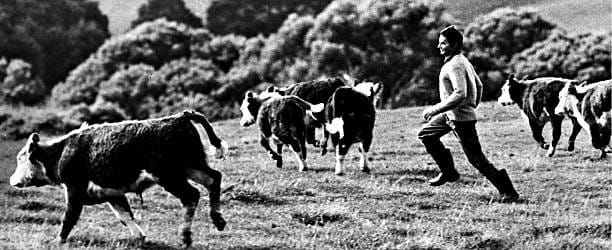
Here is what Cliff Young had: a childhood on a farm where his family couldn't afford horses or tractors, which meant that when the sheep needed rounding up across 2,000 acres of Victorian hill country, young Cliff ran after them. For days at a time. In gumboots. Without a laminated schedule. Without a support vehicle. Without anyone telling him this was a meaningful athletic achievement rather than just Tuesday. Over-pronation, under-pronation, Cliff Young knew jack shit about pronation. He had never heard of the eighteen-hours-on, six-hours-off protocol.
So he didn't follow it.
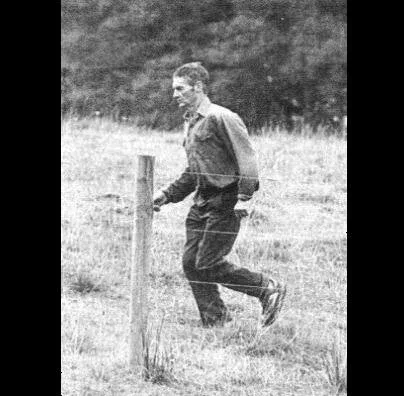
While the professionals tucked themselves into their support vehicles for their scheduled six hours of expert, science-backed, performance-optimized sleep on the first night of the race, Cliff Young kept moving. That shuffling, flat-footed, almost bovine gait, the one that had delighted the crowd so much they'd pointed and laughed, quietly ate up miles in the dark while his competitors lay horizontal, dreaming of podiums they were no longer going to reach.
By the second morning, the 61-year-old farmer in the gumboots had a lead the field would spend the rest of the race failing to close.
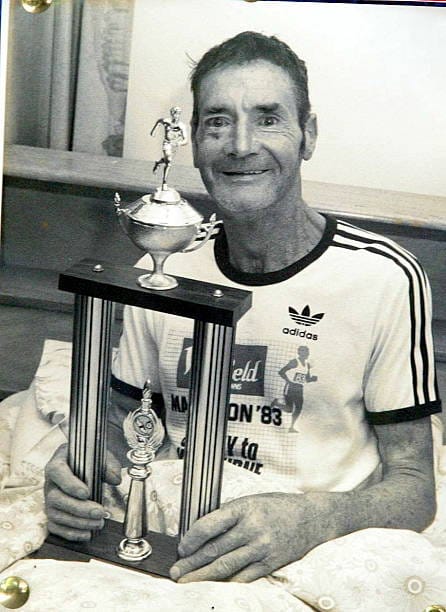
He ran the 544 miles in five days, fifteen hours, and four minutes. He shattered the previous record by two full days. The television crew that had filmed him as a joke had to go back and film him again, this time as the winner, which must have been an interesting editorial conversation. The Tortoise and the Hare had been brought to life.
A man showed up. He was old by the standards of competitive athletics, which are frankly absurd standards that would disqualify most of the human race on sight. He was dressed like a farmer because he was a farmer, a detail that struck everyone present as disqualifying rather than simply descriptive. He moved in a way that looked inefficient because it did not look like the official approved way of moving that the experts had decided was correct.
And so the experts laughed.
Not skepticism. Not measured professional assessment. Not even the basic courtesy of waiting until the race started before rendering a verdict. Just laughter, immediate and certain, from people who had confused their mental image of a winner with actual evidence about one. People whose ideas about success had been inherited, not created or arrived at as any type of original conclusion.
The professionals at that race had built a very detailed picture of what a competitive ultramarathon runner looks like. Youth. Branded gear. A particular kind of body performing a particular kind of stride that had been approved by the relevant authorities. Cliff Young did not match the picture. So the picture declared him irrelevant before a single mile had been run, before a single variable had been tested, before anyone had thought to ask what a man who spent decades running sheep across mountain country in rubber boots might know about sustained endurance that the sports scientists, with all their clipboards, had somehow missed. It turns out the arm chair quarterbacks get it wrong sometimes.
They had the data. They had the models. They had everything except the imagination to consider that the data and the models might contain a blind spot shaped exactly like an old man in overalls.
There is a technique, now well-documented in ultramarathon circles, called the Cliff Young Shuffle. It is named after him. Biomechanically, it turns out, his strange flat-footed gait was extraordinarily efficient over long distances: lower impact, lower energy expenditure, the kind of stride that doesn't announce itself with drama but simply continues, mile after mile, through the kind of night when every certified expert in the field is horizontal and unconscious in a support vehicle.
He stumbled into one of the most effective long-distance running techniques in history because no one had told him to run any other way. The professionals had the orthodoxy. Cliff Young had the gumboots. The gumboots won.
Then, and this is the part that should make every cynic in the room shut the fuck up for a moment--he gave his entire prize money to the other competitors. Ten thousand dollars. He said he didn't know there was prize money. He said he just wanted to run.
Here is the thing about stories like this one, the thing that gets lost when they get sanded down into motivational content and put on posters: the laughter at the registration table was not just mean. It was wrong. Factually, demonstrably, record-shatteringly wrong. And it was wrong in the specific way that confident dismissal is always wrong, not because the old man in gumboots was secretly hiding elite credentials, but because the people doing the dismissing had decided that credentials were the only thing worth looking at. They were the Mean Girls of the ultramarathon world.
Every field does this. Every institution does this. The criteria for being taken seriously accrete over time until they stop describing excellence and start describing the people who were already there. And then someone shows up who doesn't know the rules, or knows them and ignores them, or simply grew up chasing sheep across 2,000 acres until their body figured out something that no laboratory had thought to measure, and the institution just laughs.
Sometimes the institution wins. Sometimes the person in the gumboots goes home. History does not record those stories because history, like sports commentators, tends to pay attention after the fact.
Cliff Young was out there. In the dark. Long before the race, long before anyone was watching, long before there was any reason to believe that running sheep up a mountain would ever matter to anyone outside of his own farm. He wasn't training. He wasn't building a brand. He was just doing the thing that was in front of him, fully and without apology, because it was what the land and the life required.
The world is full of people like that. People whose particular knowledge, particular endurance, particular way of moving through difficulty has never been asked for by any official body and has therefore never appeared on any leaderboard. They are not waiting to be discovered. They are already running.
We just haven't stopped laughing long enough to notice.
Stop being a bitch. Be like Cliff.
Cliff Young went on to compete well into his seventies. He died in 2003 at the age of 81. In 2004, the annual Colac ultramarathon was renamed in his honor--the same race circuit where he had trained alone, in the dark, in gumboots, long before anyone was watching.
Fuck your sources, use google.



Member discussion