What Government Actually Does

Matt Stone
Institutional Decay: Part 1
Most people interact with government only when something goes wrong.
A bridge collapses. A storm response fails. A disease spreads faster than expected. A check does not arrive. A permit stalls. A court ruling makes no sense.
Because of that, it is easy to misunderstand what government actually exists to do.
Government is not primarily a moral enforcer, a cultural referee, or a weapon against political enemies. At its core, government has a far more boring but far more important job: to keep complex systems functioning predictably at scale.
Airplanes need to land safely every day. Water needs to be clean. Markets need rules that are applied consistently. Soldiers need accurate intelligence, not flattering narratives. Courts need to be trusted even when their decisions are unpopular. Disasters need logistics, not slogans.
This is not ideology. It is operations.
The Hidden Machinery
Modern governments are run less by elected officials than by a vast professional class that almost never makes headlines.
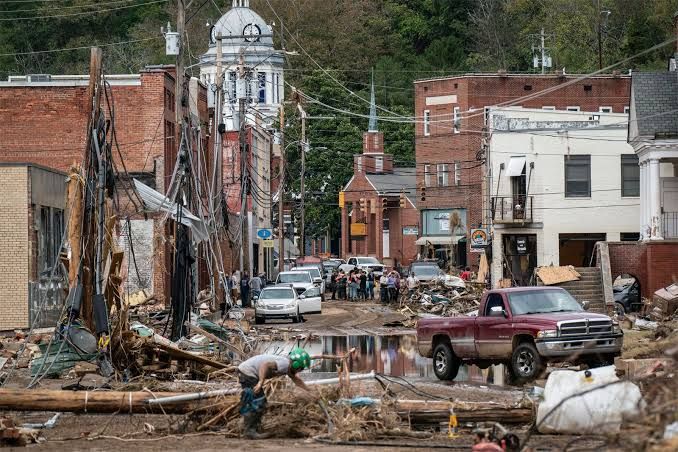
These people include engineers who understand infrastructure stress limits. They know how much load a bridge can take before microfractures become visible cracks, how redundancy fails under stress, and how long deferred maintenance can be ignored before physics collects its debt. When these engineers are sidelined, infrastructure rarely fails immediately. It fails later, suddenly, and catastrophically. The federal response to Hurricane Katrina exposed this dynamic in real time. The storm was inevitable. The collapse of logistics, coordination, and response was not. FEMA had been hollowed out and politicized, and when reality arrived, the system had no one left who knew how to move resources at scale.
They include epidemiologists who model disease spread. These professionals understand that outbreaks grow exponentially, that early data is always incomplete, and that delay is itself a decision. During the early stages of COVID-19, Chinese doctors and health officials recognized the danger but were silenced for contradicting official narratives. The virus did not become less dangerous because warnings were suppressed. It simply outran the response. This is what happens when expertise is punished and bad news becomes a liability.
They include economists who track systemic risk. Not headline economists, but the ones watching leverage ratios, liquidity flows, and cascading exposure. Before the 2008 financial crisis, regulators and analysts identified growing instability in mortgage markets and derivatives. Those warnings were minimized, ignored, or politically inconvenient. The result was not a single failure but a global collapse triggered by accumulated, unmanaged risk.
They include career diplomats who know which threats are real and which are noise. These are people who recognize the difference between rhetoric and preparation, posturing and intent. They know which relationships can absorb pressure and which will fracture under it. When diplomacy is replaced by loyalty, nuance disappears and miscalculation becomes more likely.
They include inspectors who know what failure looks like before it becomes catastrophe. Inspectors recognize patterns of degradation that precede disaster. When they are pressured to look away or soften findings, failure does not vanish. It accumulates quietly until it becomes undeniable.
They include analysts who have watched the same systems for decades. They remember what has been tried before, what failed quietly, and what almost worked. When these analysts are removed, institutions repeat old mistakes with renewed confidence.
They are not powerful because they make decisions. They are powerful because they know what happens next.
That knowledge does not come from loyalty. It comes from repetition, error, institutional memory, and experience that cannot be rushed.
A functioning state depends on these people the way a ship depends on its engineers. You may never see them. You may never like them. But when they are gone, the vessel drifts.
Why Expertise is Slow
Professional bureaucracies frustrate everyone. They say no. They demand documentation. They move carefully. They insist on process.
This is not accidental.
Those constraints exist because complex systems punish speed without understanding. A fast decision made on incomplete knowledge does not simply fail. It creates cascading failures that are harder to reverse.
Constraint as Prevention
Most people imagine catastrophe prevention as an active process. A leader intervenes. A decision is made in time. Someone acts decisively. The story usually centers on intention, judgment, or courage.
In practice, catastrophe is more often prevented by something far less visible: constraint.
The most effective safeguards in complex systems are rarely dramatic. They take the form of rules that slow action, inspections that delay production, checklists that feel redundant, and authorities empowered to say "no" even when everyone involved believes they are acting reasonably. These mechanisms are not designed to inspire confidence or signal competence. They are designed to limit discretion under pressure.
A useful example is workplace safety regulation. Agencies like the Occupational Safety and Health Administration do not operate by persuasion or moral appeal. They impose minimum standards and retain the authority to halt operations when those standards are not met. This power is deliberately bureaucratic. It does not depend on trust in management, good intentions, or corporate culture. It functions precisely because it overrides them.
When such systems work, nothing happens. No disaster occurs. No headline is written. Production resumes after a delay, costs increase marginally, and compliance becomes part of the background noise of normal operations. The absence of visible harm becomes evidence, incorrectly, that the mechanism itself was unnecessary.
This creates a persistent illusion: that safety is the result of responsible actors rather than enforced limits.
Historical data tells a different story. Prior to the establishment of mandatory safety standards and inspection authority, workplace fatalities and severe injuries were treated as a routine cost of doing business. Risk was normalized not because it was invisible, but because competitive pressure rewarded those willing to tolerate it. In that environment, even well-intentioned actors faced incentives to cut corners, defer maintenance, or accept "acceptable losses."
Constraint altered that incentive structure. By making certain behaviors non-optional, safety regulation removed the need for constant moral judgment at the point of decision. It replaced discretion with predictability. The system no longer relied on individuals choosing correctly under pressure; it enforced a baseline regardless of context.
This distinction matters because complex systems fail most often at moments of stress. When timelines compress, costs rise, and consequences feel abstract, discretion becomes dangerous. Rules that feel inefficient during normal operations become life-preserving when incentives align toward speed or profit.
The value of such constraints is easy to miss because they operate counterfactually. Their success is measured in disasters that did not occur, injuries that did not happen, and crises that never materialized. The better they function, the less visible they become.
This dynamic is not unique to safety regulation. It reflects a broader principle of institutional design: systems intended to operate at scale cannot rely on judgment, loyalty, or virtue alone. They require enforceable limits that reduce the range of permissible failure.
Government, at its most functional, serves this role. Not as an expression of will, but as an architecture of restraint. Its primary contribution is not action, but prevention—through rules that hold even when inconvenient, unpopular, or ignored by those who benefit from their absence.
Understanding this function is essential. Because once constraints are treated as expendable—once delay is reframed as inefficiency and refusal as obstruction—the system begins to rely on discretion again. At that point, prevention becomes contingent, and catastrophe returns as a possibility rather than an anomaly.
Checks exist because mistakes at scale are deadly.
The purpose of expertise is not to block action. It is to filter action through reality.
Next in this series: Why Institutions Rot Quietly — how feedback loops invert when loyalty replaces competence, and why reversibility matters.
This is part of Institutional Decay, a documented analysis of systemic collapse.



Member discussion