5 min read

Why Institutions Rot Quietly

We chose loyalty over competence. We chose speed over deliberation. We chose power over legitimacy. We chose victory over restraint. And then we acted surprised when the systems built to restrain power stopped working.
Why Institutions Rot Quietly
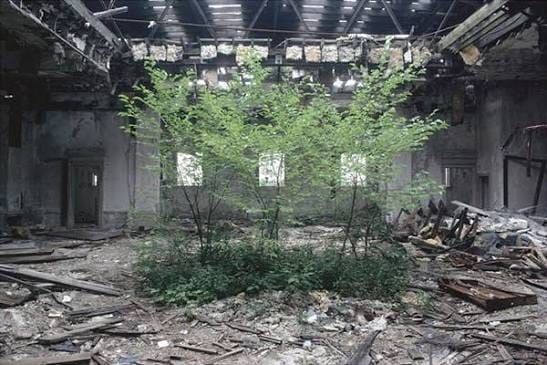
A rotting warehouse.

Part 2 of Institutional Decay

By Matt Stone

Collapse is not a moment. It is a threshold.

Systems do not fail when people notice danger. They fail when they cross conditions that make recovery slower than decay. Past that point, effort still matters, but it no longer compounds. Every fix costs more than the last. Every reform arrives late.

This is why societies often appear stable right up until they are not.

What a Point of No Return Actually Is

In complex systems, a point of no return is reached when feedback loops flip direction.

Early on, problems generate pressure for correction. Institutions respond. Trust is repaired. The system learns.

After the threshold, problems generate adaptations that worsen the problem.

Capital flight leads to austerity. Austerity degrades services. Degraded services accelerate capital flight. Talent loss weakens institutions. Weakened institutions repel talent. Courts lose legitimacy. Compliance becomes strategic. Strategic compliance increases arbitrariness. Arbitrariness erodes trust.

The loop no longer self-corrects.

It self-reinforces.

A system that cannot hear no cannot hear reality. And a system that cannot update its beliefs will continue acting until it breaks something it cannot repair.

Power without restraint does not produce stability. It produces momentum.

Momentum feels good until it meets resistance. And in complex systems, resistance always arrives late and all at once.

Why elections are not enough

Democratic systems rely on elections to reset direction. That works only if institutions remain intact.

Once courts are weakened, civil services hollowed out, intelligence distorted, capital exited, and talent dispersed, elections change leadership but not capacity.

New leaders inherit systems that cannot execute.

They issue orders that stall. They announce reforms that fail. They promise restoration without the tools to deliver it. Public frustration grows. Cynicism deepens. Faith in democracy erodes further.

This is how democratic collapse masquerades as incompetence.

The lag problem

One of the cruelest aspects of systemic collapse is delay.

The causes arrive first. The consequences arrive years later.

People judge policies by short-term outcomes and miss long-term damage. Leaders are rewarded for speed, punished for restraint. Warnings feel abstract. Costs feel distant.

By the time consequences are undeniable, the architects are gone and the institutions that could have prevented the damage no longer exist.

This is not malice. It is time.

Historical echoes

The late Roman Republic did not collapse because citizens stopped caring. It collapsed because institutional decay outpaced reform. Authority fragmented. Enforcement became uneven. Loyalty replaced law.

The Weimar Republic did not fail because democracy was unpopular. It failed because economic shock, judicial weakness, and political extremism overwhelmed fragile institutions faster than they could adapt.

In each case, the final crisis was dramatic. The causes were mundane.

How close is too close?

No one can draw a precise line. That uncertainty is itself part of the danger.

What can be measured instead are warning indicators:

  • persistent court defiance
  • politicized enforcement
  • capital exiting faster than it enters
  • skilled immigration declining
  • professionals leaving public service
  • states diverging legally and fiscally
  • intelligence failures repeating

When several of these occur simultaneously, recovery becomes exponentially harder.

The quiet realization

The most revealing moment in a declining system is when people stop asking how to fix it and start asking how to protect themselves.

That is when trust has broken.

It does not produce panic. It produces exit strategies.

The point of no return is not when collapse becomes visible.

It is when the system loses its ability to learn faster than it degrades.

At that point, decline is not inevitable, but it is no longer optional.

Everything costs more. Everything takes longer. Everything feels harder.

That is the price of ignoring warnings that arrived quietly.

And once it is paid, there are no refunds.

This was avoidable

For decades, we treated institutions as obstacles rather than safeguards. We mistook friction for corruption. We confused speed with courage. We framed expertise as elitism, dissent as sabotage, and caution as weakness.

Each decision made sense in isolation.

A regulation loosened here. An inspector sidelined there. A norm bent to win a short-term fight. A court ruling ignored because it was inconvenient. A professional replaced with a loyalist who promised efficiency.

None of it looked like collapse.

It looked like progress.

That is how the damage accumulated.

We did not lose our institutions overnight. We eroded them gradually, often proudly, often loudly, always convinced we were correcting excess rather than dismantling safeguards.

The tragedy is not that institutions failed us.

The tragedy is that we taught them to fail.

Every institutional failure described in this series represents a choice. Not an accident. Not a law of nature. A choice.

We chose loyalty over competence. We chose speed over deliberation. We chose power over legitimacy. We chose victory over restraint.

And then we acted surprised when the systems built to restrain power stopped working.

The most uncomfortable truth is this: none of this required bad intentions.

It required impatience.

It required ego.

It required the belief that rules were for other people.

Collapse did not arrive because we lacked warnings. It arrived because we learned how to ignore them.

Every failure described here was preceded by experts raising concerns, courts issuing rulings, analysts flagging risks, and professionals urging caution. Those warnings were not silenced by force. They were drowned out by applause.

That is why this was avoidable.

Not because the solutions were easy, but because the costs were known.

We knew what happens when courts lose authority. We knew what happens when intelligence is politicized. We knew what happens when capital and talent leave. We knew what happens when states stop playing by the same rules.

We had the manuals. We had the history. We had the examples.

What we lacked was restraint.

Restraint is not weakness. It is the discipline to stop before momentum becomes irreversible. It is the humility to accept limits. It is the courage to slow down when speed feels intoxicating.

Institutions are not perfect. They are not moral. They are not warm.

They are load-bearing.

And load-bearing structures do not announce when they are close to failure. They simply carry weight until they cannot.

The final illusion to abandon is the belief that collapse requires villains.

It does not.

It requires ordinary people rewarding shortcuts, excusing excess, and mistaking dominance for strength.

Warnings without consequences

Institutions generate warnings continuously through audits, reports, inspections, and internal reviews. Failure rarely occurs because signals were absent. It occurs because responding to them was inconvenient, costly, or politically undesirable.

When warnings are repeatedly ignored without consequence, systems train themselves to discount future signals. By the time failure becomes undeniable, the information was already present, only unheeded.

Surprise is usually a narrative convenience, not an explanation.

Next in this series: The Assumption at the Center — how Project 2025 trades architectural restraint for hope in executive character, and why that trade fails.

This is part of Institutional Decay, a documented analysis of systemic collapse.