
Floating Alcatraz
By Matt Stone
Seven Months.
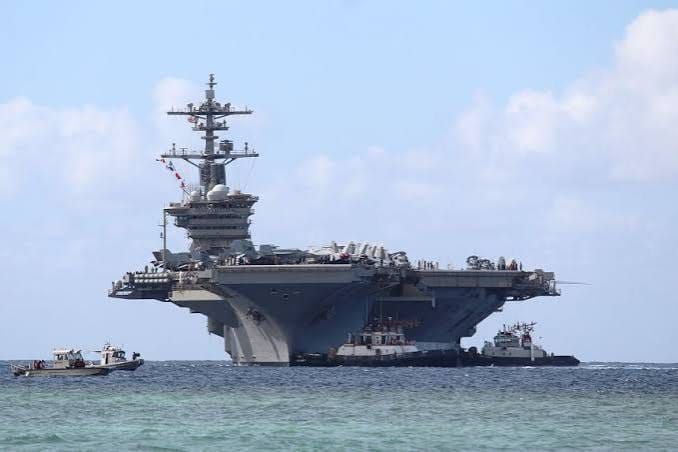
The sailors aboard the USS Abraham Lincoln were told seven months.
The ship left San Diego on November 21, 2025. It was supposed to come home in May. As of the middle of August it had been at sea more than 260 days, and more than 200 of those days passed without a single port call, which means more than 200 days without setting foot on land. That is believed to be the longest stretch without a port call for a modern American carrier. Forty of those days were spent in combat.
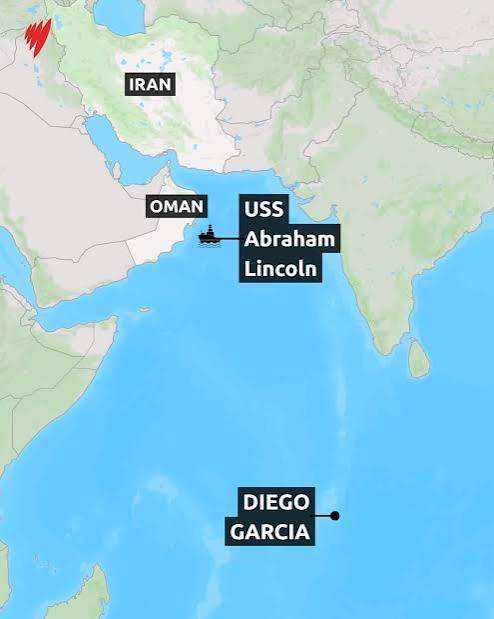
Because there is a war on. The Lincoln has been in the Middle East since January, and it is currently in the northern Arabian Sea helping enforce a blockade of Iranian ports. It is not out there waiting. It is working.
The deployment was extended, and then extended again. For most of that time, nobody would tell the crew when it ends.
Here is the part that has not been explained to the public, and it is the part that matters most.
The Lincoln is not still out there because the Navy is cruel. It is still out there because for nine months there was no other ship to send.
Eleven on paper, three at sea
Federal law says the Navy shall maintain not less than eleven operational aircraft carriers.
In the second week of August, three were at sea.
Two of those three were the Lincoln and the USS George H.W. Bush, sitting in the same body of water, running the same mission. The Iran blockade takes two carriers at once. That means a relief ship cannot come from next door. It has to come from the other side of the planet.
The rest of the fleet was tied up. Some carriers were in the middle of repairs. Some were waiting for a spot in a shipyard. One, the USS John C. Stennis, has been in a mid-life overhaul at Newport News for about five and a half years and is not expected to be ready to deploy until 2027. The USS George Washington went through that same overhaul before it, and that one took close to six years. And then there is the USS Nimitz, the oldest carrier in the fleet, commissioned in 1975. It was scheduled to be decommissioned in May 2026. The Navy moved that to March 2027, to bridge the gap until the new carrier John F. Kennedy is delivered, so the fleet would not fall below the number Title 10 requires.
Sit with that one, because it is the same decision made twice.
Title 10 says eleven. The Navy could not field eleven. So it held a fifty-year-old ship ten months past its retirement date to keep the number on paper, and it held the Lincoln's crew past their return date to keep a carrier on station. Same problem, same solution, applied once to steel and once to people. When you have nothing to replace a thing with, you keep the thing you have out longer.
So when the Pentagon needs two carriers in the Middle East and one of them has already been out past seven months, there is a simple question with a simple answer.
Who relieves them?
For nine months, nobody. So they stayed there, imprisoned on a floating barge. And this exact thing happened six years ago, on the same ship
In 2020, the Abraham Lincoln came home after 294 days at sea. At the time it was the longest carrier deployment since Vietnam.
The reason it ran that long was not complicated, and it was not a secret at the time.
In August 2019, the USS Harry S. Truman suffered a major electrical malfunction. The Truman was the ship that was supposed to go relieve the Lincoln. By October, the Navy expected repairs to stretch into November, which trade press at the time described as putting pressure on U.S. forces in the Middle East. Four ships from the Truman's strike group deployed without their carrier in September. The Lincoln stayed on station and waited.
The Lincoln's commanding officer, Captain Walter Slaughter, had to tell his crew. "We're going to have to stay on station a little longer," he said. "I know that's not the news everybody wanted to hear."
That is a carrier captain in 2019 saying the same sentence a carrier captain said this year.
The Truman was finally fixed and deployed in December, three months late.
Read that again, because it is the whole story. A repair delay on one ship turned into additional months at sea for the crew of another. Then it rolled downhill to the next crew. And if you have never been in the military, the date you go home and see your loved ones, your friends, is the date sketched in your brain that you think about every single day of deployment.
Six years later, it is the same ship, stuck in the same trap, for the same reasona.
That is not bad luck twice. That is how the whole fucked up system works now.
The port that isn’t there anymore
There is a second reason nobody has walked down a gangway in more than two hundred days, and it has nothing to do with the rotation.
The Lincoln lost its port.
When the war with Iran started at the end of February, Iranian strikes hit Naval Support Activity Bahrain, the main American logistics hub in the Gulf. The Wall Street Journal reported in June, using satellite imagery, that the strikes damaged command headquarters, other buildings, and two satellite communications terminals. The New York Times has reported that the Lincoln has had supply problems ever since.
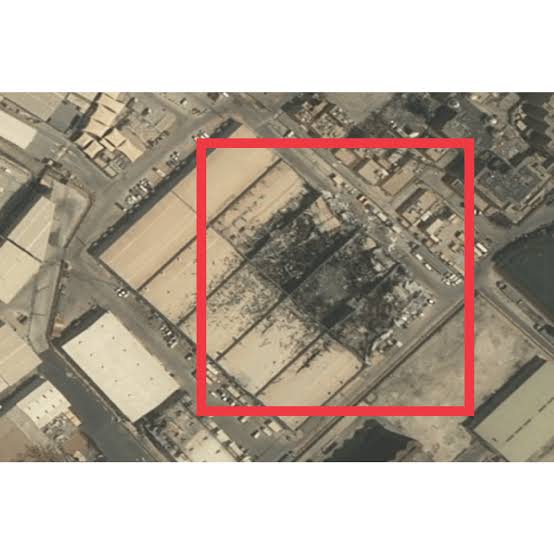
So the Pentagon moved its supply hub to Diego Garcia, a British-run island about 2,200 miles from where the carriers are working.
Read that number again. Every pallet of food, every spare part, every piece of mail now starts its trip 2,200 miles away.
And Bahrain was not just a warehouse. It was a liberty port. It was the place a crew steps off the ship, stands on ground that does not move, and calls home. When the base was hit, that disappeared too, and nothing replaced it.
This is what nobody in the government has said plainly. The crew is not missing port calls because the Navy forgot to schedule one. The port they would have pulled into got bombed, and the war they are fighting is the reason it got bombed, and the ship that was supposed to relieve them was five and a half years into an overhaul.
Three separate failures, stacked, and all three of them get absorbed by the same five thousand people.
There is also an allegation about how this was handled. David Rohde of MS Now said on air that Hegseth hid the fact that Iran destroyed the main American resupply base in the Gulf, and did not disclose it across repeated press conferences. That claim has not been substantiated, and the Pentagon has not answered it. Note it and move on, because the documented version is bad enough. Nobody has to have hidden anything for a crew to spend two hundred days without a place to stand.
The loop
You do not have to take my word for any of this. A United States senator described the circle in writing five months ago.
"When ships finally return from an extended deployment," Senator Tim Kaine wrote to the Secretary of the Navy in March, "their maintenance periods often run beyond the anticipated time and budget, creating a self-perpetuating cycle of decreased readiness and shipyard delays."
Self-perpetuating. That is the word a member of the Senate Armed Services Committee chose.
Here is that cycle in four steps.
A carrier gets held out past its planned return date, because the ship that was supposed to relieve it is not ready.
While it stays out, maintenance that was scheduled gets pushed back. You cannot fix a ship that is at sea.
When it finally comes home, the repair job is bigger and takes longer than planned, so it sits in the shipyard longer.
Which means it is not available to relieve the next carrier. Which means that crew gets extended.
Then the circle starts over.
The federal government's own auditors have been documenting this for years. The Government Accountability Office looked at maintenance work at Navy shipyards from 2015 through 2019. Out of 51 scheduled maintenance periods for carriers and submarines, 38 finished late. That is three out of four. Carriers ran an average of 113 days past their finish date.
And it does not stop at carriers.
On July 24, the destroyer USS Benfold lost power in the Pacific after a major breakdown. It stayed dark for four days. Navy spokesman Commander Matthew Comer confirmed that the ship’s roughly 300 sailors went without drinking water, meals, working toilets, and air conditioning.
That is not a morale story or a soft generation story. That is a ship that broke, in peacetime water, with nobody shooting at it.
The Lincoln is the loudest example because it is the biggest ship with the longest clock. It is not the only one.
The two biggest causes were work nobody planned for, meaning problems that were only discovered after the ship was already opened up, and not having enough skilled workers to do the job. The Navy underestimated the people it needed by 36 percent.
The Navy has spent billions trying to fix its shipyards. GAO's estimate for how long the infrastructure repairs will take is roughly twenty years.
Nobody serving on the Lincoln today will still be in uniform when that work is finished. Some may not ever put on a uniform again when they finally arrive back on shore.
The people doing the waiting
There is a second shortage stacked on top of the first one.
As of December 2025, the Navy had around 20,000 unfilled jobs on its ships. Almost all of those empty slots were at the junior enlisted level, meaning the youngest and newest sailors, the ones who do the hardest physical work aboard. The Navy has since met its recruiting goals, but a sailor recruited this year is not standing a watch this year.
So the crews absorbing these extended deployments are already short handed. Fewer people, longer hours, more months, no relief date.
In August, Navy Times and Stars and Stripes reported that multiple crew members had tried to go overboard during the deployment. CNN reported that a sailor went overboard earlier that month, citing three U.S. officials. Families described mold, broken plumbing, shortages of basic hygiene supplies, and mail so disrupted that packages sent from home vanished for months.
The government pushed back hard.
U.S. Central Command said publicly that no service members aboard the ship have died, and that "the one Sailor who fell overboard Aug. 3 was quickly and safely recovered." It called the coverage "rampant misreporting." Secretary of War Pete Hegseth said the reports were "completely misrepresented," and that "we make sure every ship, every crew, every captain has everything we can provide them at every single moment." The Navy said it had not identified an increase in reported suicidal thoughts or attempts aboard the Lincoln, and that the crew has doctors, counselors, and chaplains available. It said the ship has clean water and working air conditioning. It did acknowledge that mail and resupply had been disrupted.
Tehran saw an opening
Once the story was in the American press, Iranian state media jumped on it and pushed a claim that seven sailors had died in a brawl aboard the Lincoln. CENTCOM denied it flatly. There is no evidence for it and it should not be repeated.
But notice what made it usable. A hostile government does not manufacture a story about mutiny on a ship that came home on time. The opening existed because the real conditions were bad enough, and public enough, that a lie could ride in behind them.
That is the cost nobody put on the ledger when the deployment got extended the second time. A crew kept at sea past nine months is not just a welfare problem. It is an opportunity, and somebody took it.
The Admiral's answer
On August 16, Admiral Brad Cooper, who runs U.S. Central Command, flew out to the ship. He called the visit awe inspiring. He praised the crew's resilience. And he offered the closest thing anyone in the government has offered to an answer.
The Lincoln, he said, "currently has among the lowest number of cases related to mental health" of the Navy's eleven aircraft carriers. He added that this "doesn't mean that all is perfect."
Look at what that is, and what it is not.
It is not a number. A United States senator had asked, in writing, how many sailors had tried to go overboard. What came back was a ranking.
Now look at what the ranking is measured against. Eleven carriers. Most of them are not deployed. Several are in shipyards. One has been in a shipyard for five and a half years. Telling the country that the ship with two hundred days at sea has fewer mental health cases than ships tied to a pier is not reassurance. It is a comparison that cannot mean anything, and it is being offered as comfort.
Then there was the last part. Service at sea for long periods, Cooper said, isn't for everyone.
That sentence does something. It takes a maintenance backlog, a broken rotation, and a fleet being asked to do more than it can do, and it moves all of it inside the individual sailor. The deployment is not too long. Some people are just not built for it.
The same answer, with the volume up
The same weekend Admiral Cooper visited the ship, a Fox News host named Joey Jones watched a clip of a Lincoln sailor telling CNN what there was to eat on board, and lost it on air.
"How weak are you?" Jones said on The Big Weekend Show. "On TV, complaining about tuna and noodles?" He described eating ramen off a burner in Afghanistan for six months. "I would've traded a block of C-4 to the Taliban for a hot dog by about July 2010." If this is who our military is now, he said, "we're just Rome sitting here waiting to burn."
Jones served eight years in the Marine Corps, deployed to Iraq and Afghanistan, and lost both legs above the knee to an IED in 2010. He has standing on the subject of hardship that virtually nobody watching him has. He is comparing two different kinds of mental fortitude though. When Jones was on land, he knew he was on land, He knew that resources were more readily available on land depending on where you went and when you went there. In Afghanistan, Kandahar Airfield was more akin to a boardwalk at Myrtle Beach than anything resembling a war zone. On a boat with dwindling supplies, the stressors are different. Losing your legs is obviously a stressful event, but to say these sailors are soft because a marine once had his legs blown off is just ridiculous what-about-ism at its most disgusting display.
None of this is Jones's fault. He didn't ask to be put in that position. But Fox News did, because a double amputee combat veteran saying 'toughen up' is a more effective silencer than an anchor saying it, and that's precisely why it's disgusting. It's not an argument, it's a weapon dressed up as one with a Marine being used as a prop.
Which is exactly why his answer is worth looking at closely, because it is the admiral's answer with the volume turned up.
Cooper said service at sea for long periods isn't for everyone. Jones asked how weak are you. One is a four star officer choosing his words and the other is a television host shouting, and they arrive in the same place. The problem is the sailor.
That is not a coincidence and it is not really about either man. It is what is left to say when the real answer cannot be said out loud. The real answer is that federal law requires eleven carriers, three were deployed this month, and the Navy cannot produce a fourth just because it is asked to. Nobody is going on television to say that.
So the argument becomes a referendum on whether kids today are soft. And the sailor did not go on television to complain about a corndog. He went on television because the ship was supposed to come home in May. It is easy to downplay the plight of others when you are not in their current position. Using your own trauma as a goalpost for others' trauma is also a deeply disturbing phenomenon in the military, and it is self-defeating. It becomes "look how strong I am for overcoming this," to "look at how weak you are for not overcoming a situation we have no clue about."
The third answer
There is one more voice in this, and it belongs to the only person in the story with the authority to end the deployment with a sentence.
On August 14, on the tarmac at Joint Base Andrews, reporters asked President Trump about the Lincoln. Asked whether the deployment had gone on too long, he said: "No, no, not nearly long enough."
Told that families of the sailors aboard were concerned about conditions, he said: "No, they're not. That ship is moving right now, or very shortly, and it's being replaced with another very similar ship."
Line the three of them up.
The admiral said service at sea for long periods isn't for everyone. The Fox host asked how weak are you. The Commander in Chief said the families are not concerned and it has not been long enough.
Three men, three registers, and not one of them addressed a maintenance schedule.
The last part of what the President said is true, and it is truer than he meant it. The Lincoln is being replaced with a very similar ship. The USS George Washington is a Nimitz-class carrier of the same generation, and it is coming off a mid-life overhaul that took close to six years.
Three letters, no answers
Members of Congress have been asking about this since the spring.
On March 19, Senator Tim Kaine wrote to Secretary of the Navy John Phelan about the USS Gerald R. Ford, which had been extended twice after the President ordered military action in the Caribbean and then the Middle East.
"I am concerned that we are handicapping our future readiness by delaying much-needed maintenance to fulfill these deployment extensions," Kaine wrote. He cited persistent sewage system failures and inoperable laundry facilities aboard the ship. He asked five questions and set a deadline of April 15 for answers.
One of those questions is easy to skip past and should not be. Kaine asked for the reenlistment rates among eligible sailors on the Ford. That is the loop's bill coming due. Every sailor who finishes a deployment like this one and decides not to sign again makes the manning shortage worse, which makes the next crew shorter handed, which makes the next deployment harder.
On March 31, eleven House members wrote to Pete Hegseth about the same ship. Their letter is worth reading closely, because everything happening on the Lincoln right now is in it, five months early.
The Ford had caught fire. According to the letter, the fire caused smoke exposure injuries to roughly 200 sailors and destroyed more than 100 sleeping areas, leaving sailors to sleep on the floor and on tables. The members cited reporting on clogged toilets, persistent maintenance problems, loss of berthing, and declining morale.
Then they asked the Department for a classified briefing within fifteen days. Among the things they wanted covered: a review of long term impacts to future carrier deployments caused by the Ford's extended repair and maintenance requirements, data on crew fatigue and operational tempo, the policies in place to ensure adequate rest and mental health support, and any plans for relief, rotation, or early return of the strike group.
That is the loop, described by members of Congress, in March.
The letter was signed by Wesley Bell, John Garamendi, Joe Courtney, Sarah Elfreth, Sara Jacobs, Chris Deluzio, Eric Sorensen, Jill Tokuda, Chrissy Houlahan, Maggie Goodlander, and Jason Crow.
On April 16, the Ford passed 295 days at sea and broke the record for the longest deployment since Vietnam. The record it broke was 294 days, set by the Abraham Lincoln in 2020. The Ford came home to Naval Station Norfolk on May 16, after 326 days and 57,713 nautical miles, with the destroyers Bainbridge and Mahan alongside.
Secretary of War Pete Hegseth was waiting at the pier. He welcomed the nearly 4,500 sailors home and presented Carrier Strike Group 12 with the Presidential Unit Citation, the highest honor a military unit can receive, for extraordinary heroism during Operation Epic Fury.
"For nearly a year," he told them, "you have held the line for our nation."
They earned it. That is not the point.
The point is that the Navy has a fast, dignified, well-practiced way to honor a crew that absorbs a deployment like that, and no comparable way to keep the next crew from having to. Recognition is available. Relief is not.
Three months after that ceremony, the Lincoln was past 260 days in the same operation, for the same reason, and the same man who stood on that pier was telling the country that reports about it had been completely misrepresented.
Hold those two facts next to each other. In March, Congress asked in writing what the plan was for relief and rotation. In August, the Lincoln is at day 260 with the same complaints, the same plumbing, the same morale, and the same answer.
And note what that does to the argument that this is a generation of soft sailors. It is not one crew. It is two ships, five months apart, describing the same thing.
On August 12, Senator Richard Blumenthal wrote to Pete Hegseth and acting Navy Secretary Hung Cao about the Lincoln.
Most of what he asked is about the ship. The dates of each extension and who authorized them. The list of habitability and supply problems and when they were identified. What metrics the Navy uses to assess fatigue, morale, and mental health. Whether commanders had seen increases in safety incidents, medical issues, or disciplinary problems.
One question is not about the ship at all. It is about the whole Navy, and it is the question this entire story has been building toward.
"Does the Department assess that current demand for aircraft carrier presence exceeds the level that can be sustainably generated under the Navy's existing force structure and deployment model?"
A senator on the Armed Services Committee does not put that sentence in writing unless he already suspects the answer.
What to watch
There is a reason to think nobody will answer it.
Kaine set a deadline of April 15. The eleven House members asked for a classified briefing within fifteen days of March 31. The Ford stayed deployed until May 16 and came home holding a record. Whatever those letters produced, it was not a change to the rotation, because the Lincoln then went out past nine months for the same reason the Ford did.
So watch whether the Pentagon answers Blumenthal's question about the whole fleet, or only the ones about the ship.
It is easy to describe conditions on one carrier. Conditions look like something a resupply run can fix. Except the resupply run now starts 2,200 miles away, at an island under another country’s flag, because the base that used to do that job is a satellite photograph of damaged buildings.It is much harder to say in writing that the mission being asked of the fleet is bigger than the fleet, because the moment that is on paper, somebody has to either buy ships or cancel missions.
If you want to be useful here, the Senate Armed Services Committee is where that answer lands. You can find your senators at senate.gov. The question to ask is not whether the toilets got fixed on the Lincoln. It is the one Blumenthal already asked, and whether the Department answered it.
What happens to nobody
Federal law says the Navy shall maintain not less than eleven operational aircraft carriers. That is not a goal or a wish list. It is written into the United States Code.
In the second week of August, three were at sea.
Now ask what the penalty is for that. There isn't one. Nobody is fined. Nobody is relieved. Nobody sits in front of a committee and explains himself. The number stays in the law, the fleet stays under it, and the space between those two things gets covered by keeping one crew out past the date they were promised.
Then ask what happens to a sailor on that crew who cannot take day 261. He gets evaluated. What comes of that can follow him into his fitness report, into his next command, and sometimes into the paperwork that decides what kind of veteran he gets to be for the rest of his life.
The requirement belonged to the institution. The consequence lands on the kid.
That is the part worth being angry about, and it has nothing to do with tuna and noodles.
Joey Jones reached for Rome. Fine. Let's go there. Let us talk about Rome.
Rome did not fall because its soldiers got soft. Rome fell because it kept promising to hold more ground than it had men to hold it, and kept sending the same legions back out to cover the difference, and when the line finally gave, it decided the problem was the men standing on it, not the greedy, pampered rulers hundreds of miles away making the decisions for the men on the line.
We are not Rome because a twenty-year-old on a carrier told a reporter he was tired of hot dogs.
If we are Rome, it is because this country wrote down eleven, paid for and maintained enough to float three or four, and then asked sailors to make up the difference with their bodies and their years, after telling them seven months and then telling them nothing at all.
The USS George Washington is on its way now. It left Da Nang in August and was last seen transiting the Strait of Malacca, headed for the Middle East to take the Lincoln's place.
It is the same ship that spent close to six years in the shipyard.
The Lincoln will come home. And the crew that relieves them is already standing in the same line.
If you are a service member or veteran in crisis, or you are worried about someone who is, the Veterans Crisis Line is available at 988, then press 1.
Sources
- Sen. Richard Blumenthal, letter to Secretary Hegseth and Acting Secretary Cao, August 12, 2026: https://www.blumenthal.senate.gov/imo/media/doc/2026-8-12_letter_to_sec_hegseth__cao_re_uss_lincoln.pdf
- Sen. Tim Kaine, letter to Secretary of the Navy on USS Gerald R. Ford, March 19, 2026: https://www.kaine.senate.gov/imo/media/doc/31926_letter_to_secnav_on_uss_gerald_rford.pdf
- House letter on USS Gerald R. Ford, March 31, 2026: https://bell.house.gov/sites/evo-subsites/bell.house.gov/files/evo-media-document/3.31.26-letter-uss-ford.pdf
- Military Times, "Senator presses Navy for answers on USS Abraham Lincoln deployment," August 13, 2026: https://www.militarytimes.com/news/your-military/2026/08/13/senator-presses-navy-for-answers-on-uss-abraham-lincoln-deployment/
- Military Times, report on families and conditions aboard the Lincoln, August 11, 2026: https://www.militarytimes.com/news/your-military/2026/08/11/multiple-uss-abraham-lincoln-sailors-have-tried-to-go-overboard-amid-extended-deployment-families-say/
- CNN, "Sailor went overboard from the USS Abraham Lincoln this month," August 13, 2026: https://www.cnn.com/2026/08/13/politics/uss-abraham-lincoln-conditions-extended-deployment-hnk
- CNN, on lengthening carrier deployments, August 15, 2026: https://www.cnn.com/2026/08/15/politics/sailors-air-craft-carriers-longer-deployments-uss-abraham-lincoln
- Forbes, "Just Four United States Navy Aircraft Carriers Are Now Deployed," July 3, 2026: https://www.forbes.com/sites/petersuciu/2026/07/03/just-four-united-states-navy-aircraft-carriers-are-now-deployed/
- GAO-20-588, "Navy Shipyards: Actions Needed to Address the Main Factors Causing Maintenance Delays for Aircraft Carriers and Submarines": https://www.gao.gov/products/gao-20-588
- GAO-20-257T, "Navy Maintenance: Persistent and Substantial Ship and Submarine Maintenance Delays Hinder Efforts to Rebuild Readiness": https://www.gao.gov/products/gao-20-257t
- GAO-22-105032, on the Navy's deferred maintenance backlog: https://www.gao.gov/products/gao-22-105032
- USNI News, "Navy Has 20,000 Gaps at Sea Due to Training Backlog, Past Recruiting Shortfall," December 15, 2025: https://news.usni.org/2025/12/15/navy-has-20000-gaps-at-sea-due-to-training-backlog-past-recruiting-shortfall
- Military.com via Yahoo News, "Extra-Long Ship Deployments Aren't Hurting Sailor Retention, Personnel Chief Says": https://news.yahoo.com/extra-long-ship-deployments-aren-132027280.html
- Task & Purpose, Navy response on Lincoln morale: https://taskandpurpose.com/news/navy-uss-lincoln-morale-deployed/
The Grounded stands behind every factual claim it publishes with a $100 accuracy guarantee. Find an error of fact and tell us. If you are right, we pay.





Member discussion