James Cone and A Black Theology of Liberation
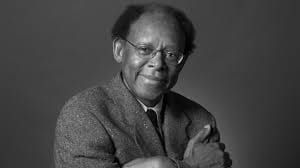
Matt Stone
James H. Cone’s A Black Theology of Liberation argues that Christian theology cannot be neutral, abstract, or detached from human suffering. His central claim is that theology is only truly Christian when it is grounded in the lived reality of the oppressed and committed to liberation. My thesis is that Cone’s most powerful contribution is his insistence that theology must be measured by whether it speaks to and participates in the struggle for freedom. Across these chapters, Cone builds a forceful and coherent argument that God is revealed in liberation, Jesus must be understood through the experience of the oppressed, and the church must become an active force against injustice rather than a passive observer of suffering.[1]
What makes Cone’s writing so compelling is that he does not treat liberation as just one subject among many. He presents it as the very heart of Christian theology. Early in the book, he argues that theology exists in order to give ordered speech to God’s activity in the world so that oppressed people can recognize that their struggle for freedom is not separate from the gospel but is actually central to it. That is an incredibly strong opening claim because it makes clear from the beginning that Cone is not interested in theology as a purely academic exercise. He is interested in whether theology tells the truth about God in a world marked by racism, domination, and suffering.[2]
Cone’s argument is persuasive because he roots it in scripture rather than merely in political opinion. He points to the Exodus as a foundational example of God’s liberating activity, emphasizing that God is revealed as the one who delivers the oppressed from bondage. He then continues this reading through the prophets, who denounce injustice and defend the poor, and into the New Testament, where Jesus identifies himself with the poor, the captive, and the oppressed. This biblical grounding gives Cone’s position real force. He is not claiming that liberation is a modern add-on to Christianity. He is arguing that liberation has always been at the center of the biblical witness and that white American theology distorted this reality by making faith safe, abstract, and socially harmless.[3]
One of the strongest sections of the reading is Cone’s discussion of the sources and norm of Black theology. This chapter shows the originality and maturity of his thought. He explains that theology is never created in a vacuum. Every theology has sources and a norm, and those choices determine what questions are asked and what answers are considered acceptable. Cone argues that Black theology must arise from the Black community and must be accountable to Black experience under white oppression. This point is important because he exposes something that many traditional theologies try to hide: there is no such thing as a neutral theology. What is often presented as universal Christian truth is frequently white theology speaking from its own social location while pretending to rise above race and history.[4]
I thought this was one of Cone’s sharpest insights. He makes clear that white theologians cannot simply assume they have the right to define what the gospel means for Black people while remaining outside Black suffering. At the same time, Cone does not fall into the trap of making experience alone the source of truth. He still grounds theology in Jesus Christ and in biblical revelation. That balance is part of what makes his work so strong. He is not abandoning Christianity in favor of politics. He is insisting that authentic Christianity must confront the concrete realities of oppression instead of hiding behind vague language about love, patience, and spiritual salvation.[5]
Cone’s chapter on revelation builds on this argument by asking how a community knows that its claims about God are true. His answer is that revelation is not just a matter of abstract proof or philosophical speculation. A community comes to know God through God’s action in history. In other words, people recognize God through liberation, struggle, and transformation, not through detached arguments that ignore suffering. I found this chapter especially meaningful because it challenges the idea that theology is primarily about explaining concepts. For Cone, theology is about recognizing where God is moving in the real world. Revelation is not empty information. It is an event that changes how people understand themselves, their neighbors, and the structures that surround them.[6]
This argument also helps explain why Cone is so critical of white theology. He believes it has often turned revelation into a matter of words while failing to confront the brutal realities of racism. That criticism still feels relevant. Cone forces the reader to ask whether theological language is actually revealing God or simply protecting the comfort of those already in power. His work is effective because he never lets the reader forget that ideas have consequences. A harmless theology may sound peaceful, but if it leaves oppressive structures untouched, it is not harmless at all. It becomes part of the problem.[7]
Cone’s discussion of God and humanity is equally powerful. In his chapter on God, he argues that speaking about God in a racist society is dangerous because God-language has so often been used as a tool of oppression. Slaveholders, politicians, and defenders of white supremacy have all invoked God while participating in systems of cruelty. Cone’s question, then, is how Black theology can speak of God without simply repeating the language of the oppressor. His answer is to reclaim God-language through liberation. God must be understood as the one who stands against oppression and for Black dignity. Anything less would simply be another version of the “white God” used to keep oppressed people passive.[8]
Chapter 5 on the human being extends this same concern into theology’s understanding of humanity. Cone argues that truth is concrete. He rejects theological approaches that obsess over abstract doctrines while ignoring the reality of ghettos, poverty, racism, and social exclusion. That line stayed with me because it captures so much of what Cone is doing throughout the book. He is not interested in elegant theological systems that never touch actual life. He wants a theology that can speak honestly about what human beings endure and what freedom demands. He also critiques both conservative and liberal theology for failing Black people in different ways. Conservatives made Christianity into a defense of authority and correctness. Liberals often spoke about love and humanity while still refusing to support Black self-determination in any serious way. Cone’s critique is severe, but it feels earned because he constantly returns to the lived consequences of these theological failures.[9]
His treatment of sin is especially effective because it shifts the concept from private morality to structural injustice. Cone argues that the reality of sin is seen most clearly in oppression and in the systems that deny human dignity. That is an important corrective to the idea that sin is just an individual matter between a person and God. In Cone’s view, racism is not simply prejudice in individual hearts. It is a structure of domination that shapes entire societies. This makes his theology feel morally serious. He refuses to let readers hide behind personal innocence while participating in larger systems of harm.[10]
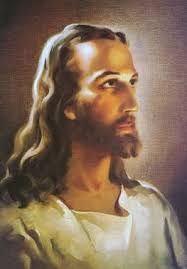
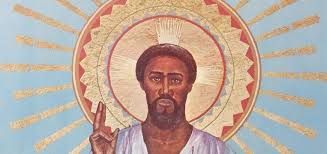
The chapter on Jesus Christ may be the most memorable part of the book. Cone begins with the traditional Christian claim that theology begins and ends with Jesus Christ, but he immediately asks what that means in relation to slave ships, auction blocks, the Underground Railroad, and Black power. That question captures the entire force of the book. Cone refuses to let Jesus remain a distant figure who offers only spiritual comfort. If Jesus is truly the center of Christian faith, then Jesus must matter for those who are humiliated, violated, and excluded. This is why Cone is so fierce in his rejection of the image of a “white Jesus.” His point is not superficial. He is showing how the image of Jesus has been used ideologically to support white innocence, white comfort, and white control.[11]
What I appreciated most here is that Cone does not abandon Christology. He intensifies it. He asks what Jesus means for oppressed Black communities and insists that if Jesus is to have any real significance, he must be identified with them. This makes Christology immediate, historical, and morally demanding. It is no longer enough to affirm that Jesus saves. One has to ask what salvation looks like in a world structured by racial oppression. Cone’s answer is that Christ stands with the oppressed and against the powers that crush them. That makes theology not only more political, but also more faithful to the gospel as Cone understands it.
The chapter on the church brings the argument to its practical conclusion. Cone describes the church as the community that has received the “hint” of the gospel and therefore cannot accept human suffering as normal. The church must proclaim liberation, embody it, and participate in the struggle against injustice. It cannot hide behind “law and order” when those phrases are used to protect oppressive systems. This is one of the most challenging parts of the book because it leaves little room for religious passivity. A church that speaks about peace while ignoring oppression has already failed. A church that values order over justice has sided with the powerful. Cone insists that the church must become a revolutionary community or else it ceases to reflect the gospel at all.[12]
That argument is difficult, but it is also one of the reasons the book is so effective. Cone does not let Christian institutions excuse themselves. He does not allow theology to retreat into private spirituality. Everything returns to the question of whether Christian faith is actually good news for the oppressed. If it is not, then it has become something else entirely.[13]
Overall, I think Cone demonstrates a mature, original, and deeply challenging understanding of theology. His argument is coherent from chapter to chapter, and he supports it with scripture, historical reflection, and sharp analysis of American racism and white Christianity. What impressed me most was how consistently he refused abstraction. I struggle to force my own work not to drift too far into the abstract. He never lets theology drift too far from lived reality. Again and again, he forces the reader back to the concrete experiences of suffering, humiliation, and resistance that theology must address if it is to have integrity.[14]
My main takeaway from these readings is that Cone makes theology feel urgent. He shows that theology is never just about ideas. It is about who is seen, who is ignored, who is protected, and who is left to suffer. His work is unsettling because it reveals how easily religion can become a mask for injustice. At the same time, it is hopeful because it insists that Christian faith can still be a force for liberation when it is rooted in the struggle of the oppressed. In that sense, Cone does more than critique white theology. He redefines what faithful theology should look like.[15]
In conclusion, A Black Theology of Liberation is a powerful and challenging work because it insists that Christian theology must be accountable to liberation in history. Cone’s central achievement is showing that theology cannot remain neutral in the face of oppression without betraying the gospel. By grounding God, revelation, Christ, humanity, and the church in the lived reality of oppressed Black communities, he creates a theology that is both intellectually rigorous and morally urgent. Whether or not a reader agrees with every aspect of Cone’s rhetoric, his larger argument is difficult to escape: theology that does not confront oppression is not merely incomplete. It is complicit.[16]
[1] James H. Cone, A Black Theology of Liberation, 50th anniversary ed. (Maryknoll, NY: Orbis Books, 2020) 18, 77, 87.
[2] Cone, 18.
[3] Cone, 18-19.
[4] Cone, 29-30.
[5] Cone, 30, 37–38.
[6] Cone, 40–41.
[7] Cone, 41.
[8] Cone, 47–48.
[9] Cone, 62–63.
[10] Cone, 62–63.
[11] Cone, 77.
[12] Cone, 77.
[13] Cone, 77–78.
[14] Cone, 77, 87–88.
[15] Cone, 87–88.
[16] Cone, 18, 29, 40, 77, 87.
Member discussion