The Cluster is the Cover
How the System Removes People Who Try to Leave
By Matt Stone
Here is the mistake almost everyone makes, and the mistake the noise depends on: treating all of it as one thing. It was never one thing.
Fifteen scientists, dead or missing, over four years. Laid out in a list, it looks like a single phenomenon. It invites a single explanation. And that is exactly the problem. The moment you treat the cluster as one story, you stop examining the individual cases. The list becomes the evidence. The strangeness becomes self-reinforcing. Fifteen is spookier than one, and spookier is easier to dismiss.
But the cases are not all connected. They cannot be.
Some of these deaths are genuine suicides. Some are genuine accidents. Some are illnesses, overdoses, the ordinary tragedies that befall any large group of people over four years. A lake drowning with no foul play. A car crash. A man who took his own life and left a family to grieve without conspiracy. To insist that all fifteen are the same operation is not rigor. It is the opposite of rigor. It is the credulity that makes the whole subject easy to wave away.
And that credulity is useful—to someone.
Because when you fold the important cases into a pile of unrelated ones, three things happen. First, the signal drowns. The person who was actively exiting compartmented work disappears into a list next to a routine accident. Second, the scrutiny disperses. Investigators, journalists, and readers spread their attention across fifteen names instead of concentrating on the two or three that actually warrant it. Third, and most important, anyone who points at the real cases gets tagged with the whole cluster. You cannot raise McCasland without being told you are "one of those missing-scientists people." The noise contaminates the signal by association.
This is not hiding a tree in a forest. It is the inverse. You plant a forest so that no one examines the one tree.
The work, then, is not to prove that all fifteen are connected. The work is to prove that they are not—and to identify which ones do not belong to the noise. Which cases have a documented exit attempt. Which have documented threats. Which have documented institutional suppression, a sheriff's office actively downplaying what the records show, a narrative constructed in real time. Which sit at a structural hub connecting programs that should not be connected in public.
Strip away the accidents. Strip away the genuine tragedies. Strip away the cases that fit no pattern but coincidence. What remains is small. And what remains is specific. McCasland, exiting four compartmented positions before he vanished. Eskridge, documenting a weapon before she died and forcing its admission afterward. The handful of others that connect to them by profession, geography, and access.
That is the signal. Everything else was camouflage—some of it deliberate, some of it simply the ordinary noise of human death that a deliberate operation can hide inside of.
The cluster, the 'bigger picture,' is never the story. Never.
Murdered by the CIA?
On November 19, 1953, at a retreat in rural Maryland, the CIA dosed Frank Olson's liquor with LSD without his knowledge. Olson was a biological warfare scientist at Fort Detrick. He began to have a negative experience with the drug. The experience had a profound effect on him. He began expressing moral doubts about his work. He had asked to resign.
Nine days later, Olson plunged from the 10th floor window of the Hotel Statler in New York.
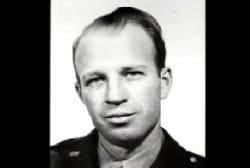
The government called it suicide. Then misadventure. For twenty years, the Olson family knew nothing except that their husband and father was dead. In 1975, the Rockefeller Commission revealed that Olson had been dosed and President Gerald Ford publicly apologized to his family in the Oval office. In 1976, the government paid the Olson family $750,000 without ever admitting guilt or wrongdoing by the CIA.
In 1994, his body was exhumed. The medical examiner found cranial injuries indicating he had been struck before he went through the window, calling it suspicious of a homicide. The DA investigated and closed without pressing more charges. The bottom line though: the government does not pay $750,000 dollars, worth over $4 million in 2026 dollars, and issue an apology in the Oval Office for a suicide. The payment is the institution buying silence, trying to bring closure to something.
The mechanism was simple: a man in compartmented work wanted out. He became a security risk. He disappeared. An official narrative explained it away. The system moved on.
That was 1953. Institutional memory runs long.
The Mechanism
What made Olson's case instructive was not that it was dramatic. It was that it was procedural. Defenestration--the effective method of assassination according to a CIA field manual.
The CIA's declassified 1953 "Study of Assassination" manual contains explicit instructions for killing someone through a contrived window fall: arrange a private meeting, drug the subject if necessary, tip them over the edge, then immediately pose as the horrified witness.
Robert Lashbrook, another CIA chemist and Olson's handler, was found in the hotel room after Olson fell. He was a horrified witness. The night manager noted the impossibility of the official story—a man waking in the dark, crossing his room in underwear, and diving through a closed window with drawn curtains. The mechanism described in the CIA's assassination manual and the death of Frank Olson are not coincidence. They are precedent. Defenestration is the golden standard in the CIA's own assassination handbook.
He did not die in a black-site interrogation. He died in a Manhattan hotel room. He was not kidnapped. He was taken voluntarily, under the guise of being taken for psychiatric care. His isolation was not forced. It was institutional. A CIA contractor doctor was arranged. A hotel room was secured. Surveillance was maintained. The process looked like treatment.
When the moment arrived, the window was there. A hotel room on the 10th floor. A closed curtain. Darkness. A man who had become a liability. Then he was gone.
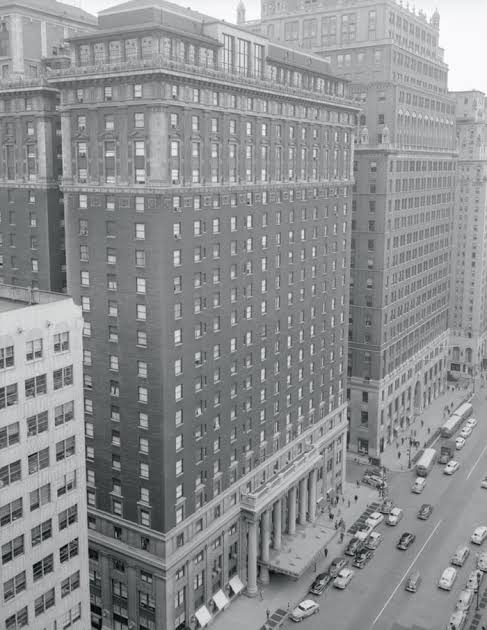
The cover story was ready: a man experiencing a psychiatric episode, a bad drug trip, a jumper. Tragic. Sad. Case closed. No questions needed.
The genius of the mechanism is that it does not announce itself. It uses the language of care—psychiatric intervention, medical supervision, therapeutic environment—to accomplish removal. The person being eliminated is never told they are being eliminated. They are told they are being helped.
And when they are gone, the narrative supplied by the institution is the only narrative available. No one was there but the people who arranged it. No one recorded it but the people who benefited from the outcome.
McCasland and His Secrets
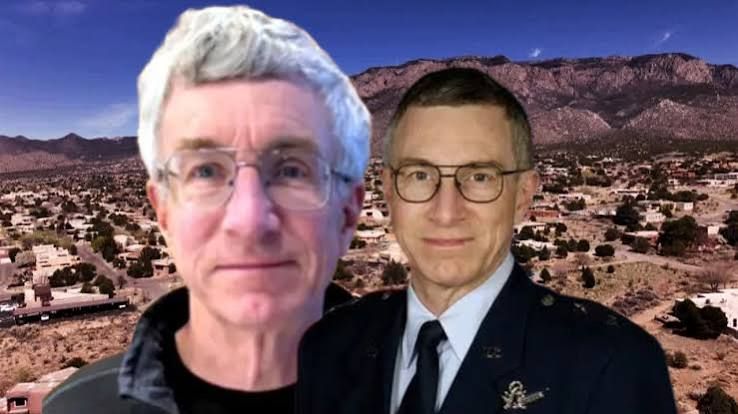
William Neil McCasland was a retired Major General who commanded the Air Force Research Laboratory. He held one of the most sensitive positions in the American military: responsible for the Air Force's multibillion-dollar science and technology program, with assignments spanning space acquisition and special programs. In plain language, he sat at the intersection where advanced materials, propulsion systems, space systems, and classified research all converge.
In February 2026, McCasland tried to exit. He flew to Washington D.C. to resign from Riverside Research, a nonprofit that performs scientific research and advisory work for the Pentagon, the U.S. intelligence community, and the Air Force. He told his wife he was stepping down from multiple positions because of what he called "brain fog"—mental decline, difficulty keeping up with conversations.
The narrative was being constructed in real time. Not as a threat. As a symptom. Mental decline. Not "I know too much," but "I can't think straight." Similar to problems Frank Olson was voicing before he was thrown out of a window.
He returned to New Mexico. On February 27, 2026, he went on a hike near Albuquerque.
He has not been seen since.
What is documented: he left behind his cellphone, his GPS watch, his eyeglasses, all electronic tracking devices. He left behind his medication, which his wife did confirm he did not need to survive. There was also a missing .38 revolver.
McCasland has a second home in Pagosa Springs, Colorado, about 35 miles north of the New Mexico border and about 200 miles from his Albuquerque home. At his second home, investigators discovered a light-green long sleeve shirt and hiking boots, according to the sheriff's office. His wallet, a 38. caliber revolver, a leather holster, and a red backpack are still missing.
His wife told 911 operators that it appeared he was trying "not to be found."
The Narrative*
The Bernalillo County Sheriff's Office has emphasized mental health. They report McCasland had stepped down from several retiree-affiliated working groups due to "brain fog." They have actively downplayed the Pentagon connection, stating that their reports do not reference the Pentagon and that there is no known connection between his case and the deaths and disappearances of other scientists.
The institutional response is consistent: minimize the classified nature of his work, emphasize the personal crisis angle, supply a narrative of mental breakdown and tragic disappearance.
This is the same institutional response that answered Olson's death in 1953. Psychiatric crisis. Voluntary departure. Tragic outcome. Move on.
Why the Parallel Matters
The parallel is not that identical people died identical deaths. The parallel is that the mechanism appears identical. Paint a person as becoming mentally-ill, suffering from brain fog, then follow the CIA handbook.
In both cases: a person with access to classified work wanted to exit. In both cases: that desire was treated as evidence of liability rather than reasonableness. In both cases: the institutional response was isolation under the guise of care. In both cases: a psychiatric narrative was supplied. In both cases: the person vanished. In both cases: the institution enforced silence.
Olson in 1953 and McCasland in 2026 are separated by seventy years and different methods. But they follow the same institutional logic. They were present in the same dark corridors of power that require top secret clearances and deal with covert government programs.
When someone inside a compartmented program decides they cannot stay, the institution cannot simply let them leave. They carry knowledge. They might talk. They have become a security risk.
The solution is not to prosecute them or detain them openly. The solution is to remove them in a way that generates no questions. To supply a narrative that answers itself. To invoke psychiatric crisis so that scrutiny becomes unfeeling—of course a man experiencing mental decline might disappear on a hike.
The mechanism succeeds precisely because it looks like tragedy rather than procedure. Because the person being eliminated is never made to understand they are being eliminated. Because the narrative supplied by the institution becomes the default explanation.
In Plain Sight
The pattern holds for others as well. Amy Eskridge was 34 years old. She held a double major in chemistry and biology from the University of Alabama in Huntsville. She was president of the Institute for Exotic Science and CEO of HoloChron, working on gravity modification, metamaterials, and quantum-related research. She was not a peripheral figure. She was embedded in the exact institutional corridor where advanced propulsion and classified research intersect.
In the months before her death, Eskridge documented what she claimed were attacks using directed energy weapons. Video from 2026 shows her in visible distress, pointing to burns on her hands. She claimed RF k-band emitters powered by car batteries in a nearby SUV had caused the injuries. She provided photographs. She told colleagues. She told Franc Milburn, a retired British intelligence officer, that she feared for her life. She believed she was being targeted.
Then, in June 2022, Amy Eskridge was dead. A self-inflicted gunshot wound to the head. No official investigation was launched immediately, but as the missing scientists began to garner more public attention, the FBI began reviewing her case as part of the wider set, and House Oversight has requested records from DOE, DOD, FBI and NASA.
The official explanation provided minimal detail. No autopsy findings were made public. No investigation was announced. What follows matters: the CIA, DOD, and GAO began making public statements about directed energy weapons. Official reports were released. Congressional briefings occurred. Spending allocations became part of the public record—$1 billion annually on DEW development. The technology that had been deniable, speculative, something for forums and fringe discussion, suddenly became official. The government shifted from concealment to admission.
They stopped denying DEW existed and started describing its capabilities in detail. CIA agents who had been victims of DEW attacks began coming forward. The timing was strange, the government went from publicly denying it in January 2022 to openly admitting it after the death of Amy Eskridge. Before Eskridge documented her attack, before she had photographs, before she told people in power, DEW could remain classified and unacknowledged. After she died, after her documentation was already in circulation, denial became impossible. Admission became the only option. High-profile Congressional hearings began and we began hearing more and more about DEW deployments in Ukraine. In April 2026, Secretary of War Pete Hegseth said he wanted to "demystify directed energy weapons." Hegseth went on to say he wanted to facilitate the integration of Directed Energy Weapons directly into the United States military.
Eskridge did not silence herself. She forced them to speak the name of the tool they claimed to be developing but swore they were not deploying. She made it impossible for them to deny what she had already proven. Her death did not end the story. It changed what they were allowed to say about it.
What We Know and Don't Know
We know McCasland was trying to exit compartmented positions. We know he flew to Washington D.C. to resign from a major DoD contractor. We know he returned to New Mexico and vanished. We know his wife told authorities he appeared to be trying "not to be found.” We know the sheriff's office is actively downplaying the classified nature of his work and emphasizing mental health.
We do not know whether McCasland is dead or missing. We do not know the mechanism of his disappearance. We do not know whether the psychiatric narrative was genuine or constructed.
What we do know is the precedent. We know that when someone in classified work tries to leave, the institutional response has a historical precedent. And that history suggests this is not coincidence.
The Uncomfortable Question
Olson was not the only person dosed in MKUltra. Hundreds of people were given LSD without consent. Most of them survived. Some did not. Most of them never found out what happened to them. Most of them had no family determined enough, no paper trail visible enough, no name famous enough to force answers.
Olson's case became known because his death was dramatic and his family refused to stop asking questions. His exhumation in 1994 revealed forensic evidence of foul play. His case became documented history.
How many people tried to exit compartmented programs and disappeared without generating a case file? How many psychiatric episodes coincided with someone wanting to leave classified work? How many disappearances in hiking accidents, car crashes, and suicides involved people with access to national security information?
We do not have a body count. We have a precedent. We have a pattern. We have a method that has worked before and continues to work, in Russia at least.
The question is not whether McCasland is connected to Olson, they are decades apart, but still part of the same world of non-disclosure agreements and top secret security clearances. The question is whether the institutional mechanism that worked in 1953 would simply stop working seventy years later, or if the CIA got better at keeping secrets. History suggests the latter.
What Remains
McCasland remains missing as of August 2026. The Bernalillo County Sheriff's Office continues to investigate. The narrative of mental decline and tragic disappearance is the official explanation.
His family has not given up. Neither should we.
Because institutional elimination of people who try to leave compartmented programs is not theory. It is documented fact. It is precedent. And when precedent repeats, silence becomes complicity.
The record needs to exist. Not as accusation. As documentation. So that when the next person tries to exit and vanishes, we can point to the pattern. We can point to Olson. Because if we do not keep asking, we will never know. It is that simple.
That is all that remains available: refusal to look away. Refusal to accept the story. Refusal to let it become forgotten. Because if we do not keep asking, the mechanism simply continues. Quietly. Without fanfare. Without acknowledgment. Exactly as designed.
If you have a security clearance, just stay away from windows.
I will not stop searching for the truth. And I know I am not alone. The people deserve to know the truth. Between the scientists, the alien and UAP files being released, and then the spectre of Epstein still hovering over the corridors of power, the people have been kept in the dark for too long, on too much. These are not all one conspiracy, but they're evidence of one behavior: institutional secrecy as default.
Want to learn more about holding the government accountable? Download a free public records request kit with a guide for getting information the government does not want to give: https://store.thegrounded.org/
Sources: Rockefeller Commission Report (1975), Olson family exhumation findings (1994), Bernalillo County Sheriff's Office reports on McCasland (2026), public reporting on McCasland disappearance (Feb-March 2026).
Member discussion