No One Left To Refuse
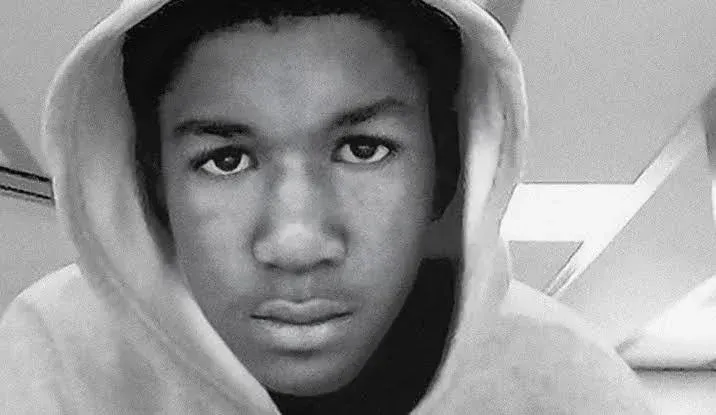
Kelly Brown Douglas traced how a system of subordination survives its own abolition. The next transformation removes the last person who could have said no.
Written by Matt Stone
In 1866, Georgia made it a crime to live without “visible and known means of a fair, honest, and respectable livelihood.” Kelly Brown Douglas cites the statute in Stand Your Ground: Black Bodies and the Justice of God, and what makes it worth citing is what it does not say. It names no race. It mentions no former condition of servitude. Read cold, a century and a half later, it is a law about employment.
Everyone involved knew what it was for. Emancipation had produced a population of free Black people whose freedom was, in the language Douglas uses, a problem requiring a solution. The solution could no longer be the slave code, because the slave code had been abolished. So the solution became a vagrancy statute, race-neutral in its language and wholly racial in its function, enforced by sheriffs who understood the assignment and upheld by judges who did not need it spelled out.
Douglas calls this preservation through transformation. It is the most useful idea in her book, and it is the reason I keep returning to it while working on something that has almost nothing to do with theology.
The Genealogy
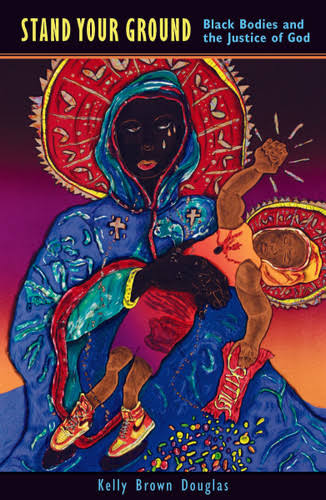
Douglas’s argument runs across three centuries and holds its shape the whole way. The Black body is constructed as chattel, and that construction is given theological warrant by natural law theory, which identifies the way things are with the way God intends things to be. Alexander Stephens, vice president of the Confederacy, put it without decoration: slavery, subordination to the superior race, is the Black man’s “natural and moral condition.” Within that framework a free Black body is a violation of the created order itself.
Then emancipation arrives and the framework has to move. The chattel becomes the criminal. Black Codes, vagrancy laws, convict leasing, and eventually the drug war and the prison system each carry forward the same structural arrangement under a new legal vocabulary. Michelle Alexander made this case at length in The New Jim Crow, and Douglas absorbs it into a theological argument: the specific instrument is disposable, the structure is not. Abolish the instrument and the structure builds another one.
What Douglas understood, and what makes her book more durable than most of what was written in the years after Trayvon Martin was killed, is that the thing to watch is not the law on the page. It is the machinery that produces laws like it, over and over, in whatever language the era will accept.
So the question her book leaves open is the obvious one. What does the machinery produce next?
The Next Instrument
It produces a risk score.
Criminal courts in the United States now use algorithmic risk assessment to inform decisions about bail, sentencing, and parole. Police departments use facial recognition to generate investigative leads. Some agencies use predictive systems to decide where officers are deployed and which people warrant attention before anything has happened.
Every one of these is race-neutral on its face. None of them asks for race as an input. They ask about prior arrests, about addresses, about employment history, about who else lives in the household. They ask, in other words, about the accumulated residue of every previous transformation in Douglas’s genealogy, and then they return a number.
This is the vagrancy statute again, and it has learned something. The Georgia law was race-neutral in its wording but legible in its purpose. Anyone reading it could see the argument being made and could argue back. A risk score is race-neutral in its wording and illegible in its operation, including to the people applying it. There is no argument on the page to contest, because there is no page.
Where The Sequence Breaks
Here is what I think Douglas could not have seen, writing in 2015, and what makes this more than another entry in her list.
Every earlier form in the genealogy still ran through a person. The vagrancy charge needed a sheriff willing to make it. It needed a judge willing to take it. The drug sentence needed a prosecutor who chose the charge and a jury that convicted. Each of those people was, in the main, doing exactly what the structure asked of them. Douglas’s whole point is that individual bad intent was never the engine.
But each of them could have refused. Some did. The refusal was available, it was locatable, and it happened in time to matter. However rarely it was exercised, there was a place in the process where a human being stood between the structure and the body it was about to fall on, and where that human being could have said no.
The risk score arrives already decided. The recommendation is generated before the hearing, and the person with authority to reject it is the last one to see it. The human remains in the process. The human has been moved to the end of it, and by the time the human is consulted, the decision has already acquired the weight of a finding.
That is a different thing from what Douglas describes, and it is worse. She traced a structure that kept surviving the removal of its instruments. This transformation removes the place where anyone could object.
Loomis
Eric Loomis was charged in La Crosse County, Wisconsin in February 2013, after a drive-by shooting in which he was identified as the driver. He pleaded guilty to two lesser counts, attempting to flee a traffic officer and operating a vehicle without the owner’s consent, and was sentenced with the help of a COMPAS risk assessment, a proprietary tool produced by the company then called Northpointe.
Hold those two charges in mind. Fleeing an officer. Driving a car that was not his. Loomis challenged the sentence on the ground that he could not evaluate a report he was not permitted to see. The algorithm’s weighting was a trade secret. His lawyers could not examine how it reached its conclusion, and neither could the judge who relied on it.
On July 13, 2016, the Wisconsin Supreme Court ruled against him. The court did not say the tool was sound. It attached warnings about how such scores should be used and then allowed the sentence to stand. The United States Supreme Court denied certiorari on June 26, 2017.
The year of that Wisconsin ruling, ProPublica published an analysis of COMPAS scores for more than seven thousand people arrested in Broward County, Florida in 2013 and 2014, measured against whether those people were charged with new crimes over the following two years. That two-year window is the same benchmark the algorithm’s creators used. Black defendants who did not go on to reoffend were falsely flagged as future criminals at almost twice the rate of white defendants. White defendants who did go on to reoffend were mislabeled as low risk more often than Black defendants were.
The paired cases ProPublica pulled out of that data are where the abstraction goes away. In the summer of 2013, Vernon Prater, 41, shoplifted $86.35 worth of tools from a Home Depot in North Lauderdale. He had served five years in Florida prison for armed robbery, with another attempted robbery and a later armed robbery arrest on his record. COMPAS scored him 3, low. He went on to steal $7,700 worth of goods from a warehouse and is now serving eight years.
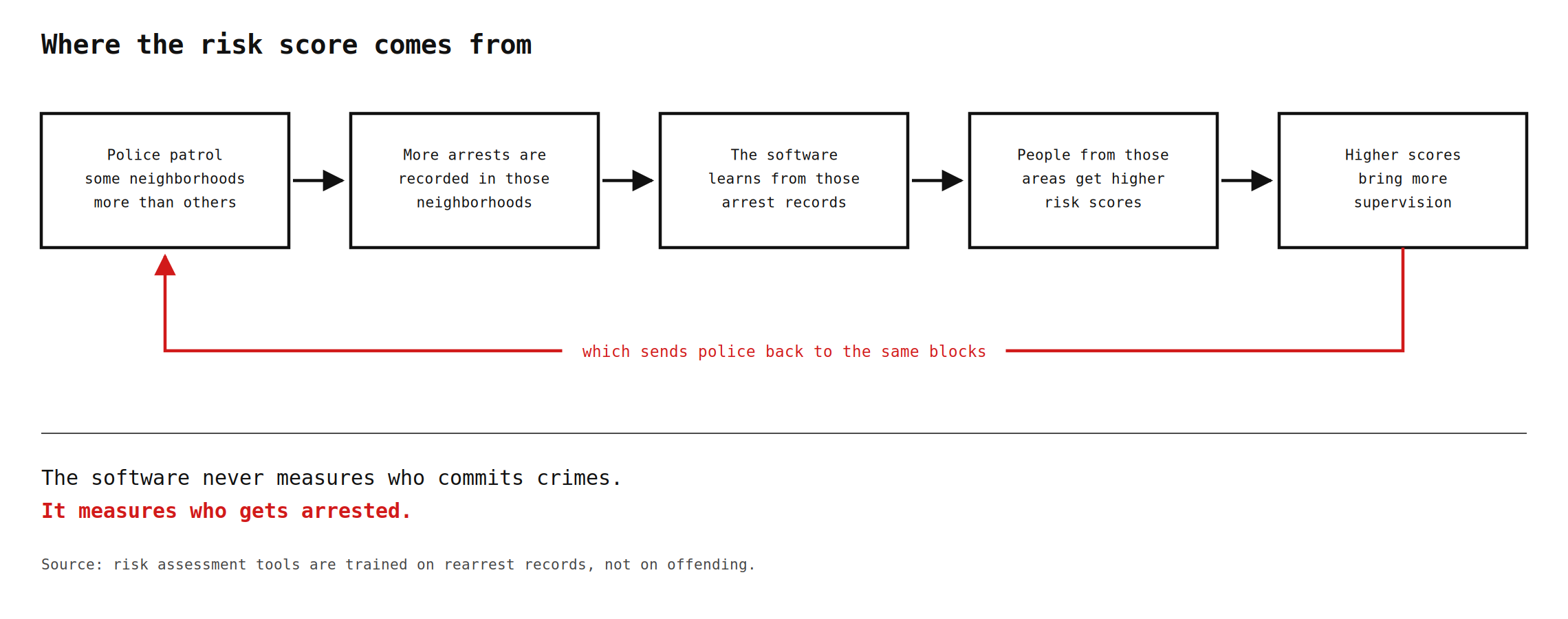
Risk scoring software is trained on records of who got arrested again, which is not the same thing as who committed another crime. Police spend more time in some neighborhoods than others, so more arrests get recorded there. The software learns from those records and gives people from those neighborhoods higher scores. Higher scores bring more supervision and more contact with police, which produces more arrests, which the next version of the software learns from. The system is measuring its own behavior and reporting it back as a prediction about people.
In 2014, Brisha Borden, 18, and a friend picked up an unlocked bicycle and a scooter sitting outside an apartment building and rode them down the street. The owner shouted, they dropped both and ran, and a neighbor called the police. She had four juvenile misdemeanors. COMPAS scored her 8, high. She was not charged with anything afterward.
Northpointe disputed the methodology, and statisticians have argued over it ever since. The dispute itself is instructive. The most examined risk assessment tool in the country produced years of argument about whether it was fair, and no one in that argument was Eric Loomis, and none of it happened before he was sentenced.
Consider what that means against Douglas’s frame. A man is sentenced. The instrument that shaped the sentence is a trade secret. The court knows it is a trade secret and proceeds. The only meaningful contest of that instrument happens in a newsroom, in a statistics journal, and years too late for the person it was used on.
The vagrancy statute at least had the decency to be published.
Lipps
Loomis could at least see that the instrument existed. The next case is worse, and it happened last year.
On July 14, 2025, United States Marshals arrested Angela Lipps, fifty years old, at her home in Elizabethton, Tennessee. She was taken on a probation violation and on an out-of-state fugitive warrant issued in Fargo, North Dakota, connected to a series of bank frauds committed by someone using a counterfeit military identification card. A facial recognition search run by a neighboring agency had returned Lipps as a candidate match to surveillance footage. That report went to Fargo police and carried forward into the charging process.
She was held in Tennessee for one hundred and eight days. She was extradited on October 30. The charges were dismissed on December 24, 2025, after her attorney produced bank records showing she had been in Tennessee the entire time. By then she had spent more than five months in custody, and she lost her home, her vehicle, and her job.
Now the part that matters for Douglas’s argument.
Human review was not absent from this. Human review was everywhere. An analyst at the originating agency, investigators in Fargo, the prosecutor’s office, the judge who issued the warrant, the officials who set her custody conditions, and the entire interstate extradition apparatus all stood between a software match and a woman in a cell. Every one of them held full authority. Every one of them used it. And every one of them sat downstream of the identification, receiving it as the starting premise of their own thinking rather than as the thing they were thinking about.
Six detectives in the investigating department were notified of her arrest by email within the same month it happened. The department has said it did not learn she was in custody until December 5, nearly five months later. Nothing was hidden. The notice arrived, and it arrived at people for whom the question had already been settled, so a message saying the named person had been found read as confirmation instead of as something to check.
There is one more turn. Litigators working facial recognition cases describe a recurring pattern in which the use of the technology never appears in the investigative report or the warrant application at all. A judge in that position is not performing weakened review. He is performing full review of the wrong object, weighing what he understands to be an investigative conclusion when what is actually in front of him is a machine output with every trace of its origin stripped off.
Loomis could not inspect the instrument. Here the instrument was never in the room.
Pilate
James Cone spent his last book arguing that the cross and the lynching tree are the same object. Both are public executions carried out under color of authority, on people the surrounding order had already classified as expendable. Douglas takes that identification and makes it the center of her Christology. Jesus did not merely sympathize with the crucified class. He was in it.
What is easy to skip in the passion narrative is how procedural it is. Nobody in it is a monster. The Sanhedrin refers the matter upward. Herod sends him back. Pilate, the Roman prefect with the actual power to release him, interviews the man, states twice that he finds no case against him, and then hands him over anyway. Matthew has him take water and wash his hands in front of the crowd while saying he is innocent of this blood.
That is the whole mechanism in a single gesture. Pilate had the authority. He exercised it. And he described his own act as something that had been decided elsewhere and delivered to him. He was not lying, exactly. By the time the man reached him, the determination had already been made and carried forward by everyone who touched it, and Pilate's part was to ratify what arrived. He located the decision somewhere upstream of himself, and the crowd let him, and a man died.
Read the Lipps file again with that in view. An analyst runs a search. Investigators receive a name. A prosecutor receives a case. A judge receives a warrant application. Officials receive a person in custody and maintain the conditions of that custody for one hundred and eight days. Every one of them had authority and used it, and every one of them was working on something that had already been settled before it reached their desk. There is no Pilate in that sequence, because the position Pilate occupied has been distributed across six or seven people, none of whom is standing in front of a crowd with a basin.
Douglas argues that remembering Jesus is not recollection. It is reenactment, living into his solidarity with the crucified in your own time. The uncomfortable half of that is the other role. The passion narrative has more people in it than the one on the cross, and most of them are administrators.
The Theological Claim
Douglas defines sin as what alienates us from the ways and will of God, and she insists that sin is structural as well as personal. Stand-your-ground culture, in her reading, is not a collection of individual failures. It is a set of arrangements that deny life and require the subordination of particular bodies in order to function.
The thing that makes a structure sinful in her framework is not only that it produces harm. It is that it makes the harm difficult to see, and it distributes responsibility for that harm so thinly that no one is left holding it. Lincoln named slavery as a national sin in the Second Inaugural. Douglas argues he stopped short, because the deeper sin was the exceptionalist narrative that made slavery available in the first place, and that narrative survived abolition intact.
Automated decision systems are the purest form of that thinness yet achieved. The engineer did not sentence anyone. The vendor sold a tool. The agency followed a recommendation. The judge exercised discretion within a range the recommendation had already defined. Every participant can describe their own contribution as small, technical, and reasonable, and every one of them is telling the truth.
That is what a culture of sin looks like when it has been properly engineered. Not cruelty, which can be pointed at. Diffusion, which cannot.
Moral Imagination
Douglas closes her book on her grandmother, a woman with a sixth-grade education who ran a hand-crank elevator in Columbus, Ohio, and saved from every paycheck so her grandchildren could finish school. Douglas calls this moral imagination: the capacity to work toward a world that has not yet shown any sign of arriving.
She means it as a resource, and it is one. But her grandmother’s imagination had something to push against. There were laws with authors, sheriffs with names, school boards that held meetings and took votes. Jim Crow was monstrous and it was also legible. You could find the thing that was doing it to you.
The open question I cannot get past is what contestation looks like when the decision has no author. Douglas’s tradition is built on the conviction that structures of sin can be named, confronted, and dismantled, and that naming them is the first act of freedom. Naming requires something to point at.
We are building systems designed, not always on purpose, to leave nothing to point at. The score is proprietary. The training data is historical. The decision is a recommendation. The human is present, at the end, briefly, after the weight has already settled.
Douglas was right that the structure adapts. This is the adaptation. It has learned to remove the moment where someone could have refused, and it has learned to do it while leaving a person in the room, so that the refusal still appears to be available right up until you reach for it.
Works Cited
Alexander, Michelle. The New Jim Crow: Mass Incarceration in the Age of Colorblindness. Rev. ed., New Press, 2012.
Agassiz, Louis. "The Diversity of Origins of the Human Races." Christian Examiner, July 1850, pp. 10–45.
Baldwin, James. The Price of the Ticket: Collected Nonfiction, 1948–1985. St. Martin's/Marek, 1985.
Berger, Peter. The Sacred Canopy: Elements of a Sociological Theory of Religion. Doubleday, 1967.
Cone, James H. The Cross and the Lynching Tree. Orbis Books, 2011.
Douglas, Kelly Brown. Stand Your Ground: Black Bodies and the Justice of God. Orbis Books, 2015.
Du Bois, W. E. B. Black Reconstruction in America, 1860–1880. The Free Press, 1935.
Foucault, Michel. The History of Sexuality. Translated by Robert Hurley, vol. 1, Vintage Books, 1990.
Gutiérrez, Gustavo. A Theology of Liberation. Translated by Sister Caridad Inda and John Eagleson, Orbis Books, 1973.
Tillich, Paul. The Courage to Be. 2nd ed., Yale University Press, 2000.
Wells, Ida B. Crusade for Justice: The Autobiography of Ida B. Wells. Edited by Alfreda M. Duster, University of Chicago Press, 1970.
Williams, Delores S. Sisters in the Wilderness: The Challenge of Womanist God-Talk. Orbis Books, 1993.




Member discussion